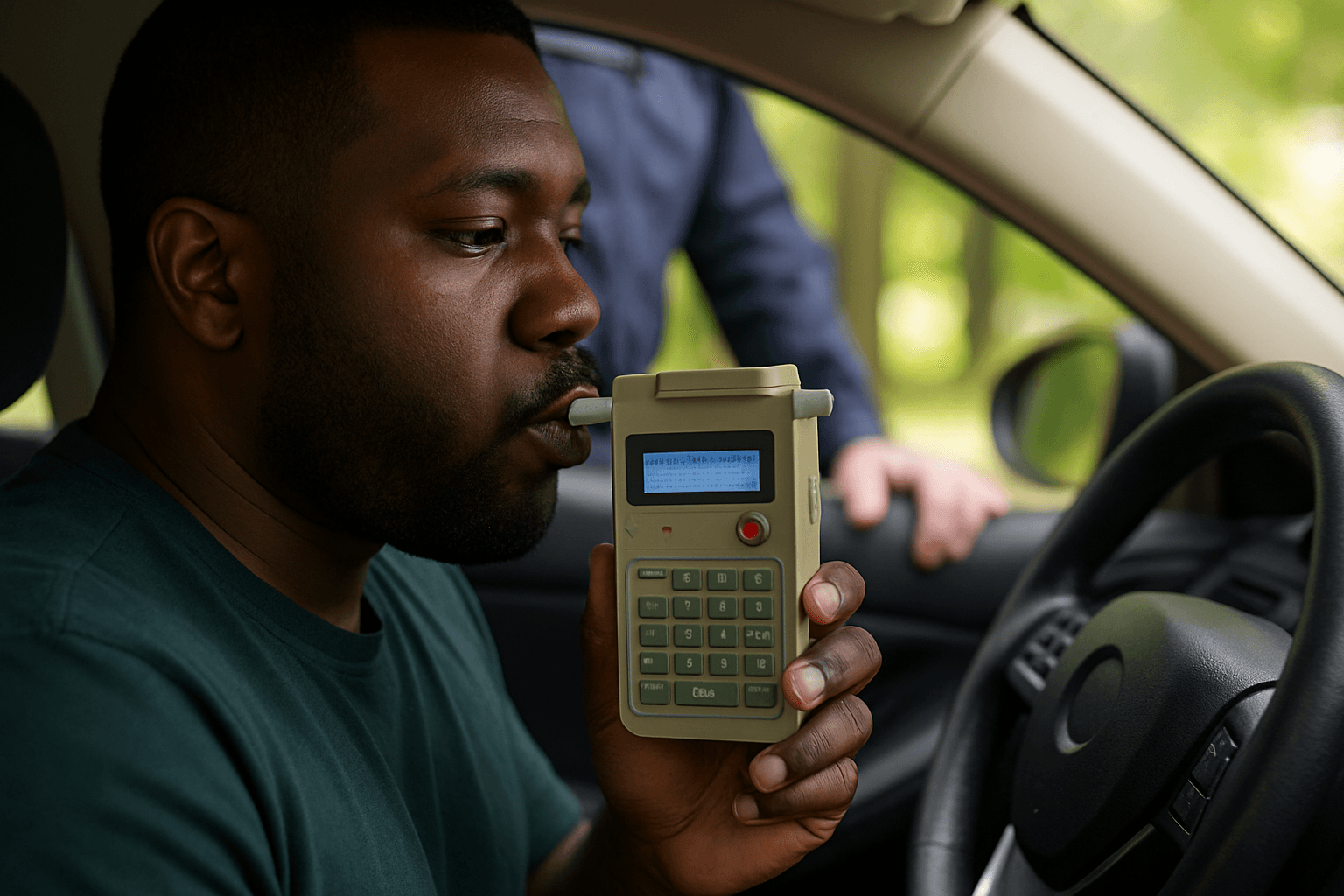
Maryland's MVA approval doesn't guarantee insurance placement. Most standard carriers decline restricted-license applicants, and the non-standard market's pricing reflects FR-44 filing volume risk.
Why Standard Carriers Decline Maryland Restricted License Holders
Maryland MVA grants restricted licenses after DUI or points-based suspensions, but most standard-tier carriers (State Farm, Allstate, Nationwide) decline to write new policies for drivers holding restricted status. The restriction itself flags elevated risk in underwriting systems before any violation history is reviewed.
Carriers distinguish between renewing an existing policy after a customer receives a restricted license versus writing a new policy for someone applying with one already in force. Renewal underwriting applies different thresholds than new-business underwriting. A driver whose State Farm policy renews after restricted-license approval may keep coverage; a driver shopping for new coverage with a restricted license active will be declined by State Farm's new-business underwriters in most regions.
The gap appears during the MVA hearing or application process. Drivers prepare for restricted-license approval costs — the $45 reinstatement fee, ignition interlock installation averaging $150–$200, monthly interlock maintenance around $75 — but discover their current carrier non-renewed them at suspension or that no standard carrier will quote them with restricted status active. Maryland's electronic insurance verification system (MIVE) reports policy status to MVA in real time, so a lapse triggers immediate registration suspension and restricted-license revocation.
Which Carriers Actually Write Maryland Restricted License Policies
Six non-standard carriers actively write Maryland policies for restricted-license holders: Bristol West, Dairyland, GAINSCO, Geico (non-standard division), National General, and The General. All six file FR-44 certificates for DUI-related restricted licenses and SR-22 for other suspension causes as required by Maryland Transportation Article §17-106.
Bristol West and Dairyland operate through appointed agents only; direct-to-consumer quotes are unavailable. GAINSCO, The General, and National General offer online quotes but route restricted-license applicants to phone underwriting for ignition-interlock verification. Geico's non-standard division (separate from its preferred tier) writes restricted-license policies online with FR-44 filing confirmation within 24 hours of policy binding.
Progressive writes SR-22 policies in Maryland but restricts FR-44 filings to its non-standard subsidiary, which does not operate in Maryland. This creates a coverage gap for Progressive customers whose DUI suspension requires FR-44: they must move to a different carrier entirely. State Farm files SR-22 for existing customers in good standing but declines new applicants with active restricted licenses.
Compare car insurance rates in your state
Get quotes from licensed carriers — no obligation, no spam, results in minutes.
Get Your Free Quote✓ No Obligation Required✓ Licensed Carriers Only✓ Available Nationwide✓ Free to Compare
FR-44 Versus SR-22 Filing Requirements for Maryland Restricted Licenses
Maryland requires FR-44 certificates for DUI, DWI, and refusal-related restricted licenses; SR-22 for uninsured-motorist, points-based, and failure-to-appear suspensions. FR-44 mandates double the state minimum liability limits: $60,000 bodily injury per person, $120,000 per accident, $30,000 property damage. SR-22 certifies the standard $30,000/$60,000/$15,000 minimums.
The filing type determines which carriers can write the policy. All six non-standard carriers listed above file both SR-22 and FR-44. Standard carriers that file SR-22 (State Farm, Geico standard tier) do not file FR-44 in Maryland, creating a trap for drivers whose MVA-approved restricted license carries an FR-44 requirement they discover only when requesting the certificate from their current carrier.
FR-44 premiums run 40–60% higher than SR-22 premiums for identical coverage because the higher liability limits increase the carrier's per-claim exposure. A Maryland driver with a clean record except for the DUI triggering restricted-license eligibility pays approximately $180–$240/month for minimum FR-44 coverage with a non-standard carrier. The same driver with SR-22 filing (points-based suspension, no DUI) pays $110–$160/month. Both figures exclude ignition interlock lease costs and reflect six-month policy terms paid monthly.
Non-Standard Carrier Pricing Structure After Restricted License Approval
Non-standard carriers price Maryland restricted-license policies using base rates 2–3× higher than standard-tier carriers before violation surcharges apply. A standard-tier Geico quote for minimum liability might run $65–$85/month for a 35-year-old driver with no violations. The same driver applying with an active restricted license and FR-44 requirement pays $180–$240/month through Geico's non-standard division or another non-standard carrier.
The pricing reflects three underwriting factors: elevated risk from the violation that triggered suspension, filing-volume risk from the three-year FR-44 certificate requirement, and restricted-license status itself as a gating filter. Carriers apply these surcharges additively, not as a single multiplier. The DUI surcharge might add 80% to base premium, the FR-44 filing adds another 40%, and restricted-license status removes multi-policy and tenure discounts that reduce standard-tier pricing.
Maryland law prohibits carriers from non-renewing policies solely because of restricted-license status under Maryland Insurance Article §19-513, but the statute applies only to renewals, not new business. A carrier declining a new applicant with restricted-license status violates no regulation. The protection matters for drivers whose policies were active before suspension — they retain renewability rights their suspended-license peers shopping for new coverage lack.
Ignition Interlock Requirements and Insurance Carrier Verification
Maryland MVA requires ignition interlock enrollment before granting restricted licenses for DUI, DWI, and refusal suspensions. The interlock must remain installed throughout the restricted-license period, typically matching the FR-44 filing duration of three years. Carriers verify interlock installation through MVA's Ignition Interlock System Program (IISP) database before binding policies with FR-44 certificates.
Carriers decline to file FR-44 if IISP records show no active interlock device associated with the driver's license number. This verification happens at quote finalization, not at the initial online quote stage, creating a binding failure for drivers who request quotes before completing interlock installation. The General and GAINSCO route these applicants to phone underwriting to confirm installation timelines; Dairyland and Bristol West require proof of installation (installer receipt or IISP confirmation letter) before issuing the policy.
Interlock lease costs run separately from insurance premiums. Installation averages $150–$200, monthly lease and calibration fees run $75–$90, and removal at program completion costs $50–$75. Over a three-year restricted-license period, total interlock costs reach $2,850–$3,440. Insurance premiums for FR-44 coverage over the same period total approximately $6,480–$8,640 at $180–$240/month. The combined cost stack — MVA fees, interlock, insurance — exceeds $9,300 before gasoline, maintenance, or vehicle ownership costs.
When to Apply for Insurance Before or After MVA Restricted License Hearing
Apply for non-standard insurance quotes before the MVA Office of Administrative Hearings hearing or restricted-license application submission. Proof of insurance is not required at the hearing itself, but demonstrating the ability to obtain FR-44 or SR-22 coverage strengthens the case for approval. Hearing officers occasionally deny restricted-license petitions when employment or medical necessity is documented but insurance availability is not addressed.
Obtain binding quotes from two non-standard carriers before the hearing. Do not bind the policy until the MVA issues the restricted license — coverage effective dates must align with the restricted-license start date to avoid paying premiums during the hard suspension period when driving is prohibited. Binding a policy 30 days before restricted-license approval wastes one month of premium with no driving privileges.
If the hearing results in denial, cancel the quote before the effective date. Non-standard carriers allow quote cancellation without penalty if done before the policy effective date. Once the restricted license is approved, bind the policy with an effective date matching the restricted-license issue date, request FR-44 or SR-22 filing immediately, and provide the filed certificate to MVA within 10 days. Maryland MVA revokes restricted licenses if proof of continuous insurance lapses at any point during the restriction period.