Louisiana requires SR-22 filing and ignition interlock enrollment before issuing a restricted license after DUI—but most drivers don't realize non-standard carriers dominate this space because standard carriers exit at the IID requirement, not the SR-22.
Why Standard Carriers Exit Louisiana Restricted License Cases Before SR-22
Louisiana Office of Motor Vehicles (OMV) requires ignition interlock device enrollment as a statutory precondition for restricted license issuance after DUI suspension under La. R.S. 32:378.2 and 32:415.1. SR-22 filing alone does not trigger automatic carrier exit. The IID requirement does.
Standard-tier carriers—Allstate, Farmers, Hartford, Liberty Mutual—underwrite to risk thresholds that treat mandatory IID enrollment as a tier-exit signal. These carriers will write SR-22 policies for uninsured motorist suspensions, points accumulation, and even first-offense reckless driving. They exit when the state mandates ignition interlock as a license condition. The device signals court-adjudicated impairment, not administrative error.
Non-standard carriers structure underwriting differently. Bristol West, Direct Auto, The General, and National General write policies explicitly designed for drivers subject to both SR-22 and IID requirements simultaneously. Their actuarial models price the combined risk rather than exit the market. This creates a carrier landscape where restricted license applicants have narrower options than SR-22 filers without IID mandates.
Louisiana's 90-Day Hard Suspension Floor and the Carrier Relationship Window
Louisiana imposes a mandatory 90-day hard suspension period before restricted license eligibility on first-offense DUI convictions under La. R.S. 32:415.1. No restricted driving is permitted during this window. The restricted license becomes available after 90 days served, contingent on IID installation, SR-22 filing, and OMV application approval.
Most drivers contact carriers during the hard suspension period to arrange coverage before their restricted license hearing. This timing creates friction. Carriers cannot issue SR-22 certificates until a policy is bound. Policies cannot bind until the applicant has a valid license number or a restricted license approval letter from OMV. Applicants without either document face a circular dependency: OMV requires proof of SR-22 filing to issue the restricted license, but carriers require the restricted license number or approval letter to bind the policy and file SR-22.
Non-standard carriers resolve this by accepting OMV hearing confirmation letters as binding triggers. SR-22 filing proceeds immediately after hearing approval, even before the physical restricted license card arrives. Standard carriers rarely accommodate this workflow. They require the license number from the physical card before binding, which delays SR-22 filing by 7 to 14 days and forces applicants to reschedule OMV appointments.
Compare car insurance rates in your state
Get quotes from licensed carriers — no obligation, no spam, results in minutes.
Get Your Free Quote✓ No Obligation Required✓ Licensed Carriers Only✓ Available Nationwide✓ Free to Compare
Non-Owner SR-22 Policies and Louisiana Restricted License Route Restrictions
Louisiana restricted licenses limit driving to employment, school, medical appointments, and other OMV-defined necessary purposes under La. R.S. 32:415.1. The license does not permit recreational driving, errands outside approved routes, or passenger transport unrelated to employment or medical care. Most restricted license holders do not own vehicles during suspension.
Non-owner SR-22 policies cover drivers operating borrowed or employer-owned vehicles without maintaining their own registration. Louisiana OMV accepts non-owner SR-22 certificates for restricted license issuance. The filing satisfies the state's proof of financial responsibility requirement even when the driver does not own a car.
Progressive, GEICO, USAA, The General, Bristol West, and Direct Auto write non-owner SR-22 policies in Louisiana. Monthly premiums for non-owner SR-22 policies range approximately $40–$75 for drivers with single DUI violations and no prior lapses. Standard vehicle SR-22 policies with IID requirements range $140–$220 monthly for liability-only coverage in the same risk profile. The $100 monthly differential makes non-owner policies financially attractive for drivers using employer vehicles or family cars exclusively within restricted-license route parameters.
Carrier SR-22 Filing Duration vs Louisiana OMV SR-22 Monitoring Period
Louisiana law requires SR-22 filing for three years after DUI conviction under La. R.S. 32:415.1 and implied consent statutes. The three-year clock starts on the conviction date, not the restricted license issuance date or the SR-22 filing date. Drivers who delay restricted license application extend their total SR-22 obligation period beyond the suspension term.
Carriers issue SR-22 certificates with policy effective dates, not retroactive filing dates. If a driver is convicted January 2024 but does not apply for a restricted license until July 2024, the carrier files SR-22 in July 2024. Louisiana OMV monitors SR-22 status from the filing date forward, but the statutory three-year requirement runs from the January 2024 conviction. The driver must maintain SR-22 coverage until January 2027 regardless of when filing began.
Carriers do not track statutory end dates. They track policy renewal cycles. Drivers must notify their carrier explicitly when the statutory SR-22 period expires to remove the filing. Otherwise, SR-22 remains attached to the policy indefinitely, and lapses in year four or five still trigger OMV notification even though the legal requirement has ended. Non-standard carriers occasionally remove SR-22 filing automatically at three years if the conviction date is documented in underwriting records. Standard carriers rarely do.
IID Monthly Cost Stack and Carrier Premium Interaction
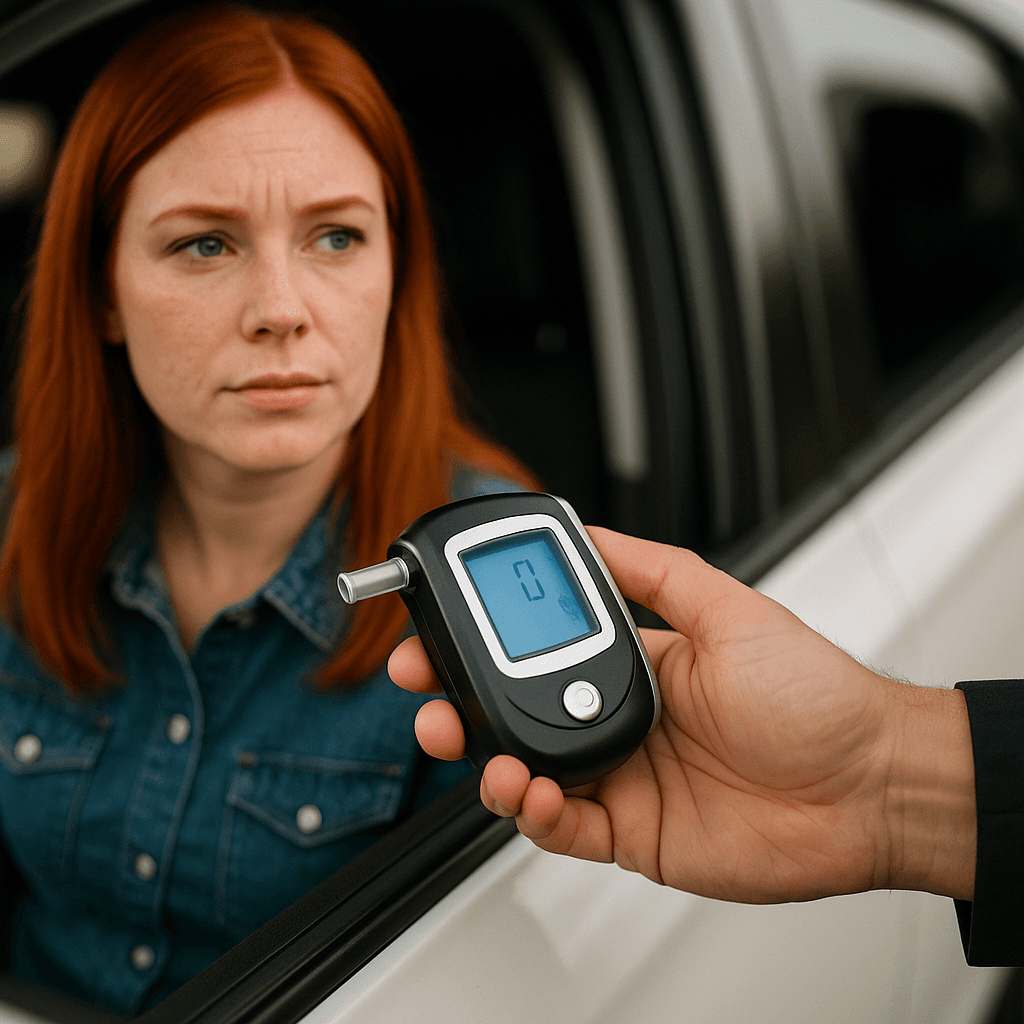
Ignition interlock device installation in Louisiana costs approximately $75–$150 upfront, with monthly monitoring fees of $60–$90. The device vendor reports compliance data directly to Louisiana OMV. Missed calibration appointments, failed breath tests, or device tampering trigger automatic OMV notification and restricted license revocation without court hearing.
Carriers do not reduce premiums when IID is installed. The device reduces recidivism risk in actuarial models, but Louisiana law mandates IID as a license condition, not as an optional telematics program. Carriers price the underlying DUI conviction risk, not the device itself. Some drivers expect premium credits for IID enrollment based on comparison to voluntary telematics programs. No such credit structure exists in Louisiana restricted license underwriting.
The combined monthly cost for restricted license driving after DUI in Louisiana is approximately $200–$310: $140–$220 for SR-22 vehicle liability coverage, $60–$90 for IID monitoring. Non-owner SR-22 policies reduce the insurance portion to $40–$75 monthly, lowering the total stack to $100–$165. Drivers using non-owner policies and employer vehicles save approximately $100–$145 monthly compared to standard vehicle coverage during the restricted license period. This calculation assumes liability-only coverage; collision and comprehensive add $80–$150 monthly depending on vehicle value.
What Happens When a Restricted License Holder's SR-22 Lapses
Louisiana OMV receives electronic notification from carriers within 24 hours of policy cancellation or lapse under the Louisiana Insurance Verification System (LAIVS) governed by La. R.S. 32:863.1. SR-22 lapse during an active restricted license period triggers automatic license suspension without advance notice. The driver's restricted license becomes invalid immediately.
Reinstatement after SR-22 lapse requires three actions: obtaining new SR-22 coverage from a willing carrier, paying a $60 OMV reinstatement fee under La. R.S. 32:415.1, and reapplying for restricted license privileges. The original restricted license approval does not carry forward. OMV treats the lapse as a new suspension event. Drivers must attend a new OMV hearing and provide updated documentation of employment, IID compliance, and SR-22 filing.
Carriers underwrite lapsed-SR-22 drivers as higher risk than first-time SR-22 filers. Non-standard carriers accept lapsed-SR-22 applications but apply surcharges of 15–30 percent over base SR-22 rates. Standard carriers that exited at the IID requirement do not re-enter after lapse. The carrier pool narrows further. Drivers who lapse SR-22 twice within a three-year period are typically limited to The General, Direct Auto, and Bristol West exclusively. Progressive and GEICO exit after second lapse in Louisiana restricted license contexts.
Finding Coverage That Meets Louisiana OMV Restricted License Requirements
Louisiana restricted license applicants need carriers that write both SR-22 and IID-mandated policies simultaneously, accept OMV hearing confirmation letters as binding triggers, and file electronically with Louisiana OMV through LAIVS. Not all carriers advertising SR-22 coverage meet all three criteria.
Start with non-standard carriers: Bristol West, Direct Auto, The General, National General. These carriers structure underwriting for Louisiana restricted license cases specifically. Request quotes as "restricted license with SR-22 and IID" rather than "SR-22 only" to ensure the underwriter applies the correct risk tier. If you do not own a vehicle, request non-owner SR-22 quotes explicitly.
Verify the carrier files SR-22 electronically with Louisiana OMV before binding the policy. Paper SR-22 certificates delay OMV processing by 10 to 21 days and risk missing restricted license hearing deadlines. Electronic filing posts to OMV systems within 24 hours. Confirm the policy effective date precedes your scheduled OMV restricted license hearing by at least 48 hours to allow filing transmission and OMV database update.