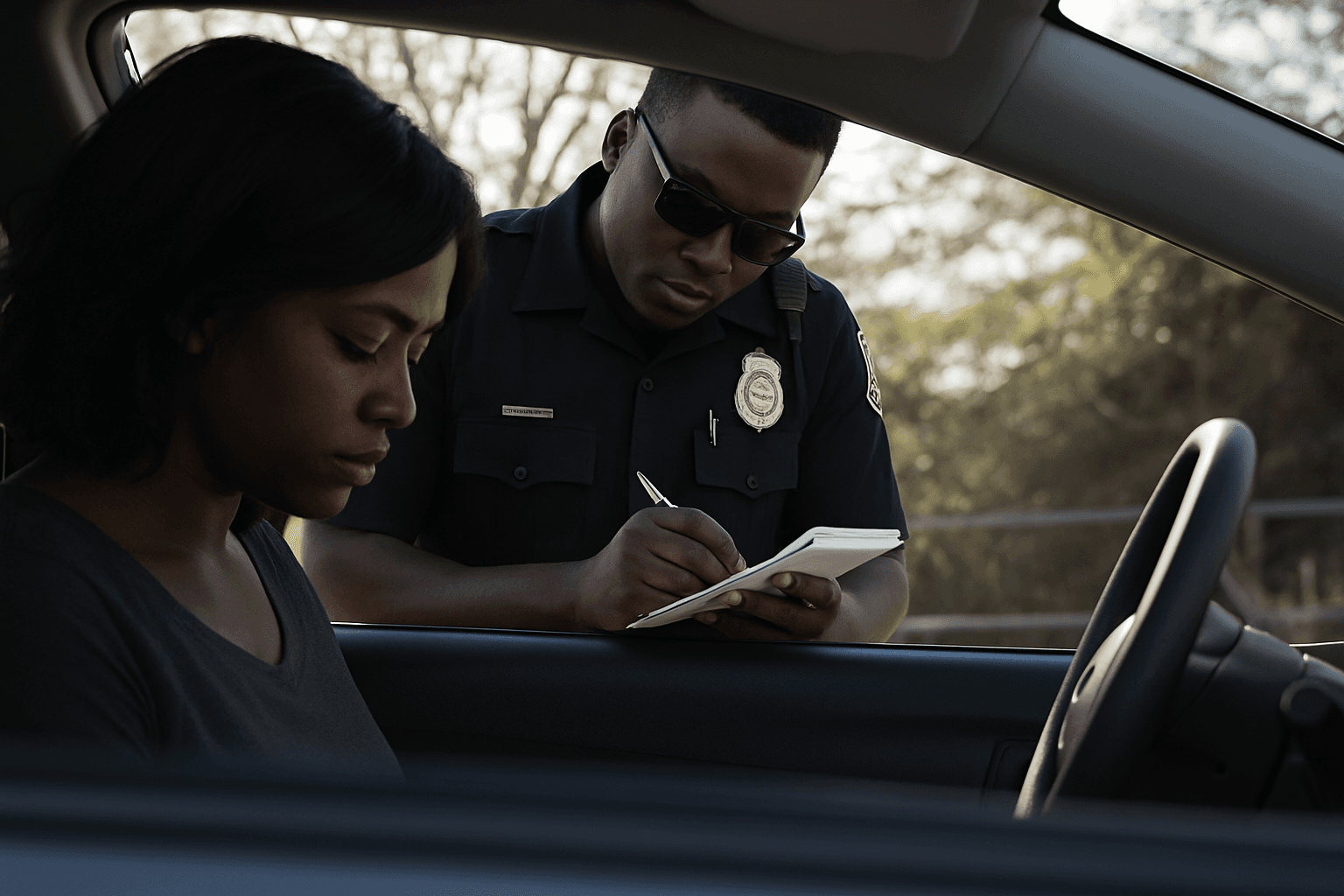
Alabama circuit courts grant restricted licenses before ALEA reinstates your full license, but the approval requires SR-22 proof—and most drivers don't realize the non-standard tier exists specifically for this stage.
Why Alabama's Court-Based Hardship Process Creates a Non-Standard Insurance Market
Alabama requires suspended drivers to petition a circuit court for a restricted license, not ALEA's Driver License Division. The petition requires SR-22 proof of insurance before the judge signs the order, which means you need coverage before you legally drive again.
Most standard carriers won't write policies for active-suspension drivers. State Farm and Allstate will file SR-22 for existing customers after DUI conviction, but they won't write new policies for someone whose license is currently suspended. That gap creates the non-standard tier.
Non-standard carriers specialize in writing policies for suspended drivers waiting for court approval. Dairyland, The General, Bristol West, GAINSCO, Direct Auto, and Acceptance operate in Alabama specifically for this stage. They charge higher premiums because the risk pool includes DUI filers, uninsured-motorist violators, and points-accumulation cases, but they write the policy before reinstatement—which is what the circuit court petition requires.
What the Circuit Court Petition Actually Requires From Your Insurer
The circuit court wants three insurance documents in your restricted license petition: an SR-22 certificate filed with ALEA, a declarations page showing liability limits at or above Alabama's $25,000/$50,000/$25,000 minimums, and proof the policy effective date precedes your petition filing date.
The SR-22 filing alone isn't enough. Judges deny petitions when the declarations page shows a future effective date or when the liability limits fall below the state minimum. Standard carriers sometimes issue SR-22 certificates for reinstatement-stage drivers but refuse to backdate effective dates for court petitions, leaving the applicant unable to submit a complete packet.
Non-standard carriers write policies with same-day or next-day effective dates specifically for petition deadlines. If your court date is in two weeks and you need SR-22 proof today, a non-standard carrier can issue both the policy and the certificate immediately. Standard carriers often require 7–10 business days for underwriting review before issuing any documents for suspended drivers.
Compare car insurance rates in your state
Get quotes from licensed carriers — no obligation, no spam, results in minutes.
Get Your Free Quote✓ No Obligation Required✓ Licensed Carriers Only✓ Available Nationwide✓ Free to Compare
How Alabama's Ignition Interlock Mandate Changes the Carrier Landscape
Alabama Code § 32-5A-191 requires ignition interlock devices on all DUI-related restricted licenses. The court order specifies IID installation before the restricted license becomes valid, and your insurer must be notified that an interlock is installed on the covered vehicle.
Most standard carriers won't insure interlock-equipped vehicles for suspended drivers. The combination of active suspension plus court-mandated IID triggers automatic underwriting decline at State Farm, Allstate, Farmers, and Hartford. USAA writes SR-22 for military members but excludes IID-equipped vehicles from new policies during suspension periods.
Dairyland, The General, and GAINSCO explicitly write policies for IID-equipped vehicles. Their underwriting guidelines accept interlock installation as a condition of coverage rather than a disqualification. Premium increases for IID cases run $40–$70/month above base non-standard rates, but the policy issue is guaranteed if you meet minimum liability requirements and pay the premium.
Non-Owner SR-22 for Alabama Restricted License Petitions Without a Vehicle
Alabama circuit courts grant restricted licenses for employment, education, medical appointments, and court-ordered obligations. The petition doesn't require vehicle ownership—judges approve walking-distance jobs, bus routes with employer pickup points, and carpooling arrangements—but the SR-22 filing is still mandatory.
Non-owner SR-22 policies provide liability coverage when you drive a borrowed vehicle or a company vehicle without owning a personal car. Dairyland, The General, and GAINSCO write non-owner policies in Alabama starting at $55–$85/month with SR-22 filing included. The policy satisfies the circuit court's insurance requirement even when the restricted license is used entirely for carpooling or employer-provided transportation.
Standard carriers rarely write non-owner policies for suspended drivers. Geico and Progressive offer non-owner coverage for clean-record drivers filling a coverage gap between vehicle sales, but both exclude active-suspension applicants from non-owner underwriting. Non-standard carriers treat non-owner SR-22 as a core product line specifically for restricted license and reinstatement cases.
Premium Structure Across Alabama's Non-Standard Tier During Restricted License Stage
Non-standard SR-22 premiums in Alabama for restricted license filers typically range from $140–$240/month depending on violation type, age, and county. DUI cases with IID requirements hit the upper end. Uninsured-motorist suspensions without collision history land near the lower end. Points-accumulation cases fall in the middle.
The premium includes three components: base liability coverage at state minimums, the SR-22 filing fee (typically $25–$50 as a one-time charge processed by the carrier), and the non-standard tier risk adjustment. That risk adjustment runs 60–120% above standard rates because the non-standard pool includes only suspended drivers, recent violators, and reinstatement cases.
Estimates based on available industry data; individual rates vary by driving history, vehicle, coverage selections, and location. Quote three carriers before selecting—Dairyland's rate for a 32-year-old with DUI suspension in Mobile may differ by $80/month from The General's rate for the same profile, even though both operate in the same non-standard tier.
What Happens to Your Non-Standard Policy After Full Reinstatement
ALEA requires SR-22 filing for three years following DUI-related revocations. The circuit court's restricted license order ends when ALEA reinstates your full license—typically after the suspension period expires and you pay the $275 base reinstatement fee plus the $200 DUI-specific fee—but the SR-22 filing requirement continues for the full three years.
Your non-standard carrier will continue the policy and the SR-22 filing after reinstatement unless you affirmatively cancel and move to a different carrier. Most non-standard carriers don't reduce premiums automatically when reinstatement occurs—the rate structure assumes the full three-year SR-22 filing period, not just the restricted license stage.
After six months of clean driving on a reinstated license, shop standard carriers again. State Farm, Allstate, and Progressive will quote reinstated drivers with SR-22 requirements as long as no new violations appear during the restricted license period. Standard-tier rates with SR-22 typically run $95–$160/month in Alabama, which is 30–50% below non-standard rates for equivalent coverage. You'll carry the SR-22 filing with you when you switch carriers—the new carrier simply files a new SR-22 certificate with ALEA to replace the old one.