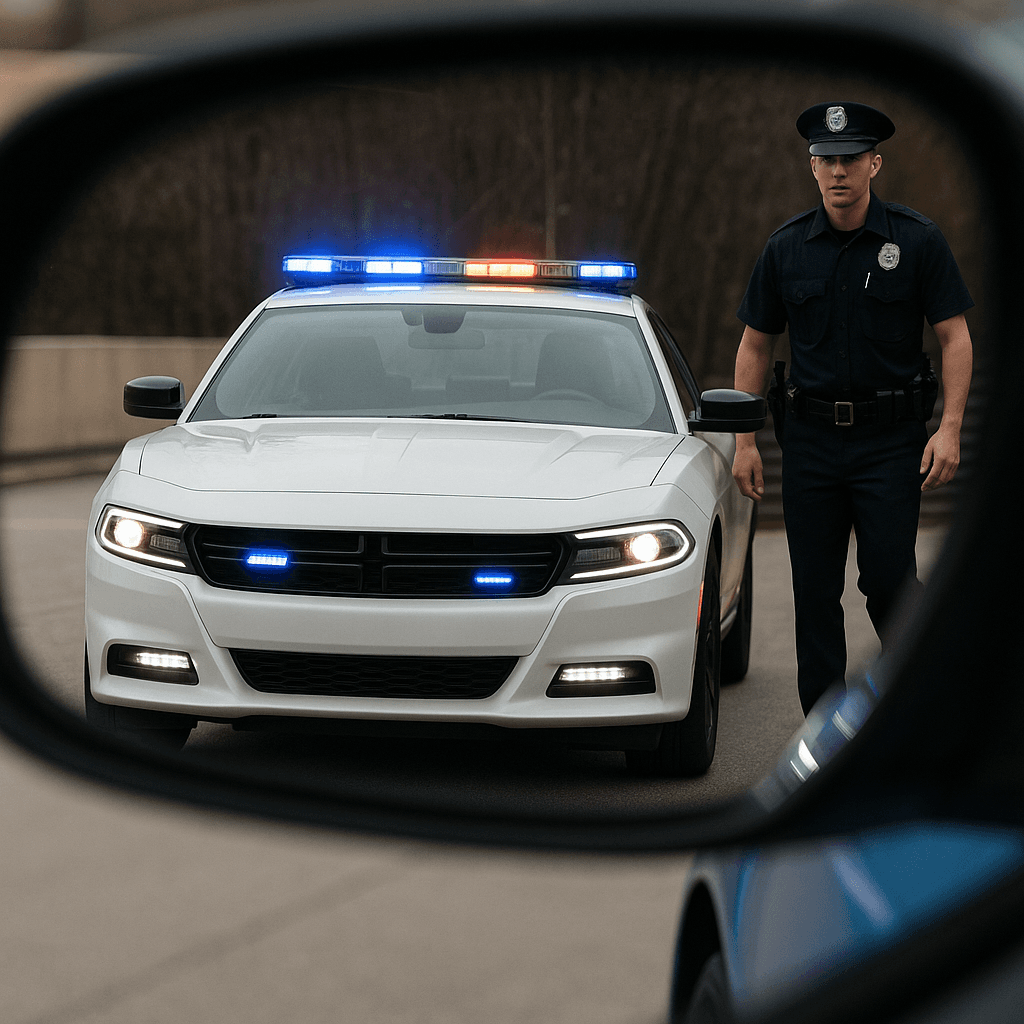
Indiana offers two separate routes to probationary driving privileges — BMV administrative and court petition under IC 9-30-16 — and which path you take determines timeline, cost, restrictions, and ignition interlock requirements.
Two Separate Probationary License Systems in Indiana
Indiana operates two distinct probationary license programs under different statutes: BMV-issued probationary licenses for administrative suspensions, and court-ordered Specialized Driving Privileges (SDP) under IC 9-30-16 for OWI and HTV cases. The route your suspension requires depends on who suspended your license — the Bureau of Motor Vehicles or a court — not just the violation itself.
BMV administrative suspensions trigger when the agency suspends your license for failing a chemical test, refusing a test under IC 9-30-6, accumulating excessive points, driving uninsured under IC 9-30-4, or insurance lapse under IC 9-25. The BMV handles these suspensions directly through its own hardship application process. You apply through the BMV, the BMV reviews your petition, and the BMV issues the probationary license if approved.
Court-ordered suspensions trigger when a judge suspends your license as part of a criminal sentence — most commonly OWI convictions under IC 9-30-5 or Habitual Traffic Violator (HTV) declarations under IC 9-30-10. For these suspensions, you petition the court that imposed the suspension for Specialized Driving Privileges, not the BMV. The court issues the order; the BMV processes it. The distinction matters because court-ordered SDP petitions can include ignition interlock requirements, different restriction scopes, and separate fee structures.
When the BMV Path Applies
The BMV administrative path applies when your suspension originates from BMV enforcement action, not a court sentence. Chemical test failures and refusals under IC 9-30-6 trigger 180-day administrative suspensions for first offenses — longer for repeat cases — and the BMV processes these directly. Points accumulation suspensions follow BMV scoring thresholds: 20 points in two years triggers suspension under IC 9-24-9. Uninsured-at-fault accidents under IC 9-30-4 produce BMV suspensions until you file SR-22 proof of insurance and pay reinstatement fees.
For BMV-path suspensions, you submit a probationary license application to the BMV district office covering your county. The application requires proof of employment or essential need (medical appointments, education, religious activities), SR-22 insurance filing, and completed BMV forms. Application fees vary by case type; processing typically takes 10 to 20 business days depending on office volume and whether additional documentation is requested. The BMV reviews the petition and either approves the probationary license with specific route and time restrictions, or denies it with written justification.
BMV-issued probationary licenses restrict driving to approved purposes only: work commute, medical appointments, school attendance, court-ordered programs, and religious services. The license specifies exact routes and permitted hours. Driving outside those parameters violates the license terms and triggers immediate revocation plus additional suspension time. SR-22 proof of financial responsibility is mandatory for all BMV probationary licenses, regardless of violation type, and must remain active throughout the suspension period.
Compare car insurance rates in your state
Get quotes from licensed carriers — no obligation, no spam, results in minutes.
Get Your Free Quote✓ No Obligation Required✓ Licensed Carriers Only✓ Available Nationwide✓ Free to Compare
When the Court Path Applies
The court petition path applies when a judge suspends your license as part of a criminal sentence. OWI convictions produce court-ordered suspensions under IC 9-30-5: first offense typically 180 days to two years depending on BAC level and aggravating factors, second offense two years, third offense 10 years. Habitual Traffic Violator declarations under IC 9-30-10 produce five-year or 10-year suspensions depending on the underlying convictions. These suspensions originate in court, and only the court that imposed the suspension can grant Specialized Driving Privileges.
You petition the convicting court for SDP by filing a motion through the court clerk. The motion must include proof of employment or essential hardship, evidence of SR-22 insurance coverage, an affidavit documenting your need for driving privileges, and in many cases a completed substance abuse evaluation or proof of DUI education enrollment. The court schedules a hearing — typically 30 to 60 days from filing — where the judge reviews the petition, hears from the prosecutor, and decides whether to grant SDP and under what conditions.
IC 9-30-16 grants judges broad discretion to impose conditions on SDP: ignition interlock device installation and maintenance, restricted driving hours, limited geographic zones, continued substance abuse treatment, random testing, or community service. For OWI cases with BAC over 0.15 or repeat offenses, ignition interlock is almost always required as a condition of SDP. The court order specifies all restrictions, the duration of SDP, and the consequences of violation. Once the judge signs the order, you submit it to the BMV for processing and license issuance.
How the Two Paths Differ in Practice
The BMV path processes faster but applies narrower restrictions. BMV probationary licenses typically specify exact employer addresses, exact routes between home and work, and exact permitted hours — the BMV defines these parameters administratively. Court-ordered SDP allows judges to craft broader restrictions tailored to individual cases: some judges permit any daytime driving within county boundaries, others restrict only by hours (no driving between 10 PM and 6 AM), others impose geographic zones (within 25 miles of residence). The trade-off is time: BMV applications resolve in weeks, court petitions take months.
Cost structures differ substantially. The BMV charges application fees (typically $150 to $250 depending on suspension type) plus the standard $250 reinstatement fee once the suspension period ends. Court petitions require filing fees (typically $100 to $200), attorney fees if you hire counsel to draft the motion and appear at the hearing ($500 to $1,500 in most counties), and ignition interlock installation plus monthly monitoring ($75 to $150/month). Over a two-year OWI suspension with IID-conditioned SDP, total costs can reach $3,000 to $5,000 when you include SR-22 premium increases.
Violation consequences also differ. Violating BMV probationary license terms triggers automatic revocation and extends your suspension period — the BMV treats violations as new offenses. Violating court-ordered SDP terms can trigger contempt-of-court charges, additional criminal penalties, and immediate license revocation with no further SDP eligibility during the remaining suspension. Judges view SDP violations seriously because the court extended trust by granting limited privileges; breaking that trust produces harsher consequences than administrative violations.
Which Path You Should Take
You do not choose between BMV and court paths based on preference — the suspension origin dictates the path. If the BMV suspended your license administratively (chemical test failure, points accumulation, uninsured driving), you apply through the BMV. If a court suspended your license as part of a criminal sentence (OWI conviction, HTV declaration), you petition that court for SDP.
Some drivers face both BMV and court suspensions simultaneously. An OWI arrest triggers immediate BMV administrative suspension for test failure or refusal under IC 9-30-6; six months later, the OWI conviction produces a separate court-ordered suspension under IC 9-30-5. In these cases, you address the BMV suspension first through the BMV probationary license process, then petition the court for SDP once the criminal case resolves. The court can structure SDP to run concurrently with remaining BMV suspension time if the judge approves that arrangement.
If you are uncertain which path applies to your case, contact the BMV district office in your county and ask who suspended your license — BMV administrative action or court order. The BMV's internal records show the suspension source and the controlling statute. Applying through the wrong channel wastes time and filing fees; the BMV will reject court-suspension probationary applications, and courts will dismiss BMV-suspension SDP petitions for lack of jurisdiction.
SR-22 Filing Requirements for Both Paths
Both BMV probationary licenses and court-ordered Specialized Driving Privileges require SR-22 proof of financial responsibility as a condition of issuance. The SR-22 filing verifies you carry at least Indiana's minimum liability coverage: $25,000 per person/$50,000 per accident bodily injury, $25,000 property damage. Your insurance carrier electronically files the SR-22 certificate with the BMV on your behalf when you purchase a policy that includes the filing.
SR-22 filing adds $15 to $50 to your policy cost depending on carrier, but the real cost driver is the premium increase from the underlying suspension. Drivers with OWI convictions, test refusals, or HTV status typically see premiums double or triple compared to clean-record rates — monthly costs of $140 to $250 are common for minimum liability coverage with SR-22 filing. Non-owner SR-22 policies cost less ($40 to $80/month) if you do not own a vehicle but need SR-22 on file to maintain probationary driving privileges.
The SR-22 filing must remain active for the entire suspension period plus any court-ordered extension. If your carrier cancels your policy for non-payment or you cancel coverage yourself, the carrier notifies the BMV electronically within 10 days, and the BMV immediately revokes your probationary license. Reinstating after SR-22 lapse requires purchasing a new policy, filing a new SR-22 certificate, paying additional BMV fees, and in court-SDP cases potentially returning to court to explain the lapse. Maintain continuous coverage from the day the probationary license is issued until the BMV confirms your suspension is fully cleared.
What Happens After the Probationary Period Ends
Once your full suspension period expires — not when the probationary license was issued, but when the original suspension term ends — you apply for full license reinstatement through the BMV. Reinstatement requires paying the $250 base fee (higher for OWI and HTV cases), submitting proof that SR-22 has been continuously active, and in some cases completing a driver safety course or passing written and road tests if your license was suspended for extended periods.
The probationary license does not shorten your suspension — it allows limited driving during the suspension period. If the court suspended your license for two years and granted SDP after six months, you still serve the full two years before reinstatement eligibility. The SDP simply permits work and essential driving during months 7 through 24. Once month 24 arrives, you pay reinstatement fees, submit final SR-22 proof, and the BMV issues your unrestricted license.
SR-22 filing requirements typically extend three years from the conviction date for OWI cases, measured separately from the suspension period itself. Even after reinstatement, you must maintain SR-22 coverage until the three-year filing period expires. Dropping coverage early triggers new BMV suspension under IC 9-25 financial responsibility rules, and you restart the entire reinstatement process. Verify your SR-22 end date with the BMV before canceling the filing — the insurance carrier does not track your legal obligation, only the policy term.