Illinois treats BAIID monitoring as a condition of your RDP, not just a device. Miss one report or drive outside permitted hours and the Secretary of State revokes the permit without a second hearing.
What the BAIID Requirement Actually Means for Your Illinois RDP
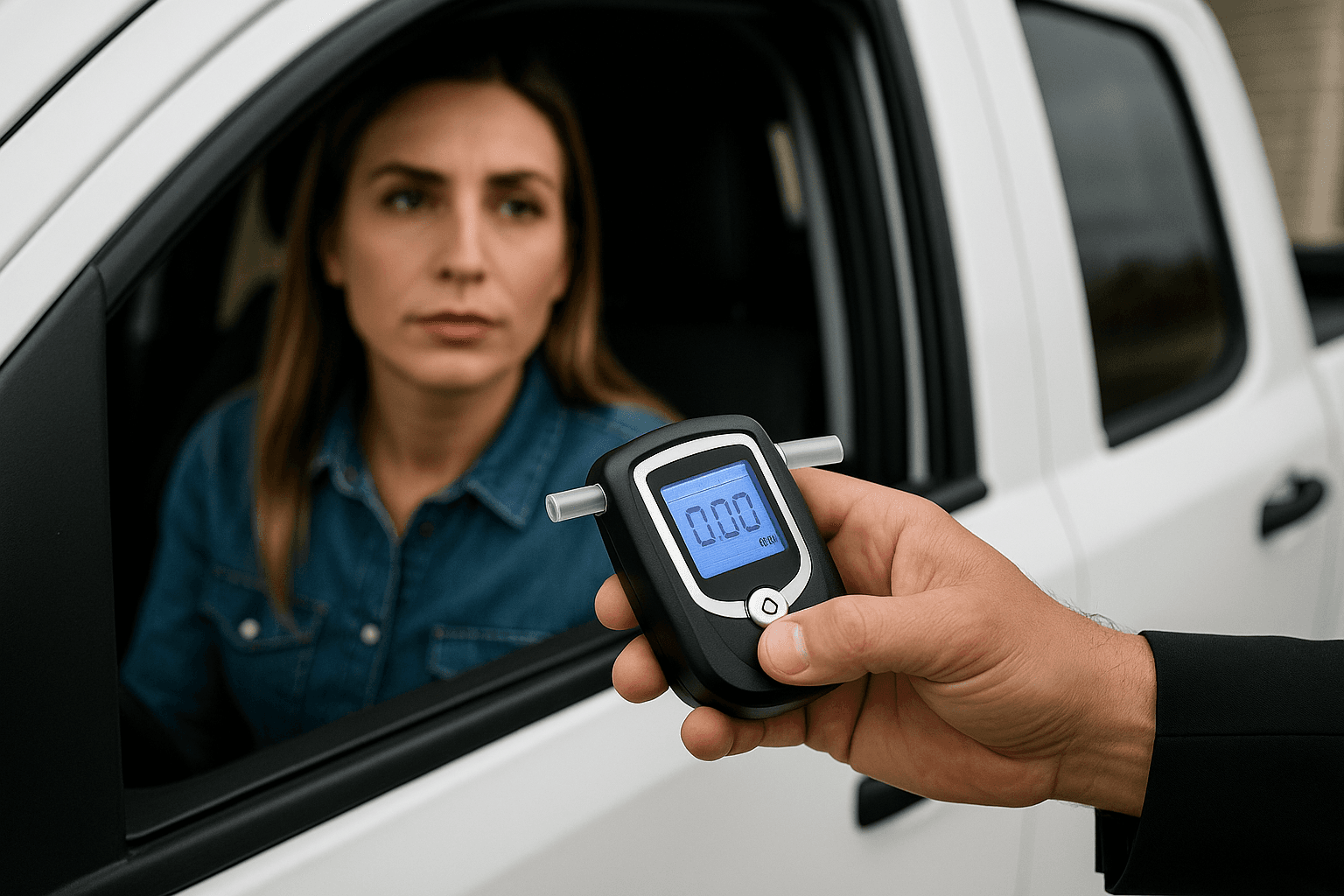
Illinois requires a Breath Alcohol Ignition Interlock Device (BAIID) for all DUI-related Restricted Driving Permits. The device prevents your vehicle from starting if it detects alcohol on your breath. This is not optional equipment: you cannot obtain an RDP after a DUI-related suspension or revocation without installing a BAIID first, and you must maintain it for the entire duration of your permit plus any post-reinstatement monitoring period the Secretary of State orders.
The BAIID is not just a mechanical barrier. Illinois uses it as a real-time compliance monitor. The device records every start attempt, every failed test, every missed rolling retest, and every attempt to tamper with or bypass the system. These records upload automatically to the Secretary of State's BAIID program office. A pattern of violations—failed tests, missed rolling retests, or driving outside your approved permit hours—triggers automatic revocation of your RDP without a second hearing.
You apply for your RDP through the Secretary of State's Safety and Financial Responsibility Division, either at a formal hearing (required for most DUI revocations) or an informal hearing (available for some first-offense statutory summary suspensions after the mandatory hard suspension period). The Secretary of State approves your permit with specific route, time, and purpose restrictions. Only after you receive that approval can you install the BAIID and begin driving under the permit. Installing the device before receiving approval does not accelerate the process.
Installing the BAIID: Approved Providers and Costs
Illinois maintains a list of approved BAIID service providers. You must choose a provider from that list—devices installed by non-approved vendors will not be recognized by the Secretary of State, and you will not receive credit for compliance. Most approved providers charge between $95 and $125 for installation, then $75 to $100 per month for monitoring and calibration. Installation typically takes 60 to 90 minutes at the provider's service center.
After installation, the provider submits an installation certificate to the Secretary of State electronically. This certificate is required before you can legally drive under your RDP. Until the Secretary of State confirms receipt of that certificate, driving—even with the device installed—violates the terms of your suspension and can result in criminal charges for driving while suspended.
The device requires calibration every 60 days. You must return to an approved service center for calibration within the scheduled window. Missing a calibration appointment is recorded as a violation and reported to the Secretary of State. If you miss two consecutive calibration appointments, your RDP is typically revoked automatically.
Compare car insurance rates in your state
Get quotes from licensed carriers — no obligation, no spam, results in minutes.
Get Your Free Quote✓ No Obligation Required✓ Licensed Carriers Only✓ Available Nationwide✓ Free to Compare
How BAIID Monitoring Works and What Gets Reported
The BAIID records every breath test you take before starting the vehicle and every rolling retest it prompts while you are driving. A failed startup test—any reading above 0.025 BAC—is recorded. A missed or failed rolling retest is recorded. An attempt to start the vehicle outside your approved permit hours is recorded. All of these data points upload to the Secretary of State when you bring the device in for calibration.
The Secretary of State reviews these reports continuously. A single failed test does not automatically revoke your permit, but a pattern of violations will. The threshold varies by case and hearing officer, but most drivers who accumulate three or more failed tests, missed rolling retests, or out-of-hours driving events within a 90-day period face revocation proceedings. The Secretary of State does not send a warning letter before revoking your permit—you receive notice after the revocation has already occurred.
If your BAIID detects alcohol during a rolling retest, the device does not shut off your engine while you are driving. Instead, it records the violation, activates the vehicle's horn and lights until you turn off the ignition, and reports the event at your next calibration. That violation becomes part of your compliance record and can be used as evidence in a future revocation hearing.
Driving Under Your RDP: Routes, Hours, and Purposes
Your RDP is not a general license. The Secretary of State issues it with specific restrictions: approved purposes (typically work, medical appointments, school, alcohol or drug treatment, and other essential activities you documented in your hearing), approved routes, and approved hours. These restrictions are printed on the permit. Driving outside those restrictions—even with the BAIID installed—violates the terms of your permit and can result in criminal charges.
If your employment or treatment schedule changes, you must file a petition with the Secretary of State to modify your permit restrictions before driving under the new schedule. Driving first and filing later is not acceptable. Law enforcement officers can verify your permit restrictions in real time during a traffic stop. If you are pulled over outside your approved hours or off your approved route, the officer can charge you with driving while suspended even if the BAIID is functioning correctly.
Your employer, medical provider, or treatment program may be contacted by the Secretary of State to verify that you are using the permit only for approved purposes. If the Secretary of State finds that you have been using the permit for personal errands, social visits, or other non-approved activities, your permit can be revoked without a hearing.
What Happens When You Violate BAIID or RDP Terms
Violations fall into two categories: BAIID compliance violations and permit restriction violations. BAIID violations include failed breath tests, missed rolling retests, missed calibration appointments, and tampering. Permit violations include driving outside approved hours, driving off approved routes, and using the vehicle for non-approved purposes. Both types trigger revocation proceedings.
If the Secretary of State revokes your RDP for BAIID violations, you do not automatically get a second hearing. The revocation is administrative and immediate. You can file a petition for reinstatement after the original revocation period ends, but you will need to demonstrate a sustained period of sobriety and compliance—typically 12 to 24 months—before the Secretary of State will consider issuing a new permit or reinstating your full license.
If you are charged with driving while suspended for violating RDP terms, that is a Class A misdemeanor in Illinois. A conviction carries up to 364 days in jail, fines up to $2,500, and an automatic extension of your revocation period. The Secretary of State will not consider any future RDP application until you have served the extended revocation period and completed any court-ordered requirements.
Insurance Requirements During the BAIID Period
Illinois requires SR-22 insurance for most DUI-related suspensions and revocations. The SR-22 is not a type of insurance—it is a certificate your insurer files with the Secretary of State confirming that you carry at least the state minimum liability coverage: $25,000 per person, $50,000 per accident for bodily injury, and $20,000 for property damage. You must maintain SR-22 coverage continuously for three years after reinstatement for most first-offense DUI cases, and longer for repeat offenses.
If your SR-22 lapses—if you cancel your policy, miss a payment, or your insurer cancels coverage—the Secretary of State receives electronic notification within 24 hours. Your RDP is suspended immediately, and you cannot drive legally until you file a new SR-22 and pay a reinstatement fee. Even a single day of lapsed SR-22 coverage restarts the three-year filing period in most cases.
Not all insurers write policies for drivers with DUI convictions and BAIID requirements. Carriers that specialize in high-risk coverage and offer SR-22 filing in Illinois include State Farm, Progressive, Geico, and non-standard carriers like Dairyland, Bristol West, and The General. Monthly premiums for BAIID-required policies typically range from $140 to $250, depending on your driving history, the number of prior DUI offenses, and whether you own a vehicle or need non-owner coverage.
Costs You Should Expect During the BAIID RDP Period
The total cost of maintaining an RDP with BAIID in Illinois includes multiple line items. The RDP application fee is $8. If you need a formal hearing, the hearing fee is typically $50. BAIID installation costs $95 to $125, and monthly monitoring and calibration fees run $75 to $100. Over a 12-month RDP period, BAIID costs alone total $995 to $1,325.
SR-22 filing fees are typically $25 to $50, paid once when your insurer files the certificate. Monthly insurance premiums for drivers with DUI convictions and BAIID requirements range from $140 to $250. Over a 12-month period, insurance costs total $1,680 to $3,000. If you need to reinstate your license after the RDP period ends, the reinstatement fee for a first DUI revocation is $500.
These costs stack. A driver maintaining an RDP with BAIID for 12 months should budget $2,700 to $4,500 total, not counting attorney fees if you hired legal representation for your hearing. If you violate your RDP terms and face revocation, you lose all progress and must restart the process—and pay all fees again—after serving the extended revocation period.