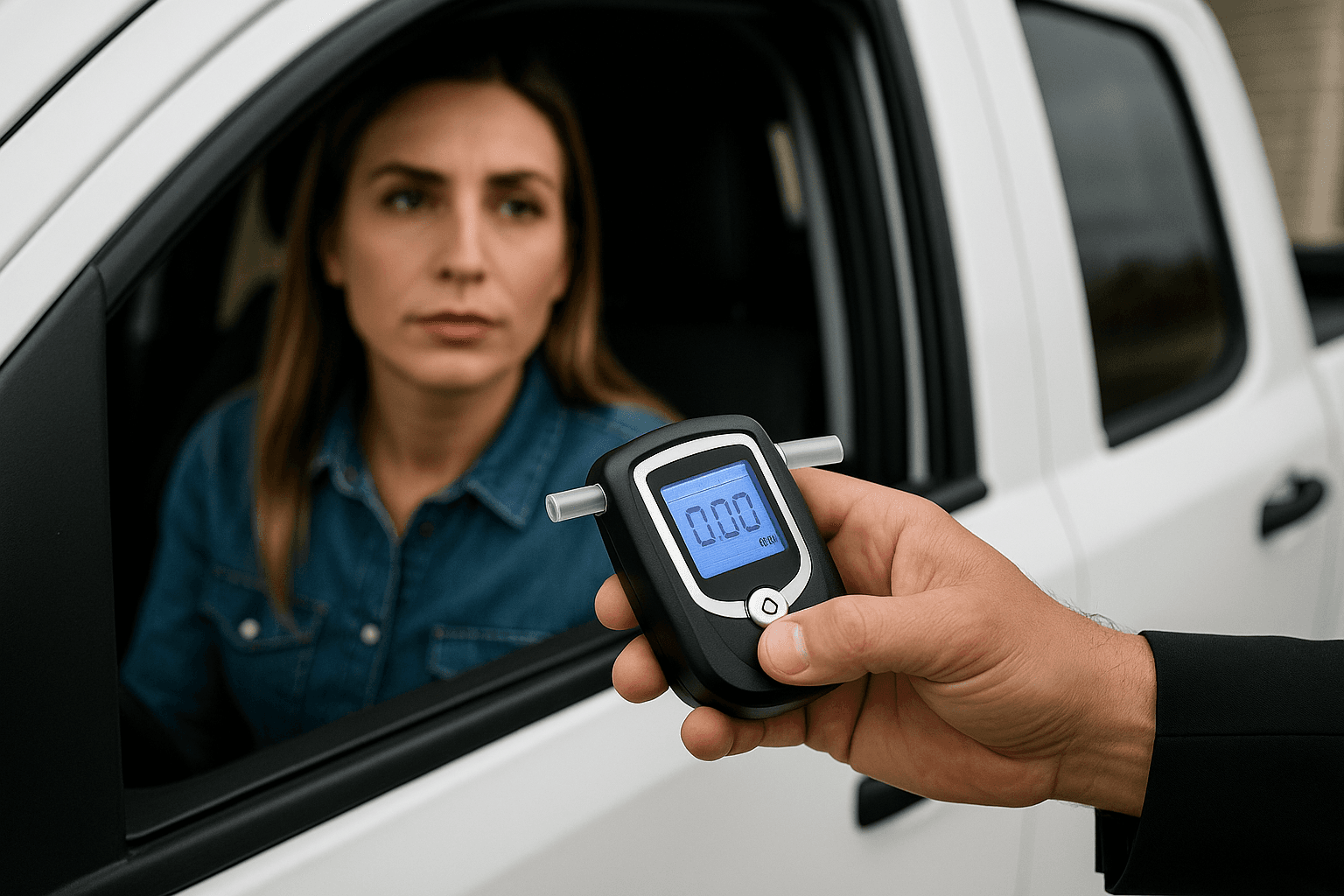
Illinois carriers treat BAIID-equipped RDP holders differently than standard restricted license holders — some refuse the policy altogether, others price it as high-risk DUI regardless of your underlying cause, and a handful write it correctly.
Why BAIID on Your RDP Triggers Carrier Pricing Confusion
Illinois requires a Breath Alcohol Ignition Interlock Device (BAIID) on all Restricted Driving Permits issued for DUI-related revocations. That requirement is statutory and applies regardless of whether your suspension stems from a first-offense statutory summary suspension, a second DUI revocation, or a judicial revocation following conviction. The device monitors every ignition event and reports violations to the Secretary of State.
Most carriers train underwriters to treat BAIID presence as a DUI marker. When you apply for coverage and disclose the device, the system flags your application as high-risk DUI even if your underlying suspension was uninsured driving, points accumulation, or unpaid tickets. The BAIID itself becomes the rating signal, not the violation history behind the RDP.
This creates a pricing mismatch. Non-DUI RDP holders who need BAIID coverage for administrative reasons face DUI-tier premiums without the underlying risk profile. Some carriers refuse the policy outright when BAIID appears on the application. Others write it but price it at 200-300% of standard rates, applying DUI surcharges and excluding multi-policy discounts.
The confusion stems from Illinois program architecture. DUI revocations require formal Secretary of State hearings and BAIID installation as a condition of RDP issuance. Non-DUI suspensions eligible for RDP — uninsured driving, points-based suspensions, certain administrative holds — sometimes require BAIID as well, depending on the hearing officer's discretion or prior violation history. Carriers cannot distinguish DUI-mandated BAIID from discretionary BAIID by device presence alone.
Which Carriers Write BAIID-Equipped RDP Policies Without DUI Pricing
Dairyland, Bristol West, and Progressive write BAIID-equipped RDP policies and rate them according to the underlying suspension cause rather than device presence. Dairyland prices uninsured-cause suspensions at non-standard tier rates without DUI surcharges even when BAIID is installed. Bristol West underwrites BAIID cases individually but does not automatically apply DUI pricing to non-DUI RDP holders. Progressive uses a tiered approach: first-offense statutory summary suspension applicants with BAIID face moderate surcharges; points-based or uninsured suspensions with BAIID face smaller increases.
Geico and State Farm accept BAIID-equipped RDP holders but apply conditional pricing. Geico writes the policy if your violation history shows no alcohol-related offenses in the past five years, pricing it as high-risk non-DUI. State Farm requires manual underwriting review when BAIID appears on an RDP application. The review checks Secretary of State records to confirm the underlying suspension cause. If records show DUI revocation, DUI pricing applies. If records show non-DUI suspension with discretionary BAIID, standard high-risk pricing applies without DUI surcharges.
National General, Infinity, and The General accept BAIID cases but price all device-equipped policies at DUI rates regardless of cause. Their underwriting systems do not differentiate discretionary BAIID from DUI-mandated BAIID. This pricing structure makes them poor fits for non-DUI RDP holders unless alternative quotes are unavailable.
Allstate, Liberty Mutual, and Farmers decline most BAIID-equipped RDP applications during the restriction period. Coverage becomes available after the RDP period ends and full license reinstatement is granted, assuming no additional violations occurred during restriction.
Compare car insurance rates in your state
Get quotes from licensed carriers — no obligation, no spam, results in minutes.
Get Your Free Quote✓ No Obligation Required✓ Licensed Carriers Only✓ Available Nationwide✓ Free to Compare
How to Frame Your Application to Avoid Automatic DUI Categorization
Disclose your RDP and BAIID requirement accurately on the application. Do not omit the device or restriction — carriers verify license status electronically through Secretary of State records, and application misrepresentation voids the policy retroactively. When the application prompts for suspension cause, select the most specific non-DUI option available: uninsured driving, points accumulation, administrative suspension, or other. Avoid selecting "alcohol-related" or "DUI" unless your suspension genuinely stems from DUI conviction or statutory summary suspension.
Request manual underwriting review if the online application auto-declines or returns a DUI-tier quote. Underwriters can pull Secretary of State records directly and confirm your suspension cause. Provide documentation showing the underlying suspension trigger: the original suspension notice, the RDP approval letter from the Secretary of State, and your driving abstract. The abstract shows violation codes and suspension reason in Illinois format, which trained underwriters can decode.
If your suspension stems from uninsured driving or points but the hearing officer required BAIID as a condition of RDP approval, explain that condition in writing to the underwriter. Some carriers treat discretionary BAIID differently from DUI-mandated BAIID once the distinction is documented. Others do not, but the manual review at least prevents automatic DUI categorization without human assessment.
Do not apply for coverage until after your RDP is issued and BAIID is installed. Carriers require active device monitoring before binding the policy. Applying before installation delays approval and complicates underwriting because the carrier cannot verify device serial number or installation vendor compliance.
What BAIID Installation Does to Your Premium Beyond Base DUI Pricing
BAIID installation itself costs $150–$200 upfront plus $80–$120 monthly monitoring fees paid directly to the device vendor. Illinois requires continuous monitoring for the full RDP period, which typically runs 6–12 months for first-offense DUI cases and 24–48 months for multiple-offense cases. The device vendor bills separately from your insurance carrier.
Carriers add policy-level fees for BAIID-equipped vehicles even when they price the underlying suspension correctly. These fees appear as endorsement charges, risk assessment surcharges, or equipment accommodation fees on the policy declaration. Dairyland adds $25–$40 per month. Bristol West adds $20–$35 per month. Progressive adds $15–$25 per month. These surcharges persist for the entire RDP restriction period and drop once you reinstate your full license and remove the device.
Some carriers require higher liability limits when BAIID is present. Illinois state minimums are $25,000 per person, $50,000 per accident for bodily injury, and $20,000 for property damage. Carriers writing BAIID policies sometimes mandate $50,000/$100,000/$50,000 or higher as a condition of coverage. Higher limits increase base premium before surcharges apply.
BAIID-equipped vehicles cannot be added to multi-car policies in most cases. Carriers separate the BAIID vehicle onto a standalone policy to isolate risk. This separation eliminates multi-car discounts, homeowner bundling discounts, and paperless billing credits that would otherwise apply. The combined impact — higher base premium, BAIID surcharge, eliminated discounts — typically doubles or triples premium compared to your pre-suspension rate.
How SR-22 Filing Interacts with BAIID Coverage Requirements
Illinois requires SR-22 filing for three years following DUI revocation, measured from reinstatement date, not conviction date. The SR-22 filing must remain active continuously during the RDP period and for the full three-year term after you reinstate your full license. If your BAIID-equipped RDP stems from DUI suspension, both requirements run concurrently: BAIID monitors device compliance during restriction, SR-22 monitors insurance compliance after reinstatement.
Carriers writing BAIID policies include SR-22 filing as a standard endorsement when the underlying suspension is DUI-related. The filing fee is $25–$50 at policy inception and $15–$25 at each renewal. The carrier transmits the SR-22 certificate electronically to the Secretary of State within 24 hours of policy binding. You do not file the SR-22 yourself — the carrier handles transmission.
Non-DUI suspensions sometimes require SR-22 even without BAIID. Uninsured driving suspensions in Illinois trigger SR-22 filing for three years post-reinstatement. Points-based suspensions and unpaid ticket suspensions typically do not require SR-22 unless the suspension lasted longer than six months or involved multiple violations. If your RDP includes BAIID but your suspension does not require SR-22, clarify that with your carrier at application. Some carriers assume BAIID presence means SR-22 is required and add the filing fee without verifying the Secretary of State's actual mandate.
If the carrier cancels your policy or you switch carriers mid-filing period, the outgoing carrier files an SR-26 cancellation notice with the Secretary of State. The state suspends your license again within 10 days unless a replacement SR-22 from your new carrier is on file before the cancellation processes. BAIID monitoring continues during any lapse, but the license suspension prohibits legal driving even with the device installed.
What Happens If Your Carrier Cancels Mid-RDP Period
Carriers can cancel BAIID-equipped RDP policies mid-term for nonpayment, device tampering reported by the vendor, or violation accumulation during the restriction period. When the carrier cancels, they file an SR-26 notice with the Secretary of State showing the policy end date. The state treats SR-26 filing as proof of insurance lapse and suspends your license within 10 days.
Your RDP does not automatically void when the carrier cancels, but driving without active insurance coverage during the RDP period violates the permit terms. The Secretary of State can revoke the RDP and extend your suspension period if they discover you drove without coverage after cancellation. Most formal RDP hearings include language requiring continuous insurance compliance as a condition of permit validity.
Device tampering — bypassing the BAIID, failing rolling retests, or accumulating lockouts — triggers vendor reports to the Secretary of State and the insurance carrier simultaneously. The carrier receives lockout data in real time through vendor integration. Three lockouts within 30 days or one tampering event typically triggers policy cancellation. The carrier does not wait for Secretary of State action; they cancel the policy immediately and file the SR-26.
If your policy cancels mid-term, you have 10 days to bind replacement coverage and file a new SR-22 before the Secretary of State processes the suspension. Dairyland, Bristol West, and Progressive write same-day replacement policies for mid-term cancellations if no tampering violations appear on the vendor report. The replacement carrier pulls your BAIID device serial number from the vendor and adds it to the new policy without requiring reinstallation.
When You Can Drop BAIID and How That Changes Your Coverage Options
Illinois requires BAIID for the full RDP restriction period specified in your hearing order. First-offense statutory summary suspension RDPs typically require 6–12 months of device monitoring. Second-offense and multiple-offense revocations require 24–60 months. The Secretary of State issues a device removal authorization letter once your monitoring period ends and your compliance record shows no violations.
You must present the removal authorization letter to your installation vendor to schedule device uninstallation. The vendor removes the device, certifies removal to the Secretary of State, and closes your monitoring account. Once removal is certified and your full license is reinstated, notify your insurance carrier immediately. The carrier removes the BAIID endorsement and associated surcharges at the next policy renewal.
Some carriers require proof of device removal before dropping the surcharge. Provide the vendor's removal certification letter and your updated driver's license showing full reinstatement status. Without documentation, the carrier may continue applying BAIID surcharges for months after the device is removed.
After BAIID removal and full license reinstatement, your coverage options expand significantly. Standard-tier carriers — Allstate, Liberty Mutual, Farmers, Travelers — become available if your violation history shows no additional offenses during restriction. Expect quotes 40–60% lower than BAIID-period premiums once the device surcharge and restriction-period risk loading drop off. SR-22 filing continues for the full three-year term post-reinstatement if your suspension was DUI-related, but the filing fee is minor compared to BAIID surcharges.