Illinois requires seven distinct documents to approve your Restricted Driving Permit application, and the Secretary of State hearing officer will deny your petition if even one is missing or improperly formatted.
What Documents Does Illinois Require for RDP Approval?
Illinois requires seven distinct documents to approve a Restricted Driving Permit: proof of SR-22 insurance, the completed Secretary of State RDP application form, the $8 application fee receipt, proof of hardship need (employment verification, medical appointment letters, or treatment program enrollment confirmation), any required evaluation documentation (alcohol/drug evaluation for DUI-related suspensions), the court order or suspension notice that triggered your license loss, and the approval order from your formal hearing before a Secretary of State hearing officer. The Secretary of State does not accept partial applications—missing even one document results in automatic denial.
The Secretary of State administers all driver licensing in Illinois, not a DMV. The Safety and Financial Responsibility Division processes RDP applications through a formal hearing system. DUI revocation RDPs require a formal hearing before a hearing officer; some non-DUI suspensions may be resolved via informal hearing, which is faster and less costly. First-time DUI offenders under statutory summary suspension may apply for an RDP after a mandatory 30-day hard suspension; those who refused chemical testing face a longer mandatory period before RDP eligibility.
Suspensions solely for unpaid fines or tolls typically require payment to lift the suspension—an RDP is generally not available as a workaround. Payment is the required path to reinstatement. Drivers with multiple DUI offenses face significantly elevated barriers, including longer mandatory suspension periods and more stringent evaluation requirements before RDP eligibility.
How to Obtain SR-22 Proof Before Your RDP Hearing
Illinois requires SR-22 insurance filing for most DUI-related suspensions and uninsured motorist violations. You must obtain SR-22 coverage before submitting your RDP application—the Secretary of State will not schedule a hearing until the filing appears in their system. Contact a carrier licensed to write SR-22 in Illinois: State Farm, GEICO, Progressive, Dairyland, The General, Bristol West, or USAA all file electronically. Non-owner SR-22 policies are available if you no longer own a vehicle.
The carrier files the SR-22 certificate directly with the Secretary of State. You receive a copy for your records, but the electronic filing is what the SOS verifies. Processing takes 3 to 5 business days after purchase. Do not submit your RDP application until the SR-22 appears in the Secretary of State's driver record system—you can verify this by requesting a driving abstract from the SOS website or by calling the Safety and Financial Responsibility Division at 217-782-2720.
Illinois requires SR-22 maintenance for 3 years post-reinstatement for most triggers. If the policy lapses or cancels, the carrier notifies the Secretary of State within 24 hours, and your RDP is revoked immediately. You must maintain continuous coverage for the entire filing period or restart the clock.
Compare car insurance rates in your state
Get quotes from licensed carriers — no obligation, no spam, results in minutes.
Get Your Free Quote✓ No Obligation Required✓ Licensed Carriers Only✓ Available Nationwide✓ Free to Compare
What Petition Forms and Fees Are Required for Illinois RDP Application?
The Illinois Secretary of State RDP application form is available at ilsos.gov under the Driver Services section. Download the current version—outdated forms are rejected. Complete every field: legal name matching your suspended license, driver's license number, date of birth, current address, suspension trigger details, and detailed hardship justification. The hardship section requires specific information: employer name, work address, work schedule, and supervisor contact for employment-based petitions; treatment facility name, address, appointment schedule, and counselor contact for alcohol/drug treatment petitions; school name, address, class schedule, and registrar contact for education petitions.
The $8 application fee is paid at the time of filing. Payment methods vary by filing location: some Secretary of State facilities accept cash, check, or money order; others require exact cash. Call ahead to verify accepted payment methods. The fee receipt must accompany your application—it is one of the seven required documents.
Include copies of all supporting hardship documentation with your application: employment verification letter on company letterhead signed by your employer, treatment program enrollment confirmation signed by your counselor or program director, school enrollment verification signed by the registrar, or medical appointment letters signed by your physician. The hearing officer will not accept verbal testimony as a substitute for written verification.
How Does the Formal Hearing Process Work for DUI-Related RDP Petitions?
DUI revocation RDPs require a formal hearing before a Secretary of State hearing officer. After submitting your application and proof of SR-22, the Secretary of State schedules your hearing date—typically 4 to 8 weeks after application submission. You receive written notice of the hearing date, time, and location. Arrive 15 minutes early with all original documents: your SR-22 proof, hardship verification letters, evaluation documentation, and photo ID.
The hearing officer reviews your application, verifies your documentation, and asks questions about your suspension, your hardship need, and your current compliance with treatment or probation requirements. Answer directly and honestly. The officer evaluates whether your hardship need is legitimate, whether your proposed driving routes are necessary and reasonable, and whether you have completed all required evaluations or treatment milestones. Informal hearings are walk-in at SOS offices and available for some non-DUI suspensions; formal hearings are scheduled proceedings with a hearing officer.
The hearing officer issues an approval order at the conclusion of the hearing if all requirements are met, or a denial notice if documentation is incomplete or hardship justification is insufficient. The approval order specifies your permitted driving routes, days, and hours. This order is the seventh required document—you must carry it with you whenever you drive under the RDP. Violating the restrictions triggers automatic revocation and restart of the suspension period.
What Route and Time Restrictions Appear on Illinois RDP Approval Orders?
Illinois RDP approval orders define specific purposes and routes: typically limited to work, medical appointments, school, alcohol/drug treatment, and other essential activities as approved on the permit. The Secretary of State defines specific days and hours on the permit based on your individual case and stated hardship need. Your approval order lists exact addresses for each permitted destination and the approved travel window for each trip.
For employment-based RDPs, the permit specifies your work address, work schedule, and the most direct route from your home to your workplace. Side trips, errands, or detours are not permitted unless explicitly listed on the approval order. For treatment-based RDPs, the permit lists your treatment facility address, appointment schedule, and the direct route from home to the facility. For medical-based RDPs, each medical appointment location and scheduled time must be listed on the permit—emergency medical trips are not automatically covered unless the permit includes a blanket medical provision.
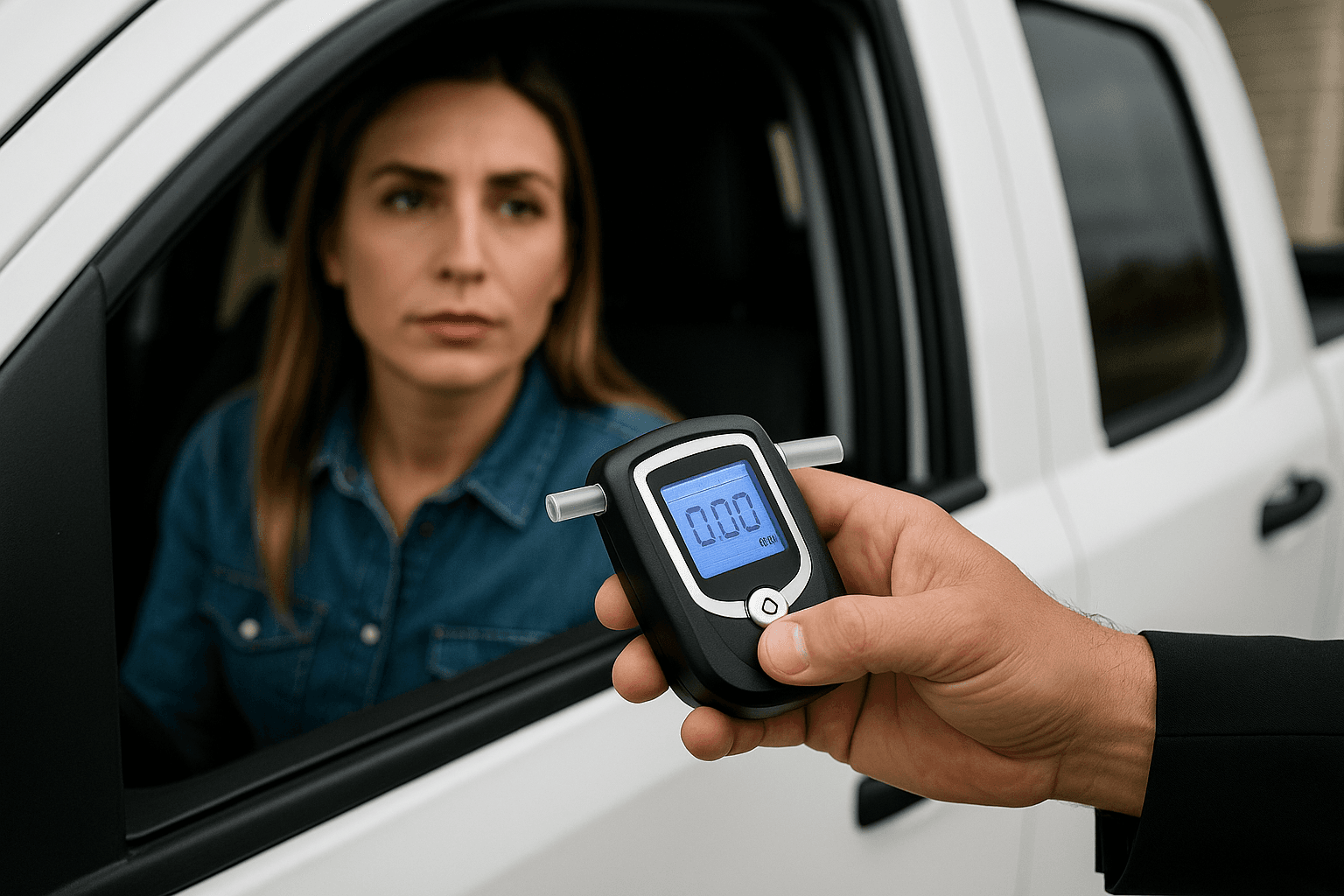
Illinois uses a BAIID (Breath Alcohol Ignition Interlock Device) rather than the generic term ignition interlock device. BAIID is required for all DUI-related RDPs and monitored by the Secretary of State. The device logs every trip, every ignition attempt, and every rolling retest. If you drive outside your approved routes or times, the BAIID records the violation and the Secretary of State revokes your RDP. Monthly BAIID monitoring reports are submitted to the Secretary of State—missed reports or failed tests trigger immediate revocation.
What Happens If Your RDP Petition Is Denied?
The Secretary of State denies RDP petitions for incomplete documentation, insufficient hardship justification, or outstanding compliance failures. The denial notice specifies the reason. You may reapply after correcting the deficiency—there is no waiting period between applications, but each application requires a new $8 fee and a new hearing.
Common denial triggers: missing SR-22 proof in the Secretary of State's system at the time of the hearing, unsigned or undated hardship verification letters, evaluation documentation that does not meet statutory requirements for DUI cases, or hardship justification that the hearing officer determines is not essential (recreational activities, social obligations, or convenience errands are not approved hardship purposes). Drivers with multiple DUI offenses face additional scrutiny—the hearing officer evaluates treatment completion, sobriety duration, and compliance history before approving an RDP.
If denied, request a copy of the denial notice and review the stated deficiency. Correct the issue, gather the missing documentation, and reapply. The Secretary of State does not provide appeal rights for RDP denials—you must submit a new application. If you disagree with the hearing officer's determination of hardship sufficiency, consult an attorney licensed in Illinois who specializes in driver's license reinstatement before reapplying.
How to Maintain Compliance After RDP Approval
After RDP approval, carry your approval order, your driver's license (if not physically surrendered), your SR-22 proof, and your vehicle registration whenever you drive. Illinois law enforcement officers verify RDP compliance during traffic stops by checking your approval order against your current location and time. Driving outside your approved routes or hours is a separate offense—penalties include RDP revocation, additional suspension time, and potential criminal charges under 625 ILCS 5/6-303 (driving while suspended).
Maintain continuous SR-22 coverage for the 3-year filing period. If your policy lapses, the carrier notifies the Secretary of State within 24 hours and your RDP is revoked immediately. You must reinstate your SR-22, pay the reinstatement fee, and reapply for a new RDP—the suspension period restarts. Monthly BAIID monitoring reports must be submitted on schedule—missed reports trigger automatic revocation. Failed breath tests or tampering with the device trigger immediate revocation and restart of the suspension period.
Complete all required treatment, evaluation, or probation milestones during your RDP period. The Secretary of State may require proof of continued compliance at reinstatement. Full reinstatement after the suspension period ends requires payment of the $70 base reinstatement fee (or $500 for first DUI revocation, $1,000 for second or subsequent DUI revocation), completion of all treatment or evaluation requirements, proof of continuous SR-22 coverage for the filing period, and proof of BAIID compliance for the RDP duration.