Most carriers write ignition interlock policies, but acceptance criteria narrow sharply when the device is required as a hardship license condition rather than post-reinstatement. Approval depends on whether your state treats hardship as a restricted license or a full reinstatement pathway.
Why Hardship-Stage Ignition Interlock Coverage Is Underwritten Differently
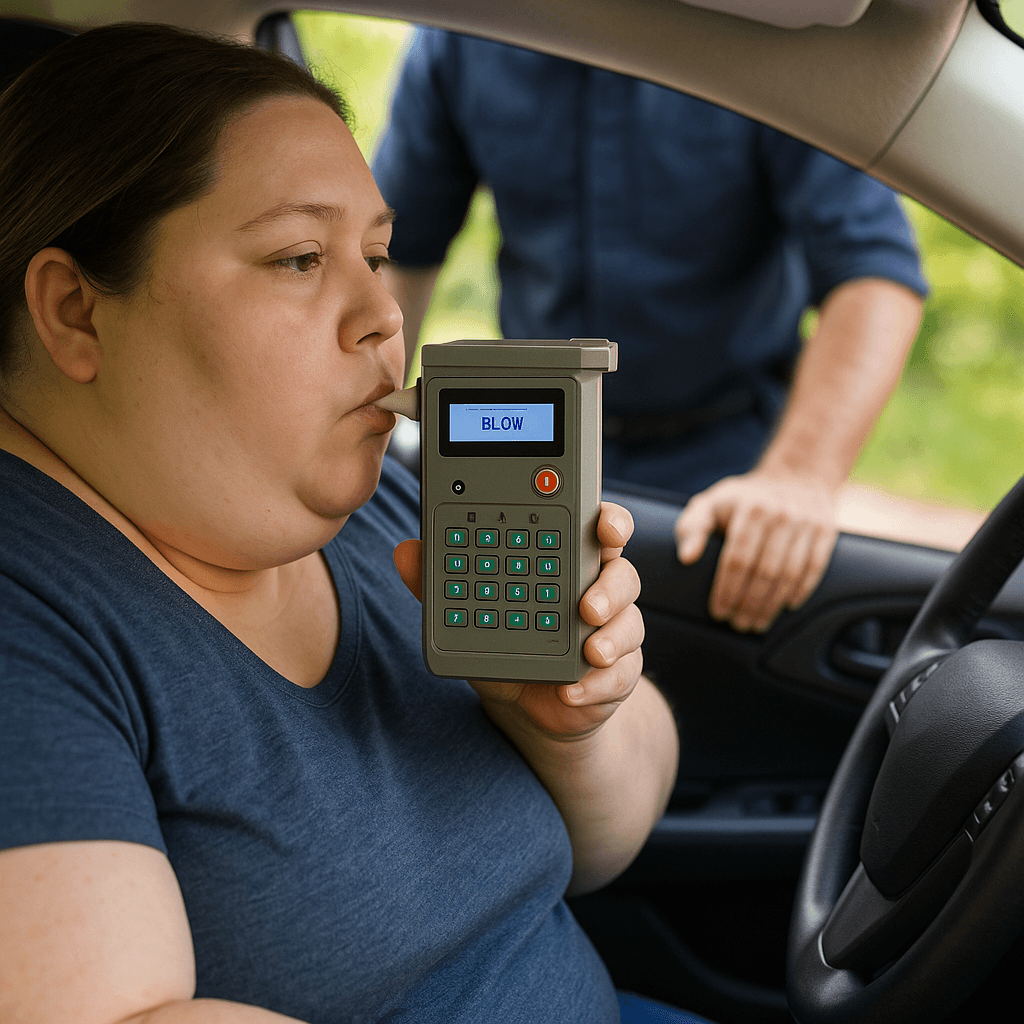
Carriers classify ignition interlock policies into two buckets: hardship-stage and post-reinstatement. When you receive a hardship license with an ignition interlock requirement, your driving privilege is still suspended—the hardship order creates a narrow exception for documented routes only. The underlying suspension remains active. Post-reinstatement interlock policies, by contrast, cover drivers whose full license has been restored with an IID condition attached.
Most non-standard carriers write both types, but hardship-stage policies face stricter underwriting. The suspension record stays visible to underwriters, and the route restriction creates exposure uncertainty. Carriers cannot predict whether a hardship driver will stay within approved routes, so they treat the policy as higher-variance risk. Post-reinstatement IID policies, even with the same device requirement, reflect a closed violation and completed compliance pathway.
This distinction surfaces at quote stage. A driver applying for coverage immediately after hardship grant sees different rate tiers, different carrier acceptance rates, and different coverage-limit floors than a driver applying six months post-reinstatement with the same device installed. The IID itself is identical. The suspension status is what shifts underwriting.
Which Carriers Accept Hardship-Stage Interlock Policies
Non-standard carriers dominate this space. Progressive, The General, Bristol West, Dairyland, and Titan accept hardship-stage interlock applications in most states. Acceptance criteria vary by state and by whether the hardship order substitutes for full reinstatement or runs concurrently with suspension.
States that treat hardship as a restricted license pathway—Texas, Wisconsin, Illinois, Oklahoma—allow carriers to write the policy as a standard SR-22 filing with route restrictions noted. The SR-22 filing tracks the hardship period, and the policy renews normally if the driver completes the interlock term and reinstates. States that treat hardship as an administrative exception during suspension—California, Florida, Georgia—create more underwriting friction. Some carriers decline hardship-stage applications entirely in these states, requiring the driver to complete reinstatement first.
Carrier acceptance also depends on how long the driver has held the hardship license. Policies written within 30 days of hardship grant face higher declination rates than policies written 90 days into the hardship period. Underwriters treat the first 60 days as a compliance test. A driver who maintains the interlock calibration schedule, avoids violations, and stays within route restrictions demonstrates lower risk than a driver applying immediately after grant.
Premium cost for hardship-stage interlock policies typically runs $140–$220 per month for minimum liability limits in non-standard markets. This reflects the active suspension record, the IID surcharge, and the SR-22 filing fee. Post-reinstatement interlock policies for the same driver profile average $110–$170 per month, a 20–30% reduction driven entirely by suspension-status reclassification.
Compare car insurance rates in your state
Get quotes from licensed carriers — no obligation, no spam, results in minutes.
Get Your Free Quote✓ No Obligation Required✓ Licensed Carriers Only✓ Available Nationwide✓ Free to Compare
How Route Restrictions Affect Coverage and Claims
Hardship licenses restrict driving to documented routes: work, school, medical appointments, IID service appointments, court-ordered obligations. Your policy covers liability within those approved routes. If you drive outside approved routes and cause an accident, the carrier will pay the third-party claim under liability coverage—state law requires this—but will likely non-renew your policy and may pursue subrogation against you for the payout.
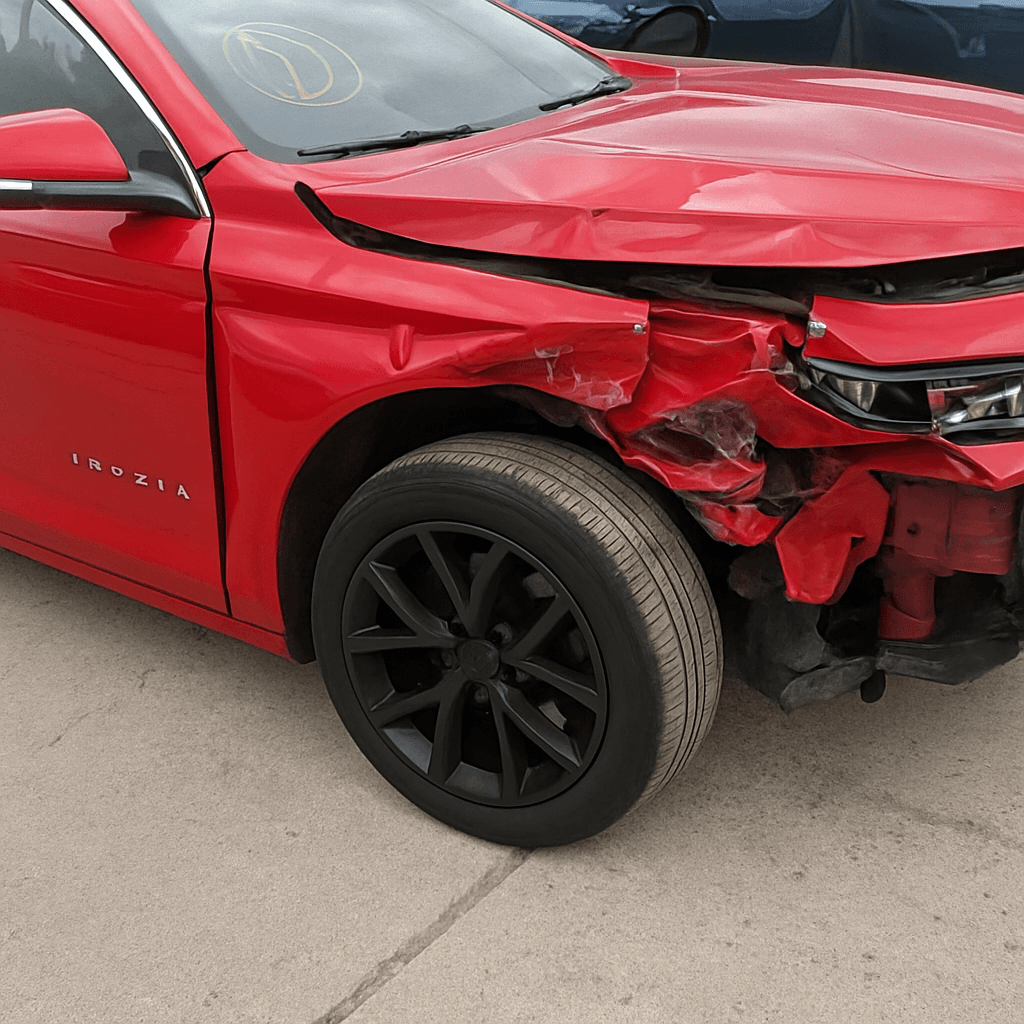
This creates a claims risk most hardship drivers miss. The interlock device does not log your route. GPS-equipped interlock units exist but are not standard in most states. If you cause an accident at 10 p.m. on a Saturday and your documented work route operates Monday through Friday, the carrier's claims adjuster will compare the accident location and time against your hardship order. Route violations do not void third-party liability coverage, but they void your renewal eligibility and open you to fraud investigation if the pattern repeats.
Some carriers add route-restriction clauses to hardship-stage policies explicitly. The clause states that coverage applies only during operation consistent with hardship terms. These clauses are unenforceable against third-party claimants under state financial responsibility laws, but they allow the carrier to deny collision coverage (if you carry it) and to cancel the policy mid-term for material misrepresentation if route violations surface during claims investigation.
SR-22 Filing Duration for Hardship Interlock Policies
SR-22 filing duration during hardship depends on whether your state counts the hardship period toward total filing time or treats it separately. In Texas, Wisconsin, and Oklahoma, the SR-22 filing period runs concurrently with the hardship license. A driver with a 3-year SR-22 requirement who holds a hardship license for 18 months completes half the filing obligation during hardship. The remaining 18 months continue post-reinstatement.
California, Florida, and Georgia treat hardship SR-22 filing separately. The filing clock does not start until full reinstatement. A California driver with a 3-year SR-22 requirement who holds a hardship license for 12 months still owes 3 full years of SR-22 filing after reinstatement. The hardship period does not count. This doubles the effective filing duration and nearly doubles total SR-22 insurance cost over the life of the requirement.
Verify how your state counts hardship filing time before applying for the license. If your state does not credit hardship time toward the SR-22 period, the cost of hardship becomes the sum of IID rental, SR-22 filing fees, elevated premiums during hardship, and a full SR-22 term post-reinstatement. In these states, waiting to reinstate without hardship may cost less than operating under hardship for an extended period.
Cost Breakdown: IID Rental, SR-22 Premium, and Filing Fees
Ignition interlock rental averages $70–$120 per month, paid directly to the IID provider. Installation costs $100–$200, and removal costs $50–$100. Monthly calibration is included in rental cost for most providers; missed calibration appointments trigger lockout and hardship revocation in most states.
SR-22 filing fees run $25–$50 per year, billed by the carrier at policy inception and renewal. Some carriers bundle the fee into the premium; others itemize it separately. The SR-22 filing itself does not increase premium—it is an administrative certificate. The premium increase comes from the underlying violation that triggered the SR-22 requirement. DUI violations increase premiums 60–150% over standard rates; uninsured-operation violations increase premiums 30–80%.
Total monthly cost for a hardship interlock policy stacks as: base premium + SR-22 surcharge + IID rental. A driver paying $160/month for SR-22 liability coverage plus $90/month IID rental faces $250/month in combined cost, or $3,000 per year. Over a 2-year hardship period, total outlay reaches $6,000 before reinstatement fees, which typically add another $200–$400 depending on state.
Non-Owner Interlock Policies for Hardship Without a Vehicle
Non-owner SR-22 policies cover liability when you drive a vehicle you do not own. Most states accept non-owner policies for hardship license compliance, but ignition interlock requirements complicate this. The IID must be installed in a specific vehicle. You cannot install an interlock in a non-owned vehicle without the owner's written consent, and most vehicle owners—including rental companies and employers—refuse consent.
Some states allow portable interlock units for hardship drivers without vehicles. These units connect to any vehicle's OBD port and operate identically to hardshipped-installed units. Portable IID availability varies by state and by provider. Intoxalock and Smart Start offer portable units in Texas, Wisconsin, and Oklahoma. California and Florida require hardshipped installation; portable units do not satisfy the hardship order in these states.
If your state does not allow portable interlock units and you do not own a vehicle, your hardship application will likely be denied. Courts and DMVs require proof of interlock installation before issuing the hardship license. Without a vehicle to install the device in, you cannot satisfy the condition. The alternative is to purchase an inexpensive vehicle solely to satisfy the IID requirement, install the device, obtain the hardship license, and carry a non-owner SR-22 policy that covers you when driving vehicles other than the IID-equipped vehicle you own but rarely drive.