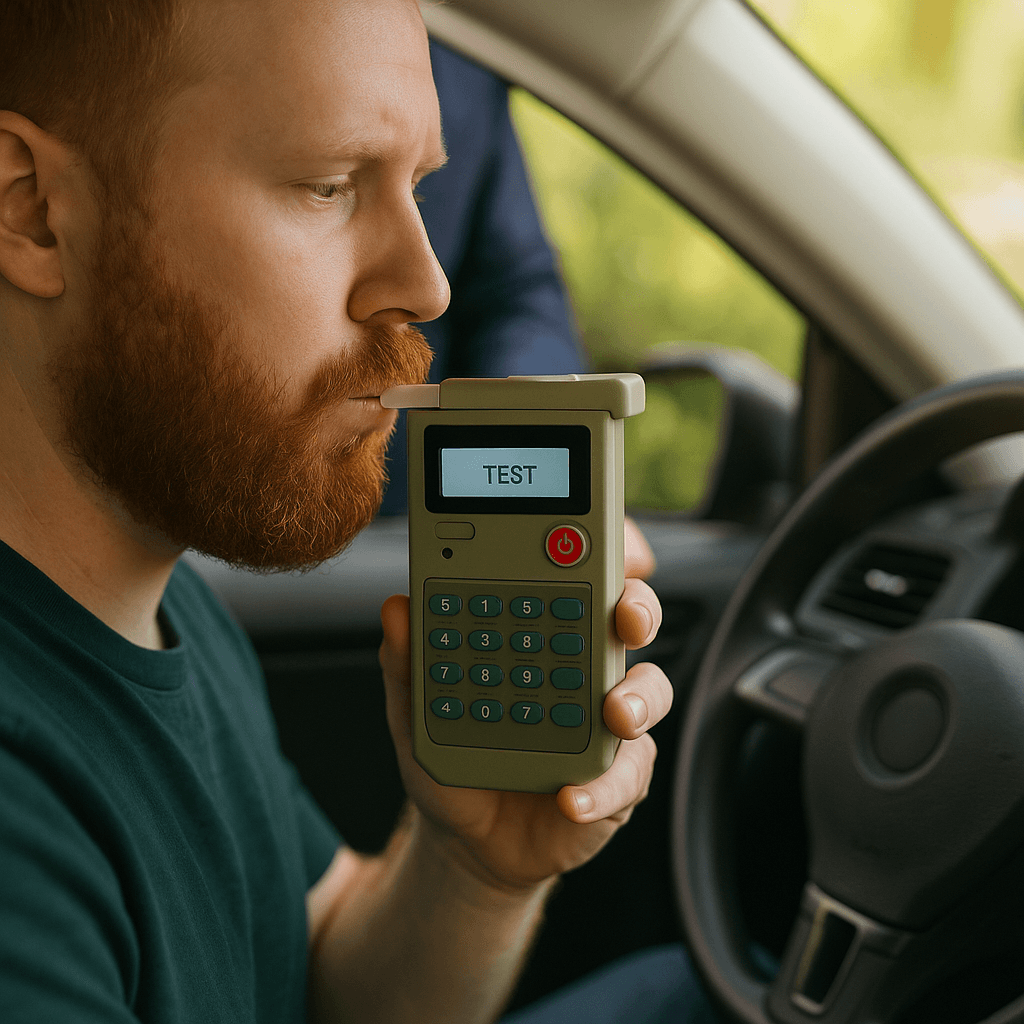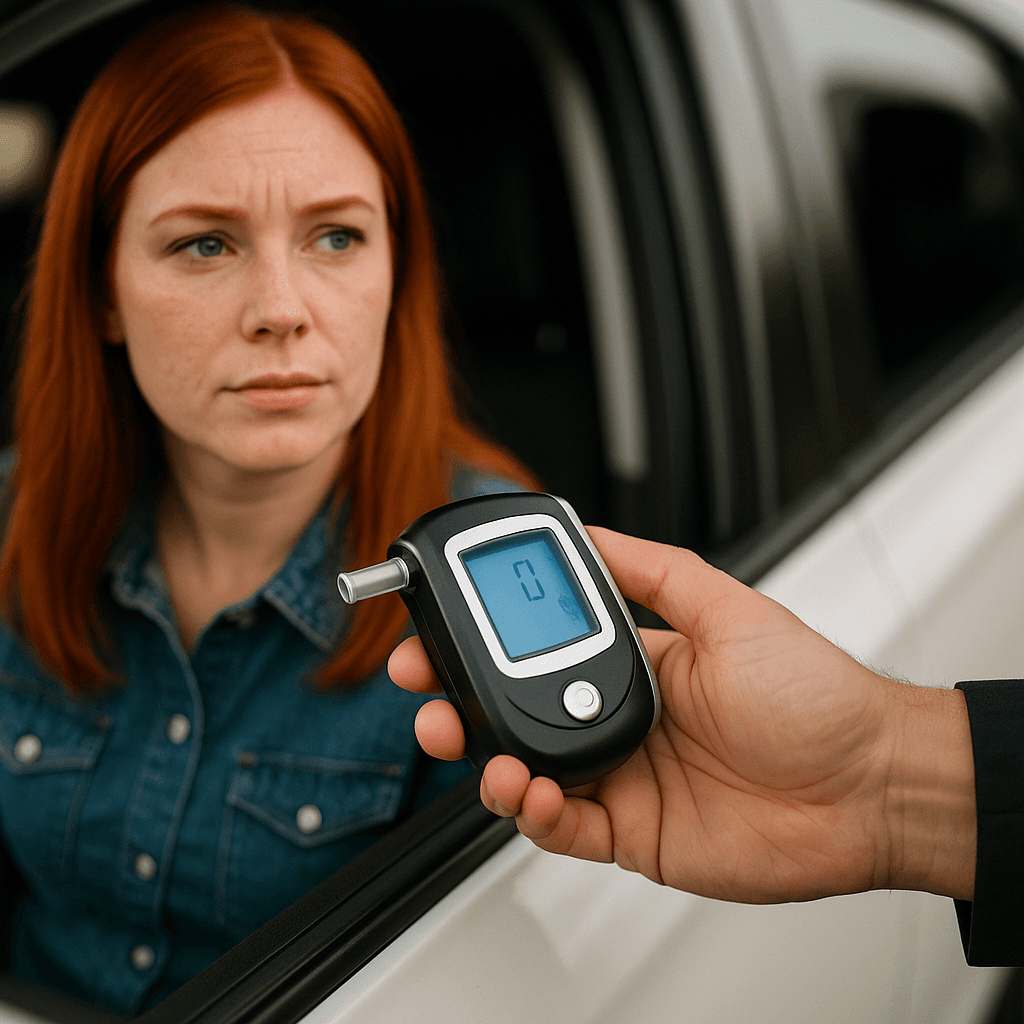
Every state that allows hardship licenses after DUI suspensions builds ignition interlock into the hardship program itself. There is no application pathway around it.
Why hardship programs and IID requirements are structurally merged
Hardship license programs exist to let suspended drivers maintain employment, medical access, and family obligations during suspension periods. Ignition interlock requirements exist to prevent impaired driving during those same periods. States merge these into a single program because the hardship license creates the driving opportunity that makes interlock monitoring necessary.
The request for a hardship license without IID after a DUI suspension assumes two separate systems: one that grants restricted driving privileges, and another that mandates interlock. That separation doesn't exist. When a state's DUI statute includes both hardship eligibility and interlock requirements, the interlock clause applies to all driving during the suspension period, including hardship driving.
Texas illustrates this clearly. The state calls its program an occupational driver's license. Texas Transportation Code 521.246 allows judges to grant occupational licenses during DUI suspensions, but 521.246(a)(2) explicitly requires ignition interlock installation as a condition of the ODL. There is no carve-out. The ODL application and the IID requirement are processed together, not sequentially.
Other states structure it identically. Georgia's Limited Driving Permit for DUI suspensions includes interlock as a statutory condition under O.C.G.A. 40-5-64.1. Wisconsin's occupational license statute cross-references the interlock mandate in Wis. Stat. 343.301. The hardship program is the mechanism; interlock is the safety condition attached to that mechanism.
What happens when you apply for hardship without addressing IID
Courts and DMVs process hardship applications as integrated petitions. When you file for restricted driving privileges after a DUI suspension, the reviewing authority checks whether your suspension trigger requires interlock. If it does, your petition won't be approved without proof of IID installation or a scheduled installation appointment.
In Texas, applicants must submit an ignition interlock verification form at the occupational license hearing. Judges will not sign the order without it. In Georgia, the Limited Driving Permit application requires certification from an approved IID vendor before the permit is issued. In Illinois, the Monitoring Device Driving Permit (the state's term for DUI-cause restricted licenses) is named after the interlock requirement because the device is the program's foundation.
Some applicants assume they can get the hardship license approved first and deal with interlock later. That sequencing doesn't work. The hardship license order itself specifies IID compliance as a condition of validity. Driving on a hardship license without an installed and functioning interlock violates the license terms and typically triggers immediate revocation plus extension of the underlying suspension.
A few states allow limited exceptions for vehicle exemptions (employer-owned vehicles where installation isn't feasible, for example), but these exceptions don't eliminate the IID requirement. They shift compliance responsibility or limit the exemption to specific vehicles during work hours only.
Compare car insurance rates in your state
Get quotes from licensed carriers — no obligation, no spam, results in minutes.
Get Your Free Quote✓ No Obligation Required✓ Licensed Carriers Only✓ Available Nationwide✓ Free to Compare
Why online carve-out claims are structurally misleading
Search results and legal forums occasionally reference hardship licenses "without interlock requirements." These claims refer to non-DUI suspension causes where interlock was never required in the first place. A driver suspended for unpaid tickets in Michigan, for example, can apply for a restricted license without interlock because the suspension cause doesn't involve impairment. The absence of an IID requirement in that case isn't a carve-out; it's cause-specific eligibility.
Other misleading claims confuse hardship programs with full reinstatement. Some states allow drivers to reinstate fully after completing a mandatory interlock period (typically one to three years depending on the offense). Once reinstated, the IID requirement ends. But that's reinstatement, not hardship driving during suspension.
Florida's Business Purpose Only license illustrates the confusion. Florida allows BPO licenses during DUI suspensions, but only after completing a mandatory hard suspension period (10 days for first offense, 30 days for second, 90 days for third). During the BPO period, interlock is required. Some sources describe the hard suspension as "interlock-free," which is technically true but irrelevant—you can't drive at all during hard suspension, so there's no license to restrict.
The pattern holds across every state with a functional hardship program for DUI suspensions. The interlock requirement applies whenever driving privileges exist. There is no procedural pathway that grants those privileges while waiving the monitoring condition.
What IID costs actually add to the hardship process
Ignition interlock isn't just a device installation. It's a monthly monitoring service with installation fees, calibration appointments, and removal costs stacked on top of the hardship application itself. Installation typically runs $70 to $150. Monthly lease and monitoring fees range from $60 to $90 depending on the state and vendor. Calibration appointments (required every 30 to 60 days) cost $10 to $20 per visit.
Over a 12-month interlock period—common for first-offense DUI suspensions—total IID costs run $800 to $1,200. That's separate from the hardship license application fee (typically $50 to $200 depending on the state), court filing fees where a hearing is required, and SR-22 insurance filing fees and premium increases.
Texas applicants pay a $10 occupational license fee to the court, but also face $125 to $175 for IID installation and $75 to $85 per month for monitoring. Over 12 months, the interlock component alone exceeds $1,000. Georgia's Limited Driving Permit costs $25 to apply, but interlock costs match the Texas range.
Some vendors offer payment plans, but the total cost remains the same. A few states subsidize interlock costs for low-income drivers, but subsidy programs require income documentation and approval timelines that can delay the hardship license process by weeks. The cost is a structural barrier to hardship eligibility, not an optional add-on.
Insurance requirements layer on top of IID and hardship costs
SR-22 filing is required in most states after DUI suspensions, whether you're applying for a hardship license or waiting out the full suspension. The SR-22 is a certification from your insurer to the state DMV confirming you carry liability coverage at or above state minimums. Filing fees range from $15 to $50 depending on the carrier, but the larger cost is the premium increase.
DUI suspensions move drivers into high-risk insurance categories. Premium increases of 60% to 150% are common after a DUI conviction. SR-22 filing itself doesn't raise premiums, but the underlying violation does, and SR-22 filing ensures the state is notified immediately if your coverage lapses.
For drivers applying for hardship licenses, SR-22 filing must be completed before the hardship application is approved. Texas requires proof of SR-22 at the occupational license hearing. Georgia requires it before issuing the Limited Driving Permit. The SR-22 filing period typically lasts two to three years from the conviction date or reinstatement date, depending on the state. Some drivers assume the SR-22 period aligns with the hardship license period, but in most states the SR-22 requirement outlasts the hardship period and continues until full reinstatement.
Non-owner SR-22 policies cover drivers who don't own vehicles but need to meet filing requirements. These policies are common for drivers relying on employer vehicles or family members' cars during hardship periods. Monthly premiums for non-owner SR-22 typically run $25 to $60, significantly lower than standard policies but still adding $300 to $720 annually to the total cost stack.
The combined cost of hardship application, IID installation and monitoring, and SR-22 insurance over a 12-month period typically exceeds $2,000. That's the floor, not the ceiling. Drivers with multiple violations, commercial licenses, or aggravated DUI charges face higher IID monitoring costs and longer SR-22 periods.
What to do if IID costs block hardship eligibility
When interlock costs make hardship licenses financially inaccessible, evaluate whether waiting out the suspension or pursuing early reinstatement options produces a lower total cost. Some states allow drivers to apply for full reinstatement after completing alcohol education programs, paying reinstatement fees, and fulfilling mandatory waiting periods. Reinstatement doesn't require ongoing IID monitoring in some states, though it still requires SR-22 filing.
Texas allows drivers to apply for full license reinstatement after completing DWI education and paying a $125 reinstatement fee, but the interlock requirement may still apply for a period after reinstatement depending on BAC level and prior offenses. Georgia requires DUI Risk Reduction classes and a $210 restoration fee, but interlock requirements vary by offense level.
If waiting out the suspension isn't viable due to employment or family obligations, prioritize IID vendor comparison. Vendor pricing varies significantly even within the same state. Some vendors offer installation discounts or reduced monthly fees for drivers enrolled in state subsidy programs. Others bundle calibration appointments into monthly fees rather than charging separately.
State subsidy programs exist in approximately 20 states for low-income drivers. Eligibility thresholds vary—some states use federal poverty guidelines, others use percentage-of-income tests. Applications require income documentation (pay stubs, tax returns, benefit statements) and approval can take two to six weeks. If subsidy approval delays your hardship application timeline, some courts allow conditional hardship orders pending IID installation, but this varies by jurisdiction.
Rideshare, public transit, or carpooling may be more cost-effective than hardship license plus IID plus SR-22 over short suspension periods. Run the numbers before committing to the hardship process. The administrative and equipment costs don't disappear if you stop halfway through.