Failed breath tests, tampering alerts, and missed calibrations trigger revocation pathways most states don't explain until your restricted driving privilege is already gone.
Why IID Violations Revoke Hardship Licenses Before You Know You're in Trouble
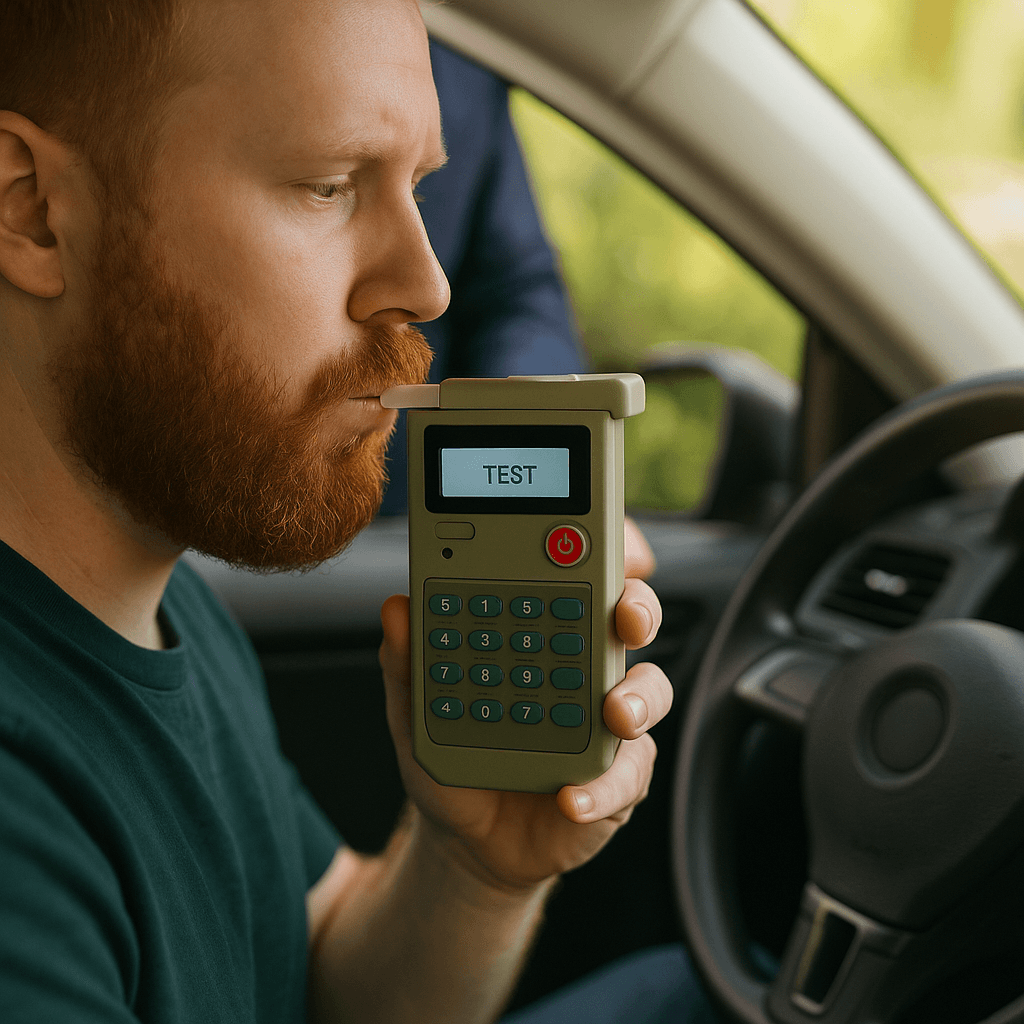
Your ignition interlock device records every failed start attempt, every missed rolling retest, every skipped calibration appointment. Most states set administrative violation thresholds that trigger automatic hardship license revocation without prior warning or hearing opportunity. You discover the problem when law enforcement pulls you over for an unrelated stop and your restricted license shows as suspended in their system.
The violation categories that matter: failed initial breath tests above your state's BAC threshold, failed rolling retests while driving, calibration appointment no-shows beyond your grace period, and tampering or circumvention attempts the device flags electronically. Each state counts these violations differently. Texas uses a three-strike system for failed tests within 12 months. California revokes on the first confirmed tampering flag. Wisconsin triggers review after two missed calibrations in 60 days.
The data flows from your IID provider to your state monitoring authority within 24-72 hours of each event. Your hardship license terms required you to maintain zero violations as a condition of restricted driving. The state interprets this literally. One confirmed tampering alert or three failed breath tests typically meets the threshold for administrative suspension, and the hardship revocation follows automatically once your monitoring officer processes the report.
What Counts as a Failed Test vs. a Violation
Not every failed breath sample ends your hardship license. Your device distinguishes between initial test failures at startup, rolling retest failures while driving, and confirmed violations that trigger state action. A failed initial test prevents the vehicle from starting but may not count toward your violation total if you wait the device lockout period and pass a subsequent test within the same session.
A rolling retest failure while driving is more serious. Most states require you to pull over immediately and pass a retest within 5-10 minutes or the device logs a confirmed violation and alerts your monitoring authority. If you turn off the engine instead of completing the retest sequence, the device flags it as a circumvention attempt, which carries heavier consequences than a simple failed breath sample.
Calibration violations operate on a separate track. Your hardship license terms specify calibration intervals, typically every 30-60 days depending on your state and the severity of your underlying offense. Missing one appointment usually triggers a grace period notice. Missing two appointments or exceeding your grace period by more than 5-7 days flags as a violation and may initiate hardship revocation proceedings even if you have zero failed breath tests on record.
Compare car insurance rates in your state
Get quotes from licensed carriers — no obligation, no spam, results in minutes.
Get Your Free Quote✓ No Obligation Required✓ Licensed Carriers Only✓ Available Nationwide✓ Free to Compare
State-by-State IID Violation Thresholds for Hardship Licenses
Texas hardship licenses (Occupational Driver's Licenses) operate under a three-violation-in-12-months rule for failed breath tests. The clock resets from the date of each violation, not annually. One tampering flag or one circumvention attempt bypasses the three-strike rule and triggers immediate review. Calibration violations follow a separate two-missed-appointments standard within any rolling 90-day window.
California restricted licenses revoke on the first confirmed tampering or circumvention flag. Failed breath tests are cumulative: three failures within 30 days, or five failures within 12 months, initiate administrative review and typically result in hardship revocation. California monitoring is handled by county courts for DUI offenses, so your specific county's IID program administrator determines whether your violation merits revocation or a warning.
Florida Business Purpose Only licenses distinguish between major and minor IID violations. Major violations include tampering, failed rolling retests while driving, and BAC readings above 0.08 percent. One major violation triggers hardship suspension. Minor violations include missed calibrations and failed initial startup tests below 0.08 percent. Three minor violations within 12 months meet the revocation threshold. Florida DMV processes these violations administratively without hearing opportunity unless you request formal review within 10 days of notice.
Wisconsin Occupational Licenses tie IID compliance to your underlying ignition interlock order rather than the hardship license itself. Two failed tests or one missed calibration beyond your grace period extends your total IID requirement period by 6-12 months. Three violations of any type within 24 months revokes the occupational license and requires you to restart the hardship application process from zero once your violation-free period is reestablished.
What Happens Between the Violation and the Revocation Notice
Your IID provider transmits violation data to your state monitoring authority electronically, usually within 24-48 hours of the event. The state system flags your driver record and queues your case for review. Processing timelines vary by state workload: 7-14 days in states with centralized DMV monitoring, 30-60 days in states where county courts handle DUI-related IID oversight.
You may receive no advance warning before your hardship license is administratively suspended. Some states mail a notice of violation to your address on file, but delivery delays mean you often learn about the suspension when you're already driving under a revoked hardship license without realizing it. This converts your legal restricted driving into a no-valid-license violation, which compounds your suspension period and closes future hardship eligibility in states that bar repeat offenders.
A few states offer pre-revocation hearing opportunities if you request them immediately upon receiving a violation notice. Illinois allows 10 days from the notice date to request an administrative hearing before your occupational license is suspended. California offers a similar window for county court review if your violation was logged under a DUI-related IID order. Missing these narrow windows means the revocation becomes final and you must wait out the suspension period before reapplying for hardship privileges.
How Revocation Affects Your Underlying Suspension and Reinstatement Timeline
A hardship license revocation for IID violations does not pause or reset your underlying suspension period. If you were serving a 12-month DUI suspension and your hardship license is revoked at month 6 for a tampering flag, your original suspension continues to run. You lose restricted driving privileges for the remainder of the suspension, but your total suspension end date does not extend unless your state treats the hardship violation as a separate offense.
Some states add a hardship violation penalty on top of your original suspension. Wisconsin extends your total license suspension by 6 months for each confirmed IID violation during a hardship period. Texas may require you to restart your SR-22 filing clock if the hardship revocation was based on a failed breath test above 0.08 percent, treating it as a new alcohol-related incident even though no arrest occurred.
Reinstatement requirements after hardship revocation typically include completing your original suspension period, paying a hardship revocation fee separate from your standard reinstatement fee, and demonstrating a violation-free IID period if your state requires continued interlock use post-hardship. Florida mandates an additional 90-day violation-free IID period after hardship revocation before full license reinstatement is processed, even if your original suspension term has ended.
What This Means for Your Insurance Filing Requirement
Your SR-22 filing requirement continues through hardship revocation. The filing obligation is tied to your underlying suspension trigger, not your hardship license status. If your state required 3 years of SR-22 for a DUI conviction, that 3-year clock keeps running whether your hardship license is active or revoked, and whether you're driving or not.
A hardship revocation for IID violations does not typically restart your SR-22 clock unless your state treats the violation as a separate reportable incident. Failed breath tests logged by your interlock device usually don't qualify as new convictions, so they don't trigger a new SR-22 filing period. Tampering or circumvention violations that result in criminal charges can restart the SR-22 requirement if they're prosecuted as separate offenses.
If you were carrying non-owner SR-22 coverage during your hardship period because you don't own a vehicle, you must maintain that policy through hardship revocation and for the full duration of your SR-22 filing term. Letting the policy lapse triggers a separate insurance suspension on top of your hardship revocation, compounding your total suspension period and creating additional reinstatement hurdles when your eligibility window opens.
Can You Appeal or Reinstate After IID-Related Hardship Revocation
Appeal windows are narrow and procedurally strict. Most states allow 10-15 days from the date of your revocation notice to request an administrative hearing. You must submit a written request, pay a hearing fee (typically $50-$150), and present evidence that the IID violation was a device malfunction, a false positive, or a data transmission error rather than an actual compliance failure. Calibration records, service logs, and affidavits from your IID provider carry the most weight.
Successful appeals are rare. State hearing officers defer to electronic IID records unless you provide clear documented proof the device malfunctioned at the specific date and time of the logged violation. If your appeal is denied, the hardship revocation stands and you lose the remainder of your restricted driving period. Some states bar you from reapplying for hardship privileges for 12-24 months after a revocation, treating it as evidence you cannot comply with restricted license terms.
Reinstatement after serving your full suspension requires completing all original conditions plus any hardship-revocation-specific penalties. This typically includes paying a hardship revocation fee, completing an additional IID violation education course if your state mandates one, and maintaining a violation-free IID period of 60-180 days before your full license is restored. States that require continued IID use post-reinstatement will extend your total device requirement period by 6-12 months for each confirmed violation during your hardship license term.