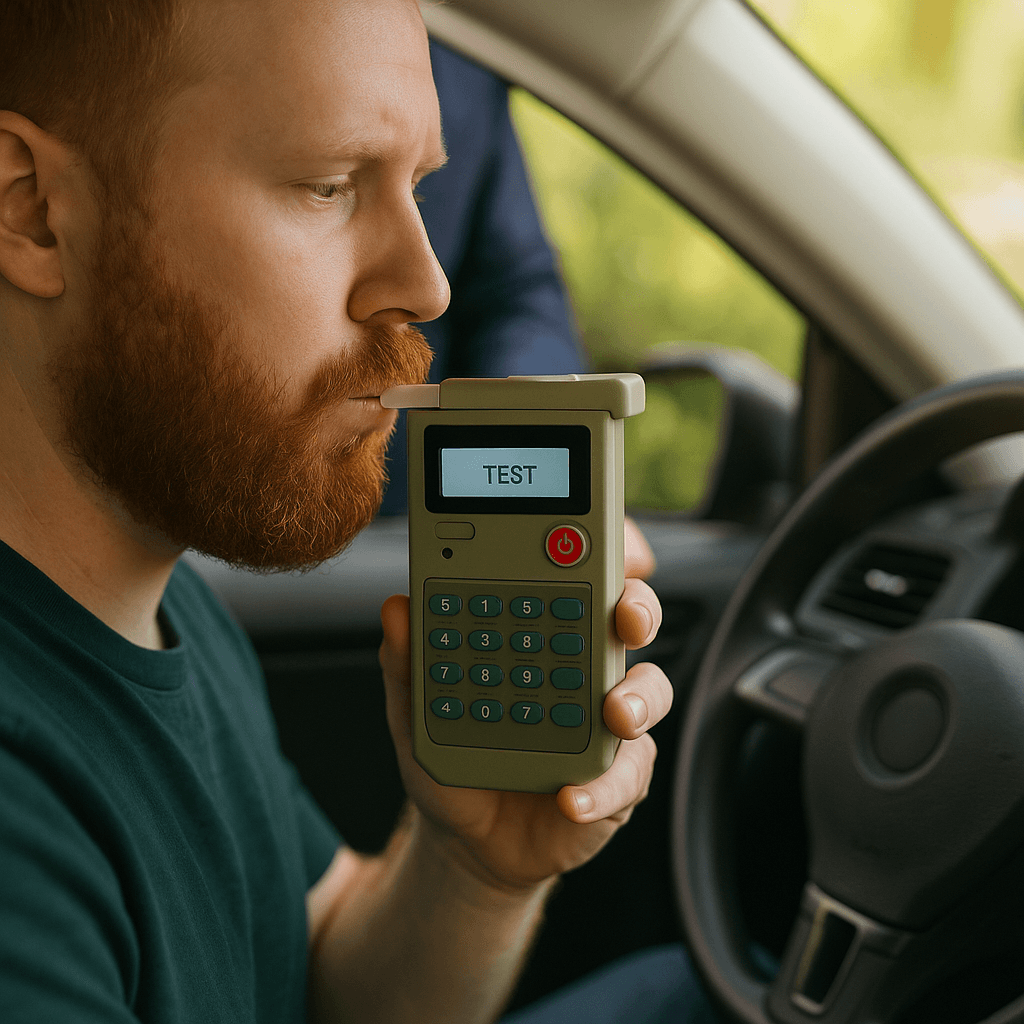
Most states publish an approved ignition interlock device vendor list, but not all vendors serve all counties—and choosing wrong delays your hardship license by weeks.
Why Your State's Approved IID Vendor List Is Only Half the Information You Need
State DMV websites publish lists of approved ignition interlock device manufacturers, often 8 to 12 vendors per state. What those lists rarely disclose: not every approved manufacturer operates service centers in every county. If you select a vendor approved statewide but unavailable in your home county, your hardship license application will be rejected or delayed until you switch providers and schedule a new installation.
Most states require you to name your IID vendor on the hardship license application itself. The application asks for the manufacturer name, installation date, and sometimes the installer's certification number. If the vendor you list cannot install within your county, the court or DMV processing your application has no mechanism to approve restricted driving privileges tied to a device you cannot physically obtain.
This gap matters most in rural counties. Urban centers typically have multiple installers competing for business. Rural applicants often discover after filing that the three vendors they researched online have no certified installers within 60 miles of their home address.
How to Verify County-Level Service Availability Before You Apply
Start with your state DMV's official IID vendor list. This is non-negotiable—only manufacturers on that list qualify for hardship license compliance. Download the PDF or print the webpage; these lists update annually and you need documentation of what was approved when you applied.
Call each vendor on the state list and provide your home ZIP code. Ask three specific questions: Does your company operate a certified installation center in my county? What is the street address of the nearest service location? What is the average wait time from payment to installation appointment? Do not accept vague assurances like "we serve your area." Request the installer's name, address, and phone number before you commit.
Some states publish county-specific vendor maps on their Department of Public Safety or DMV websites. Texas, Arizona, and Florida maintain searchable databases showing which vendors hold active installer certifications by county. If your state provides this tool, cross-reference it against the statewide approved list—the map is more current than the PDF in most cases.
Compare car insurance rates in your state
Get quotes from licensed carriers — no obligation, no spam, results in minutes.
Get Your Free Quote✓ No Obligation Required✓ Licensed Carriers Only✓ Available Nationwide✓ Free to Compare
What Happens If You Select a Vendor That Cannot Serve Your County
Courts and DMVs do not issue hardship licenses contingent on future IID installation. The device must be installed before restricted driving privileges take effect. If your application lists a vendor that later cannot install in your county, you face two procedural failures.
First, the application enters administrative hold. The court clerk or DMV examiner contacts the listed vendor to confirm installation scheduling. When the vendor reports they do not serve your address, your file is flagged for deficiency. Most states require you to file an amended application naming a new vendor. This restarts the processing clock—typically 10 to 15 business days from the date the corrected application is received.
Second, you lose your installation deposit. IID vendors collect $75 to $150 upfront to reserve an installation slot. If you cancel because the company cannot serve your address, refund policies vary. Some manufacturers credit the deposit toward future services; others treat ZIP code verification failures as customer error and retain the payment. You pay a second deposit to the replacement vendor, doubling your upfront cost before restricted driving even begins.
How to Read State Vendor Lists for Installation Network Disclosure
State-approved vendor lists vary widely in transparency. California publishes manufacturer names, headquarters addresses, and toll-free customer service numbers—but no county service maps. Applicants must call each vendor individually. Ohio publishes vendor names with embedded hyperlinks to each company's regional service locator. Minnesota lists vendors with footnotes indicating which manufacturers subcontract installation to third-party shops versus operating company-owned locations.
Look for vendor entries that include phrases like "statewide service," "all counties," or "see website for locations." These are warning signals, not guarantees. "Statewide service" often means the company holds a statewide certification from the state monitoring authority, not that they operate installers in all 67 or 88 or 102 counties within that state.
Some lists include installer count by vendor. If one manufacturer shows 47 locations and another shows 4, the second vendor likely concentrates service in urban centers. Rural applicants should prioritize vendors with double-digit installer networks unless the county verification call confirms local availability.
Why Choosing the Cheapest Listed Vendor Often Delays Your Hardship License
Monthly IID lease rates vary by $20 to $40 across vendors on the same state's approved list. The lowest advertised rate almost always corresponds to the smallest installer footprint. Budget-focused manufacturers keep overhead low by operating fewer physical locations and requiring customers to travel farther for calibration and service.
Hardship licenses with IID conditions require monthly or biweekly calibration visits. If your nearest service center is 70 miles away, you burn two hours and a tank of gas every calibration cycle. Miss a scheduled calibration and the device enters lockout mode—your vehicle will not start until the unit is serviced. Lockout violations are reported to the court or DMV and frequently trigger immediate hardship license revocation.
The cost calculation must include travel. A vendor charging $85/month with a service center 8 miles from your home costs less annually than a vendor charging $70/month with a service center 60 miles away. Gas, time off work for appointments, and lockout risk all carry financial consequences invisible in the advertised lease rate.
What to Do If No Approved Vendor Serves Your County
A small number of rural counties nationwide are not served by any state-approved IID installer. When this occurs, courts and DMVs apply one of three fallback procedures depending on state statute.
Some states allow you to petition for an exemption from the IID requirement if no vendor operates within 50 miles of your residence. The petition must include a signed affidavit from each approved vendor on the state list confirming they do not serve your county. Courts grant these exemptions sparingly and often impose stricter route or curfew restrictions in exchange for waiving the device requirement.
Other states require you to travel to the nearest service center regardless of distance and document compliance through monthly service logs. Iowa, Nebraska, and Montana apply this rule. The hardship license is issued with the IID condition intact, and the burden of accessing an out-of-county installer falls on the driver. Failure to maintain the device results in immediate license revocation.
A third group of states—Alaska, Wyoming, and parts of northern Michigan—allow the court to designate an out-of-state vendor if no in-state installer serves the applicant's address. This typically applies near state borders where an installer 40 miles away across the state line is closer than the nearest in-state provider 90 miles away. The device must still appear on your home state's approved manufacturer list even if installed by an out-of-state service center.