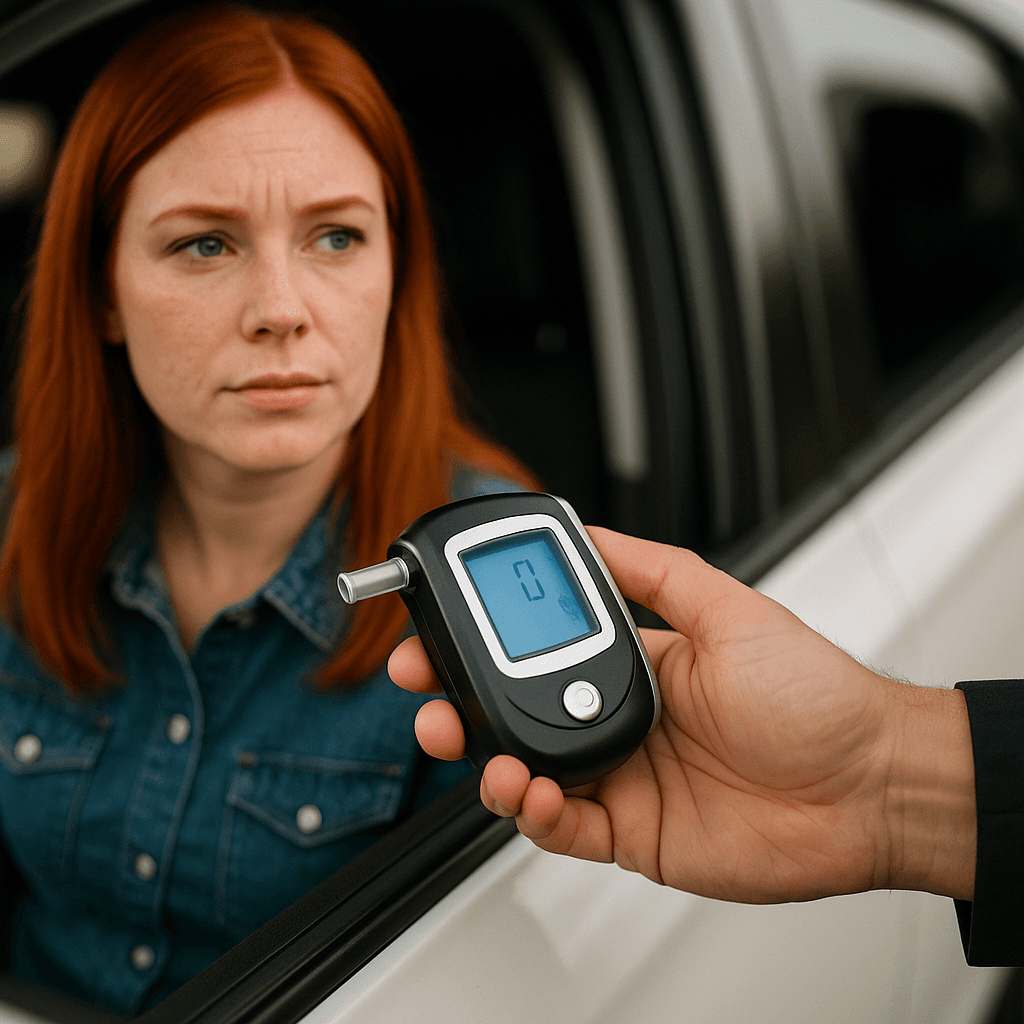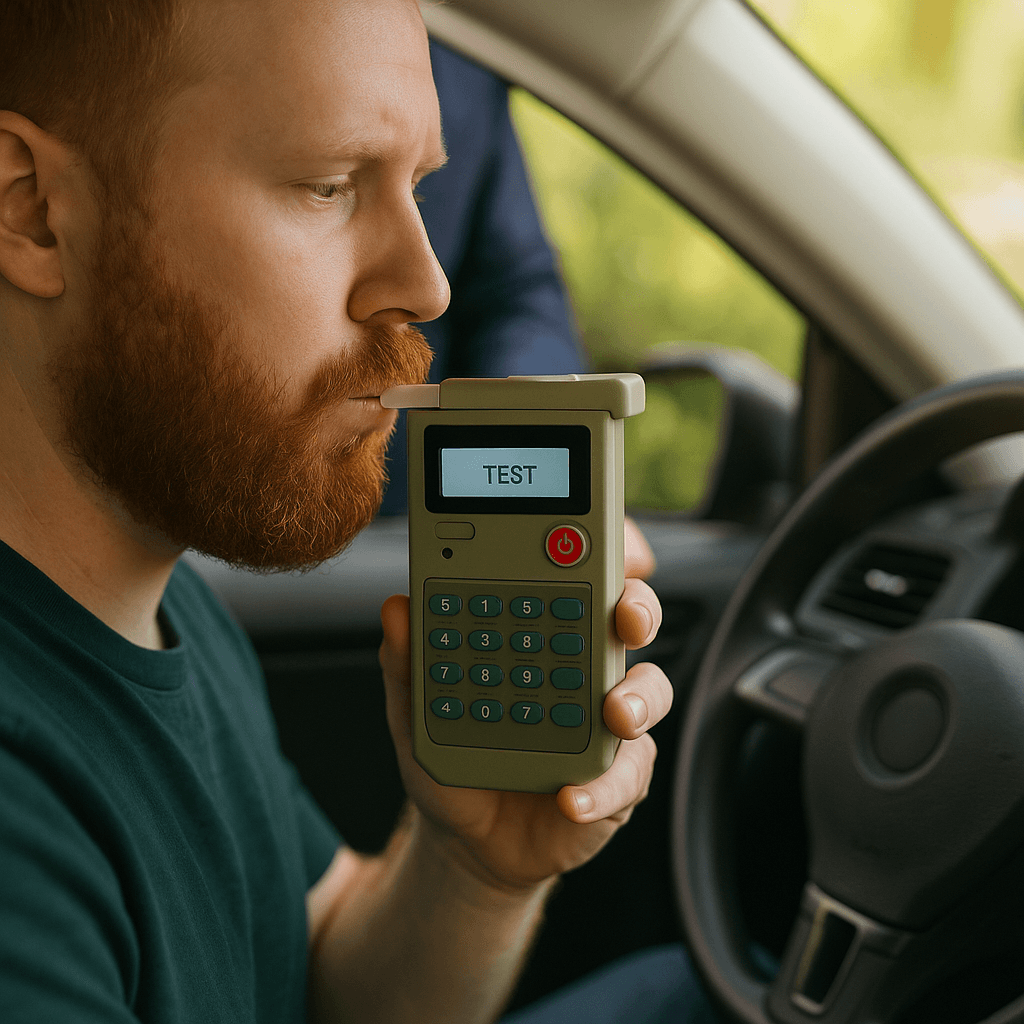
Every state that issues hardship licenses requires ignition interlock devices, but only 36 states make them available to drivers suspended for non-alcohol causes. That gap determines whether your suspension has a restricted-driving option at all.
Why Every State Links Hardship Licenses to Ignition Interlock Devices
All 51 U.S. jurisdictions that offer hardship licenses require ignition interlock devices for alcohol-related suspensions. The universal mandate stems from federal transportation funding tied to compliance with the MAP-21 and FAST Act requirements. States that fail to implement all-offender IID programs risk losing highway safety grants.
The policy logic is straightforward: hardship licenses restore limited driving privileges during suspension, which creates compliance risk. IID technology provides mechanical enforcement that supervision cannot. Judges and DMV hearing officers approve hardship petitions because the device physically prevents intoxicated operation.
But the IID requirement extends beyond its DUI justification. Most states apply the device mandate to all hardship license holders, regardless of suspension cause. If your license was suspended for unpaid tickets, child support arrears, or points accumulation, you still need an IID installed to qualify for restricted driving in 36 states. The remaining 15 states deny hardship access entirely for non-alcohol causes because their statutory language ties hardship eligibility to IID-eligible offenses only.
The Non-Alcohol Hardship Gap Created by IID Statutory Language
Fifteen states restrict hardship licenses to suspension causes that independently trigger IID requirements. If your suspension does not involve alcohol or drugs, you cannot obtain restricted driving privileges in Alaska, Connecticut, Delaware, Hawaii, Kansas, Louisiana, Maine, Massachusetts, New Hampshire, New Jersey, Oregon, Pennsylvania, Rhode Island, Vermont, or Washington.
The gap is statutory, not administrative. These states designed their hardship programs as extensions of DUI enforcement, not as general-purpose suspension relief. Their enabling legislation defines hardship eligibility by reference to IID-mandatory offenses. If the underlying suspension does not require an IID on its own, the hardship pathway does not open.
Drivers suspended for insurance lapses, unpaid fines, or points accumulation in these 15 states face full license revocation with no restricted-driving option. The only path forward is waiting out the suspension period and completing reinstatement requirements. Hardship petitions filed for non-alcohol causes are denied at intake, not at hearing.
Compare car insurance rates in your state
Get quotes from licensed carriers — no obligation, no spam, results in minutes.
Get Your Free Quote✓ No Obligation Required✓ Licensed Carriers Only✓ Available Nationwide✓ Free to Compare
IID Installation Requirements for Hardship License Approval
Hardship license approval is conditional on proof of IID installation. You must install the device before your DMV hearing or court petition. Most states require the installation invoice, calibration certificate, and monitoring service enrollment confirmation as petition documentation.
Installation costs range from $70 to $150. Monthly monitoring and calibration fees add $60 to $90. Most states require monthly reporting intervals, which means a technician inspects the device and downloads violation data every 30 days. Missed calibration appointments trigger compliance violations that revoke the hardship license immediately.
IID vendors approved by your state must be certified by the DMV or an equivalent licensing agency. Installation by a non-certified vendor voids hardship eligibility. California, Florida, Illinois, New York, Ohio, and Texas maintain approved-provider lists on their DMV websites. Other states delegate certification to the Department of Transportation or a third-party testing body. Verify the vendor's certification status before scheduling installation.
IID Monitoring Violations That Revoke Hardship Privileges
Hardship licenses are revoked for four categories of IID violations: failed start attempts, rolling retests failures, tampering alerts, and missed calibration appointments. The threshold varies by state, but most jurisdictions revoke after three failed starts in a 30-day period or one tampering event.
Failed start attempts occur when the device detects a blood alcohol concentration above the preset limit, typically 0.02% or 0.025%. The vehicle will not start, and the event is logged. Three failed starts within a monitoring period signal ongoing alcohol use and trigger automatic revocation in most states. You receive no hearing, no grace period, and no advance notice.
Rolling retests require you to blow into the device at random intervals while driving. If you fail a rolling retest or ignore the prompt, the vehicle logs a violation. Some states treat rolling retest failures as equivalent to failed starts. Others escalate them immediately to revocation because the violation occurred while operating the vehicle.
Tampering includes disconnecting the device, bypassing the breath hose, or allowing another person to provide the breath sample. IID systems detect electrical disconnections and report them as tampering. Most states revoke hardship privileges for any tampering event, even if no driving occurred.
How IID Requirements Interact with SR-22 Filing for Hardship Licenses
Hardship licenses for alcohol-related suspensions require both IID installation and SR-22 insurance filing in every state. The IID monitors mechanical compliance. The SR-22 certifies continuous liability coverage. Both must remain active for the full hardship period.
SR-22 filing adds $15 to $50 to your policy premium, depending on the state and carrier. The filing fee is separate from the IID monitoring cost. If your SR-22 lapses, your insurer notifies the DMV electronically, and your hardship license is suspended within 10 to 15 days. Reinstatement requires filing a new SR-22, paying a reinstatement fee, and sometimes reapplying for the hardship license.
Non-owner SR-22 policies are available if you do not own a vehicle but need liability coverage to satisfy the filing requirement. Monthly premiums for non-owner SR-22 policies range from $40 to $80. The IID must still be installed in any vehicle you operate, even if you do not own it. Some states require the vehicle owner to enroll in the IID monitoring program alongside the hardship license holder.
State-Specific IID Duration Requirements for Hardship Programs
IID duration for hardship licenses varies independently from the underlying suspension period. In most states, the device must remain installed for the full suspension term, even if the hardship license expires earlier. Some states extend the IID requirement beyond the suspension period as a post-reinstatement condition.
Texas requires IID installation for at least half the suspension period for first-offense DWI hardship licenses. If your suspension is two years, the IID stays in for one year minimum. California mandates IID for the full suspension period plus six months after reinstatement for second-offense DUI. Florida ties IID duration to the hardship license term, not the suspension term, which means early compliance can shorten the device period.
Drivers who complete the IID requirement early cannot remove the device until the DMV issues a removal authorization. Unauthorized removal is treated as tampering and extends the IID period by six months to one year in most states. Removal authorization requires submitting a compliance report from your monitoring vendor and paying a processing fee, typically $20 to $50.
What Happens If You Cannot Afford IID Installation and Monitoring
IID costs are not waived for financial hardship in most states. If you cannot afford the $700 to $1,200 annual monitoring cost, your hardship petition is denied or your existing hardship license is revoked. A few states offer subsidized IID programs for low-income drivers, but eligibility thresholds are strict.
California, New York, and Washington operate IID subsidy programs that reduce installation and monitoring costs by 50% to 75% for drivers below 200% of the federal poverty line. Eligibility requires proof of income, typically recent pay stubs or tax returns. The subsidy does not cover the full cost, and most drivers still pay $300 to $500 annually.
If no subsidy is available in your state and you cannot afford the IID, your only option is waiting out the full suspension period without restricted driving privileges. Some states allow hardship petitions to be held open pending proof of IID installation, which gives you time to arrange financing. Others deny the petition outright and require you to refile once the device is installed.