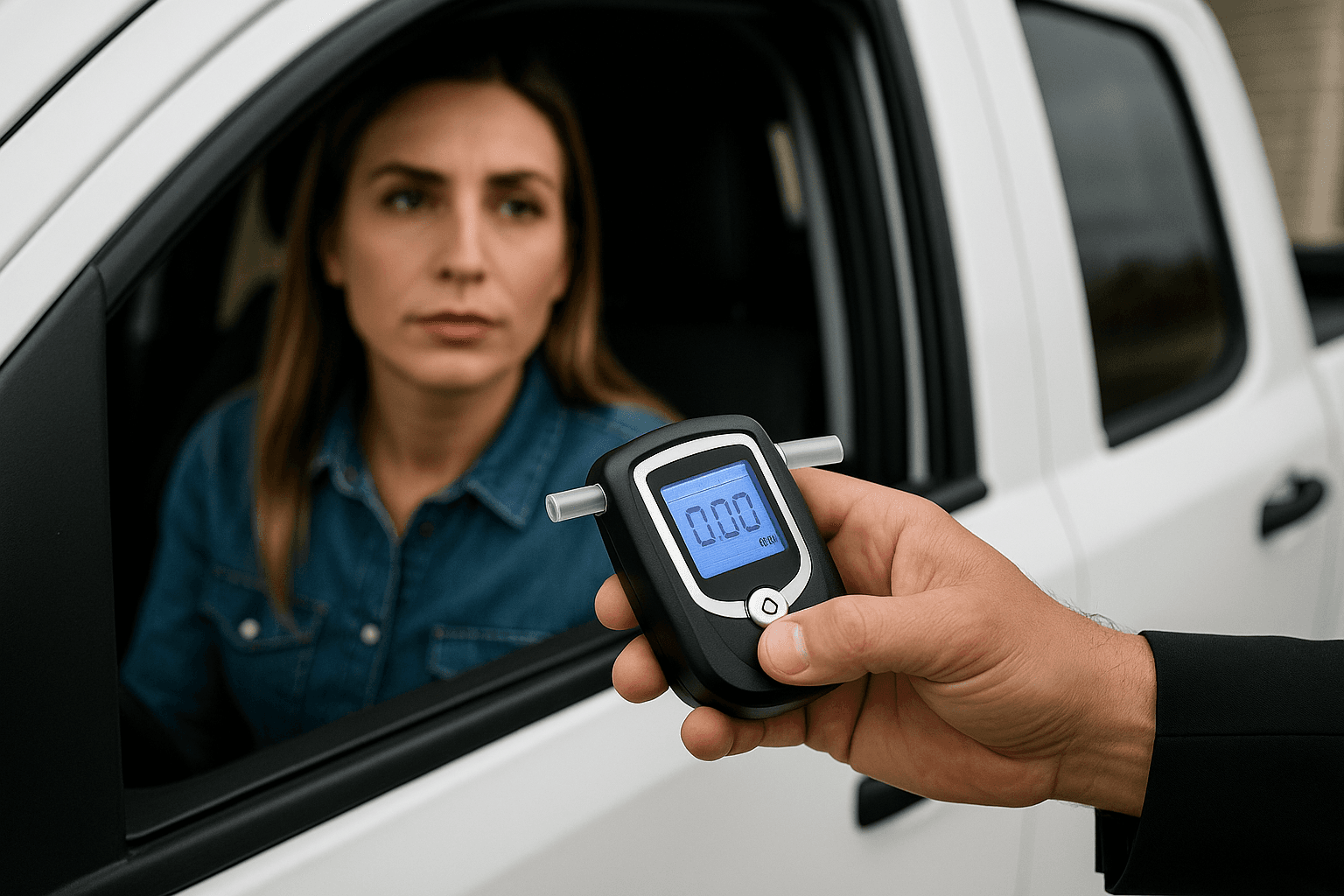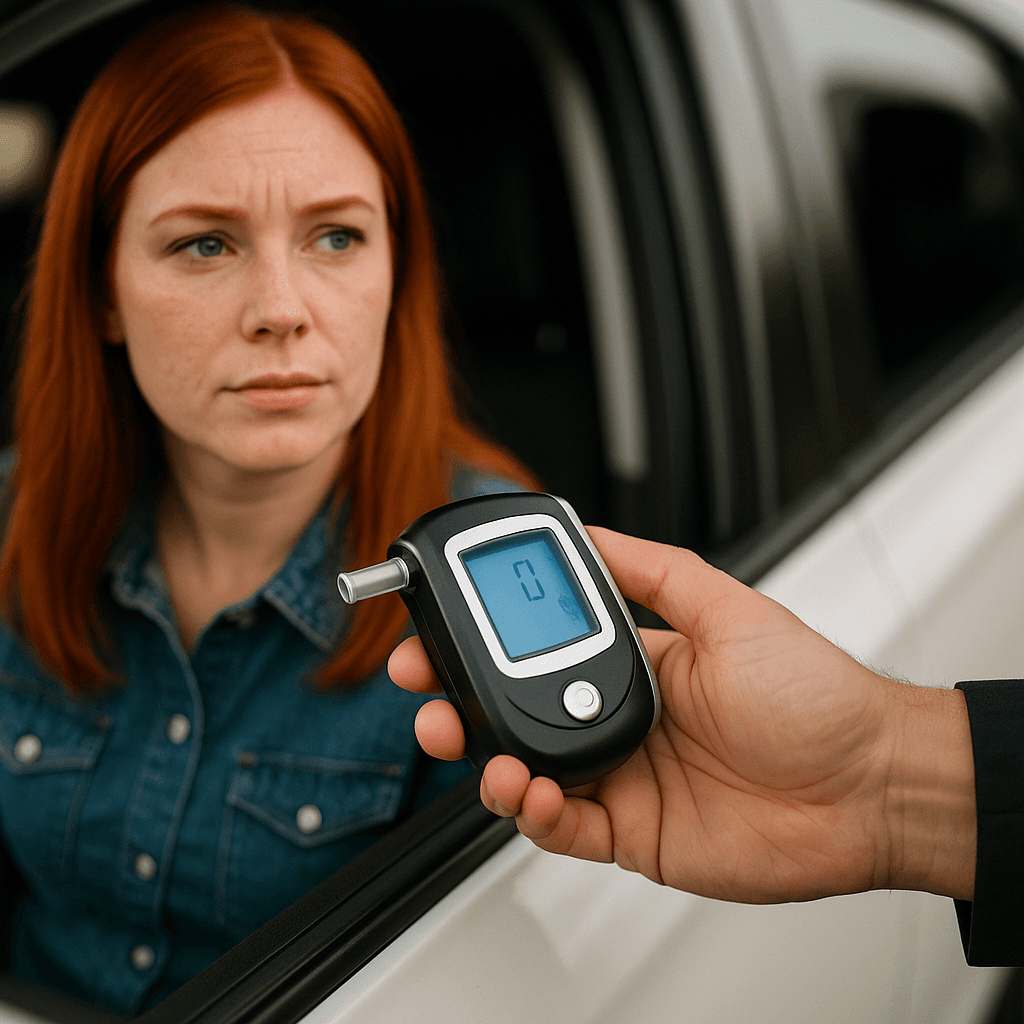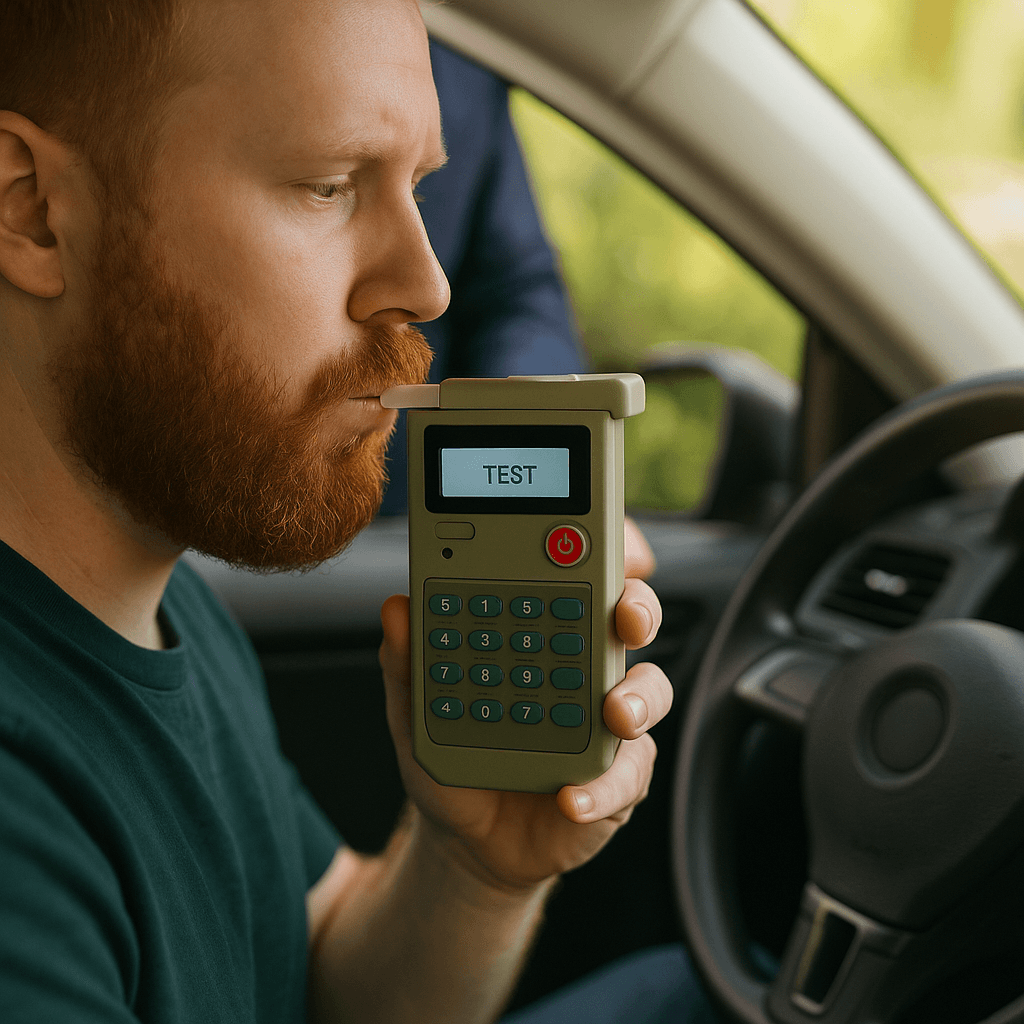
Your hardship license requires an ignition interlock device, but the state doesn't tell you what data it sends or how violations are flagged. Here's what the device reports, how transmission works, and what triggers enforcement action.
What Data Does the Ignition Interlock Device Transmit to the State?
Ignition interlock devices transmit every breath test result, every lockout event, every attempted start with a failed test, and every missed rolling retest to the state DMV or monitoring authority in real time via cellular modem. The device logs the timestamp, BAC reading, GPS coordinates, and vehicle identification for each event. Most states receive this data within 24 hours of the event through a centralized reporting portal maintained by the IID manufacturer.
The device also reports tampering attempts: disconnection from power, attempts to bypass the handset, removal of the camera housing, or obstruction of the breath sensor. Some states require photo verification at each test; those images are transmitted alongside the BAC reading. Maintenance appointments, calibration lapses, and low battery warnings are also logged and transmitted automatically.
States do not monitor this data in real time for every driver. Most compliance programs flag accounts automatically when specific violation thresholds are crossed: multiple failed starts within a rolling 30-day window, a single BAC reading above a state-defined threshold (commonly 0.04% or 0.08%), or a missed rolling retest. Once flagged, the account moves to manual review, and the state sends a notice to the driver and the monitoring authority.
How Does Real-Time Transmission Work and What Happens When It Fails?
The ignition interlock device connects to the state reporting portal via a built-in cellular modem. The device transmits test data, lockout events, and GPS coordinates every time the vehicle is started or a rolling retest is completed. If the cellular connection fails due to network outage, the device stores events locally and uploads them when connectivity is restored. Most devices store 30-60 days of offline event logs before running out of memory.
If the device cannot connect to the state portal for longer than the state-specified upload window (commonly 7-14 days), the manufacturer sends a notice to the driver and the monitoring authority. The state considers this a compliance failure even if no violations occurred. The driver must bring the vehicle to an authorized service center for manual data download. Failure to do so within the notice window results in a hardship license suspension in most states.
Some rural areas have weak cellular coverage. If you know your commute or work location has poor signal, notify the monitoring authority and the service center at installation. Many states allow extended upload windows for documented connectivity issues, but you must request this accommodation in advance. Retroactive extensions are rarely granted.
Compare car insurance rates in your state
Get quotes from licensed carriers — no obligation, no spam, results in minutes.
Get Your Free Quote✓ No Obligation Required✓ Licensed Carriers Only✓ Available Nationwide✓ Free to Compare
What Violations Trigger State Enforcement Action?
States define violation thresholds in their hardship license or IID program regulations. A failed start attempt (BAC above the device lockout threshold, commonly 0.02% to 0.025%) is logged but does not automatically trigger enforcement unless repeated. Most states flag accounts after 3-5 failed start attempts within a rolling 30-day period. A single BAC reading above the state's high-threshold level (commonly 0.04% or 0.08%) triggers immediate review in most jurisdictions.
A missed rolling retest triggers a violation flag after the second consecutive miss within a single trip. Rolling retests are random prompts while driving; the driver has 5-10 minutes to pull over safely and provide a breath sample. Missing the window once is a warning. Missing twice in one trip is a reportable event. Some states count missed rolling retests cumulatively across multiple trips; others reset the count each trip.
Tampering, disconnection, or obstruction of the device triggers immediate enforcement review. The state receives a tampering alert within hours. Most states issue a show-cause notice requiring the driver to appear at a DMV hearing within 10-15 days. If the driver cannot prove the event was accidental or caused by a documented mechanical failure, the hardship license is revoked and the underlying suspension period restarts from the revocation date.
Some states impose a grace period for first-time minor violations: one failed start, one missed rolling retest, or one late calibration appointment. The grace period is consumed on the first violation; subsequent violations of any type move directly to enforcement. Other states count violations cumulatively across violation types. Read your state's IID program manual at installation; the service center should provide a printed summary.
How Long Does the State Store IID Compliance Data?
Most states retain ignition interlock compliance data for the duration of the IID requirement plus 3-5 years after the device is removed and the hardship license or full license is reinstated. This data is part of your driving record and may be subpoenaed in future legal proceedings. Some states archive IID data indefinitely for repeat offenders or drivers with multiple DUI convictions.
If you apply for a hardship license extension, hardship license reinstatement after revocation, or full license reinstatement, the state reviews the entire IID compliance history. A pattern of near-violations (BAC readings just below the lockout threshold, frequent late calibrations, multiple rolling retest warnings) can delay reinstatement even if no formal violations occurred. Compliance officers look for behavioral patterns, not just threshold crossings.
Some states allow drivers to request a compliance summary report from the IID manufacturer or the state monitoring authority before the hardship license term ends. This report shows total test counts, average BAC readings, violation flags, and maintenance compliance. Drivers use this report to preemptively address concerns before the reinstatement hearing. Not all states offer this; check with your monitoring authority.
What Happens If You Move to Another State During the IID Requirement?
Interstate transfer of ignition interlock requirements depends on whether the new state participates in the Driver License Compact and whether it recognizes out-of-state hardship licenses. Most states do not honor out-of-state hardship licenses; you must apply for a new hardship or restricted license in the new state under that state's program rules. The IID requirement typically follows you, but the compliance reporting transfers to the new state's monitoring authority.
Before moving, contact the new state's DMV or licensing agency and confirm: (1) whether the new state recognizes your suspension from the original state, (2) whether the new state requires IID for the same suspension type, (3) how many months of IID credit transfer from the original state, and (4) which IID manufacturers are approved in the new state. Some manufacturers operate nationally; others are regional. If your current device is not approved in the new state, you must have it removed and a new device installed by an approved service center in the new state within 10-30 days of establishing residency.
The original state continues to enforce its IID requirement until you notify the court or DMV that issued the hardship license of your move and provide proof of new-state compliance. Failure to notify the original state results in a hardship license revocation and a warrant for non-compliance in some jurisdictions. The new state may also refuse to issue a license until the original state confirms the case is closed or transferred.
How Insurance Fits Into IID Compliance and Hardship License Maintenance
Most states that require ignition interlock devices also require continuous SR-22 insurance or FR-44 insurance (in Florida and Virginia) for the duration of the IID requirement. The SR-22 is a filing, not a policy; it certifies to the state that you carry at least the state-mandated liability minimums. If your policy lapses for any reason, the insurance carrier notifies the state within 24 hours, and your hardship license is suspended immediately in most jurisdictions.
The IID service center and the insurance carrier do not communicate directly. You must maintain both independently. Some drivers assume the IID compliance report satisfies insurance filing requirements; it does not. The state monitors IID compliance and insurance compliance through separate systems. A clean IID record does not prevent suspension for insurance lapse, and continuous SR-22 filing does not excuse IID violations.
If you do not own a vehicle and hold a hardship license for work or medical purposes only, ask your state whether non-owner SR-22 insurance satisfies the filing requirement. Non-owner policies cover you when driving a vehicle you do not own; they are cheaper than standard policies and meet SR-22 filing requirements in most states. Some states require proof that an IID is installed in any vehicle you drive regularly, even if you do not own it. Verify this before purchasing non-owner coverage.