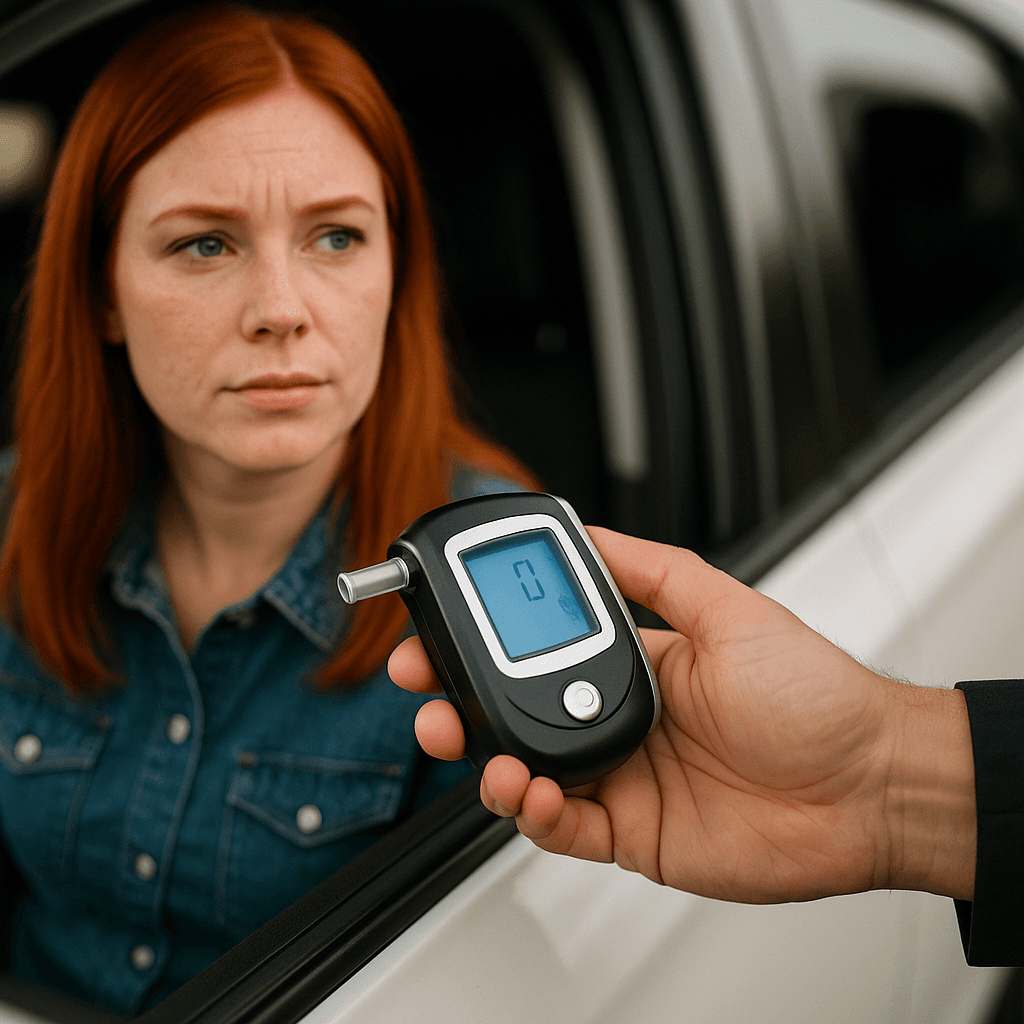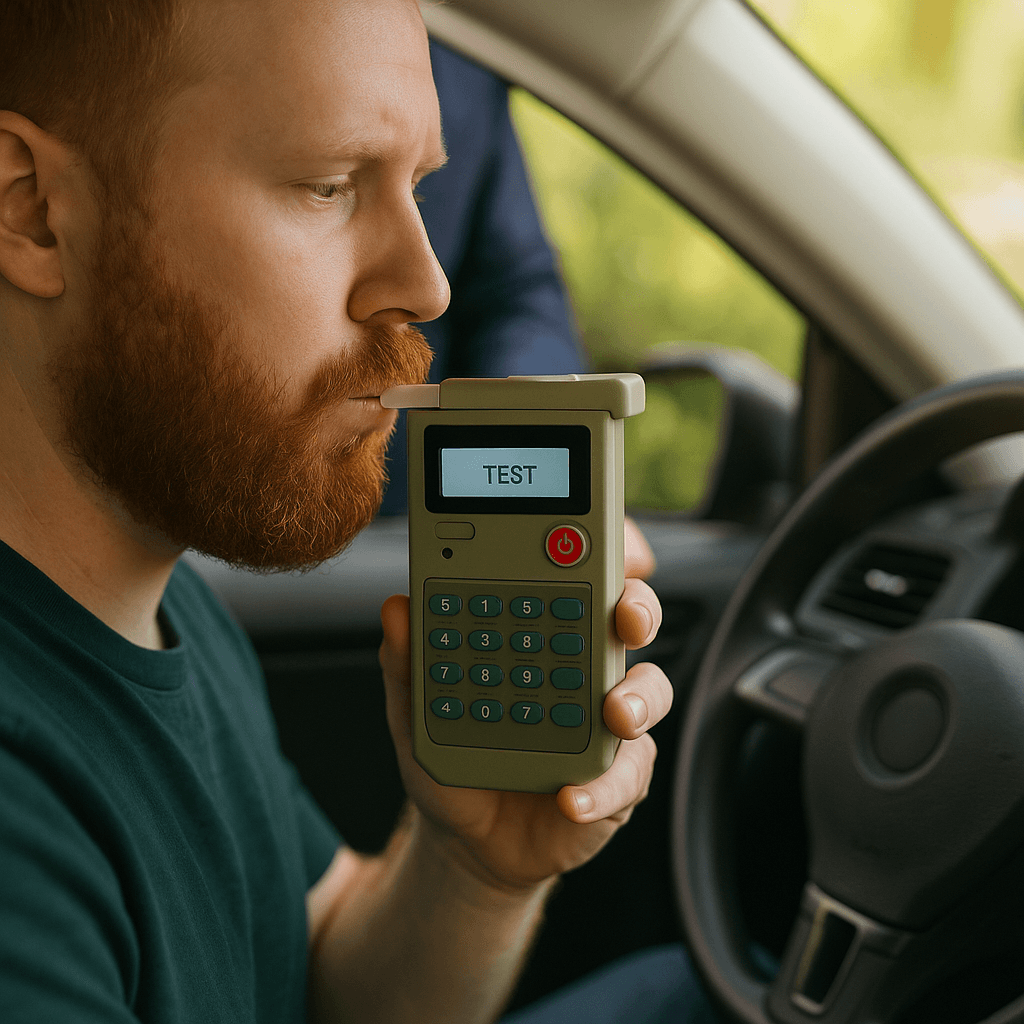
Most drivers approved for hardship licenses don't realize ignition interlock calibration is legally mandated monthly and that a single missed appointment triggers automatic license revocation in most states—no warning, no grace period.
Why Ignition Interlock Calibration Is a Separate Legal Requirement
Ignition interlock calibration is not vehicle maintenance. It is a court-supervised compliance event that your state's monitoring authority tracks in real time and reports to the DMV and the court that issued your hardship license. When you receive a hardship license with an ignition interlock requirement, your approval order specifies a calibration schedule—typically every 30 days. That schedule is a legal condition of your restricted driving privilege, not a manufacturer recommendation.
Most states contract with private interlock vendors (Smart Start, LifeSafer, Intoxalock, Draeger) who transmit calibration data directly to the DMV or the court's monitoring program. When you miss a calibration appointment, that absence appears in your compliance record within 24 to 48 hours. The court does not contact you. The DMV does not send a reminder. Your hardship license is revoked automatically in most jurisdictions once the grace period expires—usually 5 to 10 days after the missed appointment.
Calibration appointments serve three functions: they verify the device is measuring blood alcohol accurately, they download the event log showing every startup test and rolling retest, and they document compliance with your restricted driving order. The court cares about the event log more than the calibration itself. If the log shows failed tests, skipped retests, or tampering attempts, your hardship license can be revoked even if you attended every calibration appointment on time.
How Often Calibration Happens and What the Appointment Involves
Standard calibration intervals are every 30 days for the first six months of your interlock requirement, then every 60 days if your compliance record is clean. Some states (Texas, Arizona, Florida) allow 60-day intervals from the start if the offense was a first DUI with no aggravating factors. High-BAC offenses, refusal cases, and second or subsequent DUI convictions typically lock drivers into 30-day intervals for the full term.
The appointment itself takes 15 to 30 minutes. The technician connects a diagnostic tool to the interlock unit, downloads the event log, runs a calibration test using a gas standard, and inspects the camera (if your state requires photo verification). You receive a printed calibration certificate at the end of the appointment. That certificate is your proof of compliance. Keep every certificate in your vehicle—if you are stopped by law enforcement, they may ask to see your most recent calibration record along with your hardship license documentation.
Missing a calibration window by even one day can trigger a lockout mode in many interlock models. The vehicle will start, but the device will display a warning message and log the missed appointment. After the grace period expires (typically 5 days), the device enters permanent lockout and the vehicle will not start until you complete the overdue calibration. By that point, your hardship license has already been revoked in most states. Reinstatement after a calibration-related revocation requires a new court hearing, a new hardship application, and in some cases a new interlock installation with the full monitoring term restarted from zero.
Compare car insurance rates in your state
Get quotes from licensed carriers — no obligation, no spam, results in minutes.
Get Your Free Quote✓ No Obligation Required✓ Licensed Carriers Only✓ Available Nationwide✓ Free to Compare
What Happens When You Miss a Calibration Appointment
The first consequence is administrative. Your interlock vendor reports the missed appointment to the state monitoring authority within 48 hours. If your state uses a real-time dashboard (Florida's DUI Monitoring Program, Texas's Interlock Management System, California's IID pilot program), the violation appears in your record immediately. The court or DMV receives an automated compliance alert, and your hardship license status changes to "non-compliant."
Most states impose a 5-day grace period before formal revocation. During that window, you can schedule an emergency calibration appointment and submit proof of completion to the monitoring authority. Not all states allow grace-period corrections. Pennsylvania, Ohio, and Michigan treat a missed calibration as an automatic violation with no remedy short of a new hardship petition. In those states, the hardship license is revoked the day after the missed appointment, and you are prohibited from driving under any circumstances until a judge reinstates your privilege.
The second consequence is practical. If your interlock enters permanent lockout, you cannot drive to work, to required DUI education classes, or to any of the approved purposes listed on your hardship order. Missing work because your vehicle is locked often leads to job loss, which in turn makes you ineligible for continued hardship driving in states that require documented employment as a condition of approval. Missing DUI education classes triggers a separate compliance failure that can extend your underlying suspension term by six months to a year.
How Insurance Monitoring Connects to Calibration Compliance
SR-22 or FR-44 insurance filing is a separate requirement from ignition interlock calibration, but both feed into the same compliance monitoring system. When your insurer files an SR-22 on your behalf, the state monitoring authority cross-references your insurance status with your interlock calibration record. If your SR-22 lapses or if you miss a calibration appointment, both violations appear in the same compliance dashboard.
Some states (Virginia, Florida, Illinois) suspend insurance coverage verification during a calibration-related lockout. If your vehicle is inoperable because you missed calibration, your insurer is not required to maintain continuous SR-22 filing. When the lockout is resolved, you must refile the SR-22 and pay a reinstatement fee even if the underlying policy never lapsed. Other states (California, Arizona, Texas) treat a calibration lockout as a separate event and do not pause SR-22 continuity requirements. In those states, you must maintain continuous SR-22 filing even if your vehicle cannot start.
Non-owner SR-22 policies do not exempt you from calibration requirements if your hardship license specifies an interlock condition. Even if you do not own a vehicle, you are required to install an interlock in any vehicle you operate, and you must complete calibration appointments on the court-ordered schedule. If you borrow a vehicle without an interlock installed, you are driving in violation of your hardship order, and your license will be revoked if discovered.
State-Specific Calibration Rules and Monitoring Differences
Texas requires monthly calibration for the full term of the occupational license unless the court specifies otherwise in the hardship order. Texas interlock vendors report to the DPS Interlock Management System, which cross-references calibration records with SR-22 filing status and DUI education attendance. A single missed calibration triggers a compliance hold, and the occupational license is revoked after 10 days unless proof of makeup calibration is submitted to the court.
Florida mandates monthly calibration for all Business Purpose Only licenses issued after a DUI conviction. Florida uses a centralized DUI Monitoring Program that tracks interlock compliance, FR-44 insurance status, and DUI school completion in a single dashboard. Missing calibration or allowing FR-44 to lapse disqualifies you from BPO eligibility for 90 days after the violation is resolved. Reinstatement requires a new hardship hearing and a new $60 application fee.
California allows 60-day calibration intervals for first-offense DUI restricted licenses if the driver completes the first 90 days without violations. California does not revoke the restricted license automatically for a single missed calibration—the DMV issues a notice of non-compliance and allows 15 days to cure. A second missed appointment within six months results in immediate revocation with no cure period.
States without centralized monitoring (Montana, Wyoming, South Dakota) rely on vendor self-reporting and periodic audits. In those states, a missed calibration may not appear in your record for 30 to 60 days, but when it does, the court treats the violation retroactively and may revoke your hardship license effective the date of the original missed appointment.
What to Do If You Realize You Missed Calibration
Call your interlock vendor immediately and request the next available appointment. Most vendors offer same-day or next-day emergency calibration if you explain that you are in a compliance grace period. Complete the appointment and request a written calibration certificate with the date and time stamped.
Contact the court or DMV monitoring authority that issued your hardship license and submit proof of the makeup calibration. Some states allow electronic submission through a compliance portal; others require mailed documentation with a tracking number. Do not assume the vendor's transmission of calibration data is sufficient—submit your own proof directly.
If your vehicle is already in permanent lockout, do not attempt to drive it to the calibration appointment. Arrange a tow or rideshare to the vendor's service location. Driving a locked interlock vehicle is treated as tampering in most states and results in immediate hardship license revocation with no appeal.
If your grace period has already expired and your hardship license has been revoked, you will need to file a new hardship petition. The process varies by state, but most require a new court hearing, a new application fee, and evidence that the calibration schedule will be followed going forward. Some judges require proof of enrollment in a compliance monitoring service or proof of automated calibration reminders before approving a second hardship license.