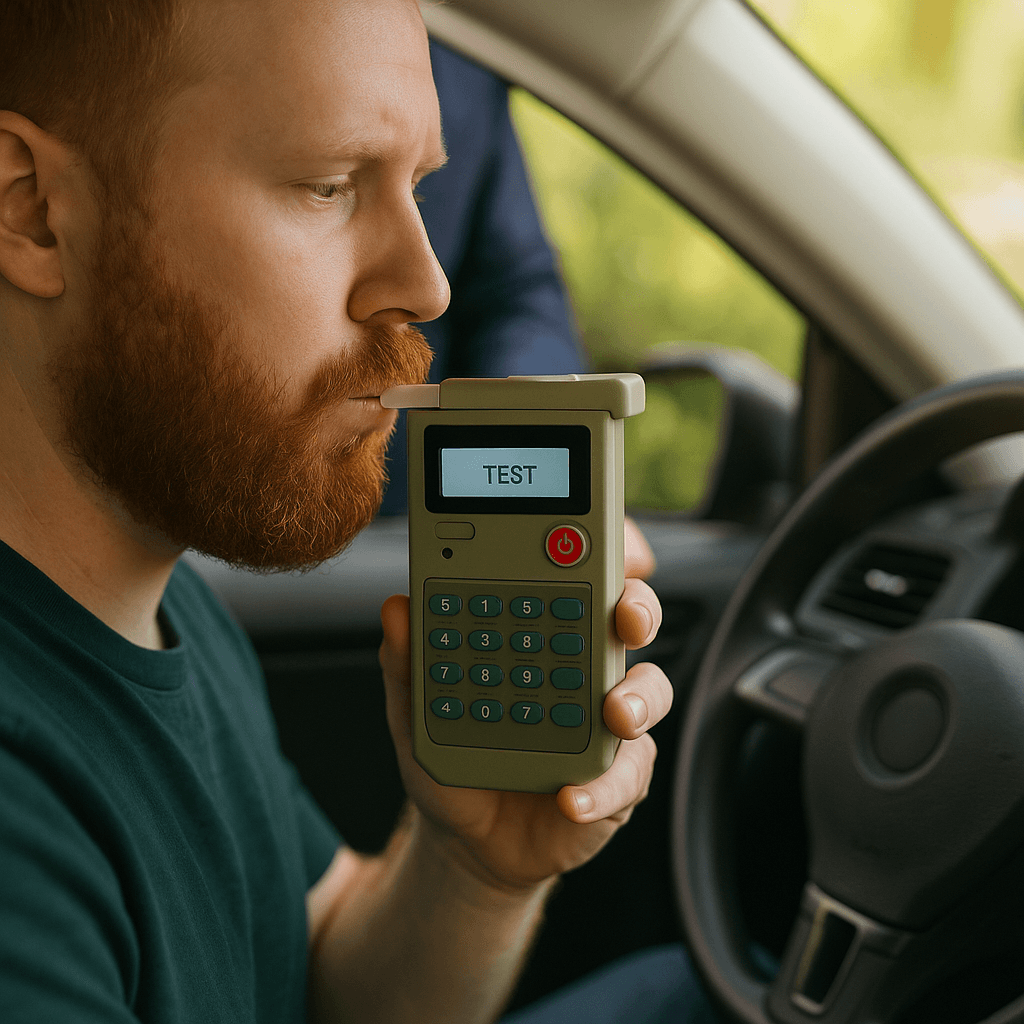
Your hardship license requires an ignition interlock device, but your spouse and teenage son also drive the family car. Most states impose IID requirements on all household vehicles regardless of who drives them—and violations by family members count against your license.
Do All Household Vehicles Need an Ignition Interlock When You Hold a Hardship License?
Most states require an ignition interlock device on every vehicle registered to your household address when a hardship license is granted, not just the vehicle you personally drive. This applies even if your spouse, adult children, or other household members are the primary drivers of those vehicles and hold unrestricted licenses.
The all-vehicle requirement exists because states view household registration as a proxy for access. If you share an address with a vehicle, enforcement agencies assume you could access that vehicle, regardless of whose name appears on the title. States like Arizona, Illinois, Ohio, and Texas enforce this interpretation strictly through their hardship license program rules.
A minority of states allow an exemption process for vehicles you cannot access, but the burden of proof sits entirely with you. You must typically demonstrate through documentation—employer vehicle assignments, lease agreements showing separate addresses, or custody arrangements—that you have no physical or legal access to the exempted vehicle.
What Happens When a Family Member Violates the IID Requirement on a Shared Vehicle?
A family member's violation of the IID requirement—whether tampering, circumventing the device, or driving without completing the breath test—counts as your violation in most state hardship license programs. The device logs every failed start attempt, every failed rolling retest, and every disconnection event. These logs are transmitted to the monitoring authority, typically your state's DMV or the court that granted your hardship license.
The consequence is immediate revocation in most jurisdictions. Ohio's occupational license program, for example, treats any IID violation as a breach of the restricted license terms, triggering automatic suspension without a hearing. Illinois treats circumvention by a household member identically to circumvention by the license holder—both result in termination of driving privileges and extension of the underlying suspension period.
Some states allow a single violation appeal if you can prove you were not the driver and had no knowledge of the circumvention attempt, but the evidentiary standard is high. You cannot simply assert that your spouse or teenager was the violator—you must provide corroborating evidence such as work timesheets, GPS data, or third-party testimony showing you were not present when the violation occurred.
Compare car insurance rates in your state
Get quotes from licensed carriers — no obligation, no spam, results in minutes.
Get Your Free Quote✓ No Obligation Required✓ Licensed Carriers Only✓ Available Nationwide✓ Free to Compare
Can You Exclude a Vehicle From the IID Requirement If Another Driver Uses It?
A small number of states allow vehicle exclusions from the IID requirement, but the criteria are narrow and procedural compliance is strict. You must file a formal exclusion request at the time of your hardship license application or petition for modification afterward, depending on your state's administrative process.
Exclusion is typically granted only when you can demonstrate complete lack of access. A spouse's separate work vehicle titled solely in their name and parked at their workplace overnight may qualify. A vehicle driven exclusively by an adult child who lives at a documented separate address may qualify. A shared family vehicle that remains parked in your driveway does not qualify, even if another household member holds the title and pays the insurance.
States that allow exclusions—such as California, Florida, and Michigan—require supporting documentation with the exclusion petition. This includes title records, insurance declarations showing the other driver as the sole named insured, employer letters confirming a work vehicle assignment, or lease agreements proving separate residency. The state will deny exclusions filed without documentation, and most states do not allow appeals of exclusion denials.
How Do Insurance Requirements Change When Family Members Drive IID-Equipped Vehicles?
Every driver operating an IID-equipped vehicle must be listed on the vehicle's insurance policy, and the policy must disclose the ignition interlock requirement to the carrier. Failure to disclose the IID results in policy rescission if a claim occurs—carriers will deny coverage retroactively once they discover the device was installed and not reported.
Premiums increase for all household drivers when an IID is installed, not just the restricted license holder. Carriers view the device as evidence of high-risk household behavior, and they price accordingly. A spouse or adult child with a clean driving record will still see their premium rise when they are listed as a driver on an IID-equipped vehicle, typically by 20 to 40 percent depending on the carrier and the state.
Some carriers refuse to write policies covering IID-equipped vehicles at all. If your current carrier drops you after the IID installation, you will need to move to a non-standard or high-risk carrier that specializes in restricted-license drivers. These carriers charge higher base premiums but are often the only option available once an IID requirement is in place.
What Are the Practical Options for Families Sharing Vehicles?
The cleanest solution is separate vehicles: one IID-equipped vehicle titled and insured solely in your name for your hardship driving, and one non-IID vehicle titled and insured solely in another household member's name for their unrestricted driving. This requires maintaining two separate insurance policies and ensuring the non-IID vehicle is never registered to your address if your state enforces strict household registration rules.
If separate vehicles are not financially feasible, the entire household must adapt to IID procedures. Every driver must complete the breath test before every trip and pass all rolling retests while driving. This includes your spouse driving to work, your teenager driving to school, and any other household member using the vehicle for any purpose. One failed test or one circumvention attempt by any driver jeopardizes your hardship license.
Some families choose to have the non-restricted household member hold all vehicle titles and insurance policies, with the restricted license holder listed as an excluded driver on the non-IID vehicle. This works only in states that honor driver exclusions and only when you can credibly demonstrate you will never operate the excluded vehicle. Any evidence you drove the excluded vehicle—whether a traffic stop, an accident, or even a neighbor's testimony—results in immediate hardship license revocation.