Most states tie the ignition interlock requirement to the driver, not the vehicle registration. If your household owns multiple cars but only one has the IID installed, you cannot legally drive the others during your hardship period without violating restriction terms.
The IID Restriction Applies to You, Not Your Household Fleet
Your hardship license with an ignition interlock requirement does not give you permission to drive any vehicle in your household. The restriction follows you as the driver. If the hardship order or court documentation specifies IID-only driving, you are prohibited from operating any vehicle not equipped with an approved interlock device during the restriction period.
Family members with valid unrestricted licenses can continue driving the household vehicles that lack interlock devices without issue. The IID requirement attaches to your driving privilege, not to the vehicle title or registration. This means your spouse, adult children, or other licensed household members are not required to install IID units in their own cars unless they share your suspension trigger.
The confusion arises because hardship documentation often lists approved purposes and routes but does not always clarify vehicle scope explicitly. Judges and DMV administrators assume the IID restriction is understood: if the device is mandatory for your hardship grant, you drive only IID-equipped vehicles. Most violation discoveries happen during traffic stops when officers run the hardship license and see the IID requirement but find no device installed in the vehicle you are operating.
What Happens If You Drive a Household Vehicle Without the IID
Operating a non-IID vehicle while under an interlock-restricted hardship license is treated as driving while suspended in most states. The hardship grant is conditioned on IID compliance. Violating that condition voids the restricted license and triggers the underlying suspension immediately.
Law enforcement will cite you for driving under suspension if they discover the violation during a traffic stop. Many states treat this as a separate criminal offense rather than a simple violation of hardship terms. You will lose the hardship license, the underlying suspension clock restarts or extends, and reinstatement eligibility is pushed back by months or years depending on state statute.
Courts rarely grant second hardship petitions after IID violations. The hardship privilege exists because the judge or DMV accepted your argument that restricted driving serves a compelling need and that you can be trusted to follow the conditions. Violating IID terms signals unreliability. Expect denial if you reapply after an interlock violation, even if the original suspension cause was minor.
Compare car insurance rates in your state
Get quotes from licensed carriers — no obligation, no spam, results in minutes.
Get Your Free Quote✓ No Obligation Required✓ Licensed Carriers Only✓ Available Nationwide✓ Free to Compare
Installing IID on Multiple Household Vehicles: Cost and Logistics
If you need access to more than one household vehicle during the hardship period, you must install interlock devices on each vehicle you intend to drive. Installation fees typically range from $75 to $150 per vehicle. Monthly monitoring and calibration fees run $60 to $90 per device. Over a 12-month hardship period, equipping two vehicles costs approximately $1,620 to $2,280 total.
Some households choose to install IID only on the primary commute vehicle and restrict the hardship driver to that car exclusively. This reduces cost but limits flexibility. If the IID-equipped vehicle is in the shop or unavailable, the hardship driver cannot legally operate the household backup car without violating restriction terms.
Interlock providers require separate service contracts for each vehicle. Calibration appointments occur every 30 to 60 days per device. Missing a calibration window on any installed unit can trigger a lockout or violation report to the monitoring authority, even if you have not driven that vehicle recently. Managing multiple IID units requires careful scheduling to avoid administrative violations that have nothing to do with failed breath tests.
When Family Members Share Vehicles With Installed IID Units
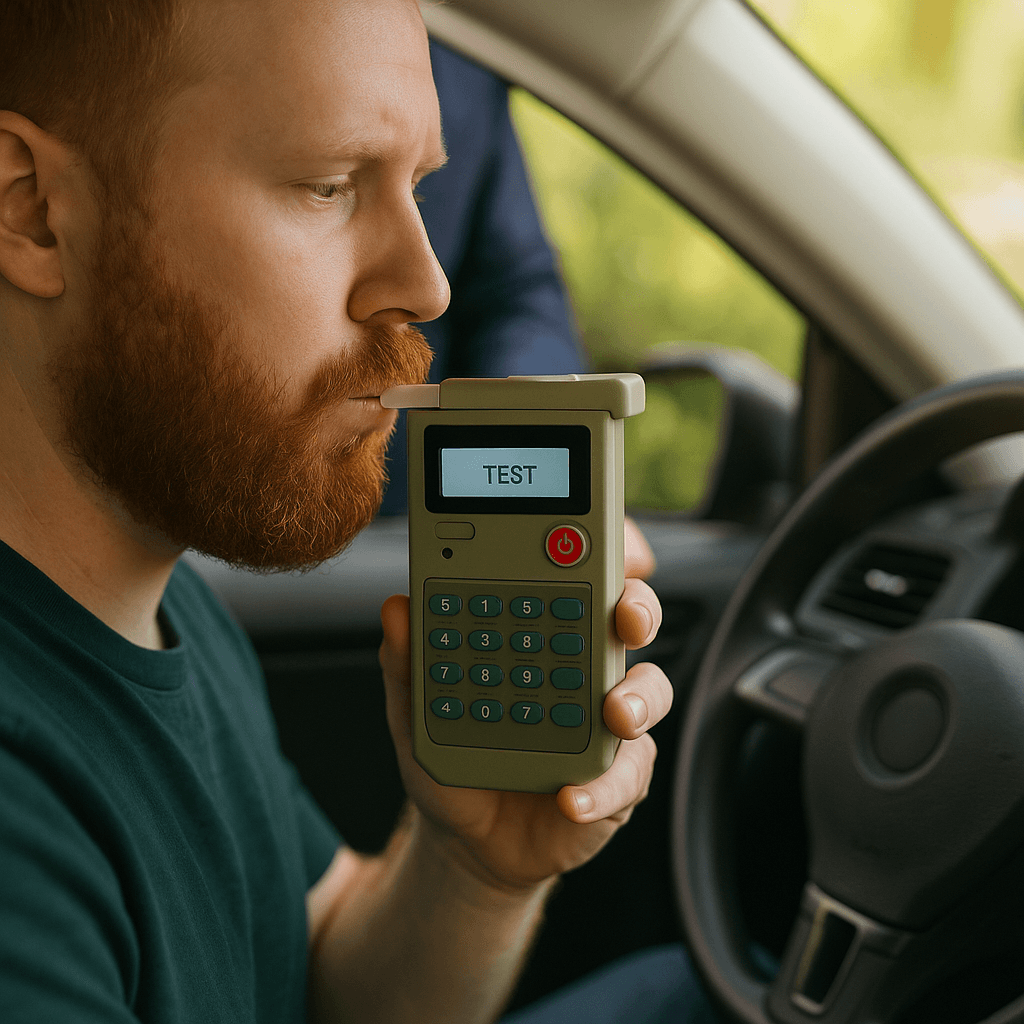
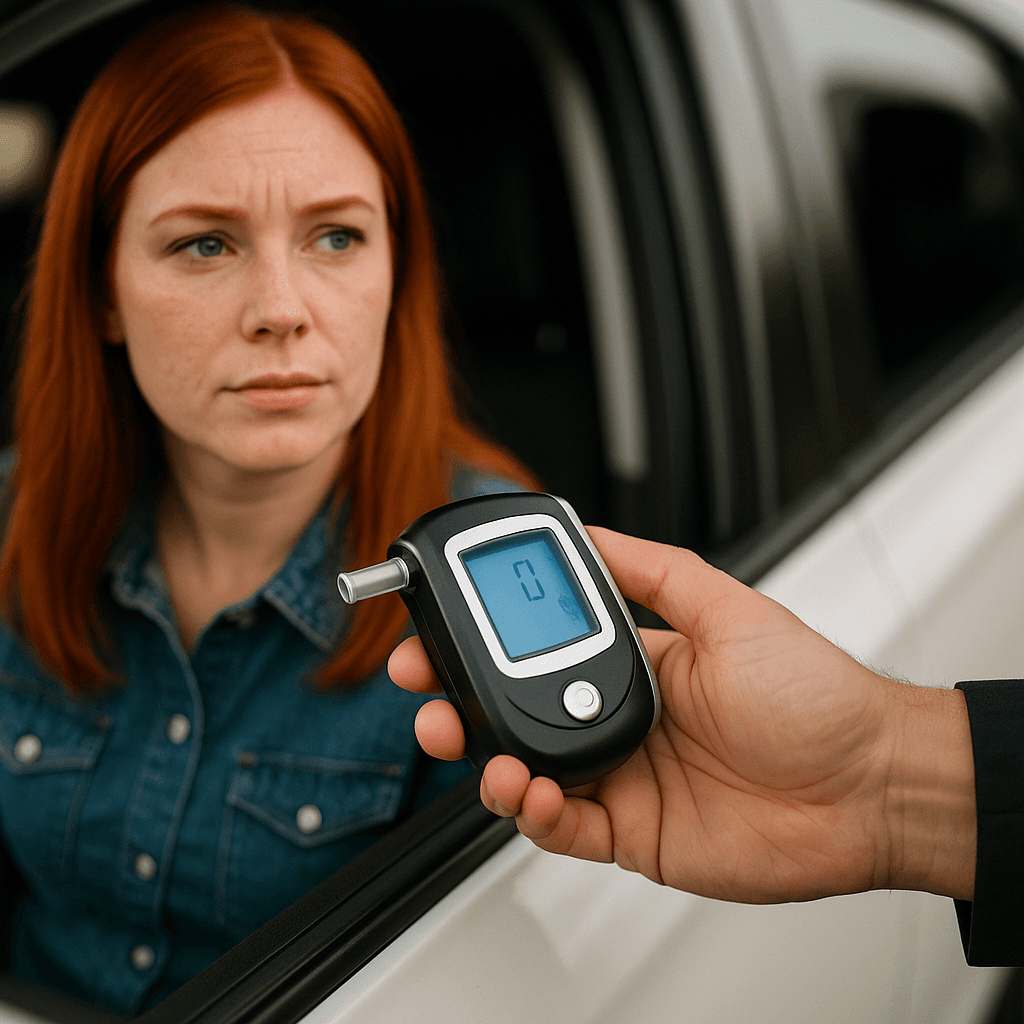
Family members with unrestricted licenses can drive IID-equipped vehicles. The device requires a clean breath sample before starting the engine and random rolling retests while driving. If your spouse or adult child drives the car to work, they provide the breath samples. The device does not care who is blowing into it as long as the sample registers below the programmed threshold.
Rolling retests occur at random intervals after the engine starts, typically within 5 to 15 minutes of departure and then periodically throughout the drive. If the non-restricted family member is driving alone and a retest prompt occurs, they must pull over safely and provide a sample within the time window or the device logs a violation. Some IID monitoring programs flag repeated retest violations as potential circumvention attempts even when the family member is the legitimate driver.
To avoid false violations, family members should understand the retest protocol before driving an IID-equipped vehicle. The device manual and provider orientation cover this. Most interlock contracts allow the account holder to designate alternate drivers. This does not eliminate the hardship driver's responsibility for all logged events, but it provides context if a retest violation occurs while someone else was behind the wheel.
State Variations in IID Multi-Vehicle Policy
Some states require IID installation on all household vehicles titled or registered to the restricted driver, regardless of how many the driver actually operates. This all-vehicle mandate appears in Arizona, New Mexico, and West Virginia hardship programs for DUI-related suspensions. The policy intent is to close the loophole where a restricted driver claims to drive only one car but has easy access to others.
Other states apply the restriction to the driver without mandating installation across all titled vehicles. In these jurisdictions, you are legally required to drive only IID-equipped vehicles, but you are not forced to install devices on cars you do not intend to operate during the hardship period. Texas, Illinois, and Ohio follow this model. The distinction matters for households with multiple registered vehicles but only one driver under restriction.
Court orders and DMV restriction letters specify whether the IID requirement applies per-vehicle or per-driver. Read the hardship documentation carefully. If the language states you must install IID on all vehicles registered in your name, you cannot avoid the cost by designating one car as your exclusive vehicle. If the language states you may drive only IID-equipped vehicles, you control which cars receive devices and which remain off-limits to you during the hardship period.
How SR-22 or FR-44 Filing Interacts With Multi-Vehicle IID Setup
If your hardship license requires both IID installation and SR-22 or FR-44 financial responsibility filing, the filing covers you as the driver across all vehicles you operate. The SR-22 certificate does not list specific vehicles. It certifies that you carry liability coverage meeting state minimums and that the insurer will notify the state if your policy lapses.
Adding IID devices to multiple household vehicles does not require separate SR-22 filings per vehicle. One SR-22 filing covers your driving activity regardless of how many cars you drive during the hardship period. Some insurers increase premiums when multiple IID installations are reported because the exposure profile changes, but the filing requirement itself remains a single certificate tied to your name and license number.
Non-owner SR-22 policies do not apply when you have regular access to household vehicles. If you install IID on two cars you drive frequently, you need a standard auto policy with SR-22 endorsement, not a non-owner policy. Non-owner coverage is designed for drivers without vehicle ownership or regular access. Installing interlock devices on household cars signals regular access, which disqualifies you from non-owner eligibility in most underwriting rules.
What to Do About Insurance During Hardship With Multiple IID Vehicles
Contact your current insurer as soon as the hardship license is granted and IID installation is scheduled. Notify them of the interlock requirement and provide the device provider's documentation. Some carriers will not continue coverage once IID is mandated. Others will continue but impose surcharge pricing or require SR-22 or FR-44 filing endorsement.
If your current carrier non-renews or cancels your policy after learning of the IID requirement, you will need coverage through a non-standard or high-risk carrier. Insurers specializing in SR-22 and hardship-license drivers understand IID protocols and will not automatically reject you. Expect premium increases of 50% to 150% over your pre-suspension rate, depending on the suspension trigger and your prior driving record.
List all household vehicles on the policy if you plan to install IID on more than one. The insurer needs accurate vehicle count and usage information to calculate exposure and set premiums correctly. If you drive two IID-equipped cars during the hardship period but only list one on your policy, the insurer can deny claims involving the unlisted vehicle or rescind the policy for material misrepresentation. Honest disclosure prevents claim denials later.