No state hardship license program currently requires real-time GPS vehicle monitoring. The confusion stems from ignition interlock devices, which log location at engine start but don't track movement, and ankle monitors used for house arrest unrelated to driving privileges.
Do Hardship Licenses Require GPS Tracking of Your Vehicle?
No. No state DMV attaches GPS tracking devices to vehicles issued hardship licenses, occupational licenses, or restricted licenses. The devices required in some states record ignition events and engine runtime, not continuous location.
The confusion arises because ignition interlock devices (IIDs) log GPS coordinates at engine start and at random rolling retests while driving. That coordinate log is not real-time tracking. The IID stores location stamps locally and transmits them during monthly calibration appointments. Law enforcement and probation officers cannot monitor your vehicle's movements in real time through an IID.
Ankle monitors used for house arrest or probation compliance are entirely separate systems. They track the person, not the vehicle, and are ordered by courts for criminal supervision, not by DMVs as a condition of driving privileges.
What Ignition Interlock Devices Actually Record
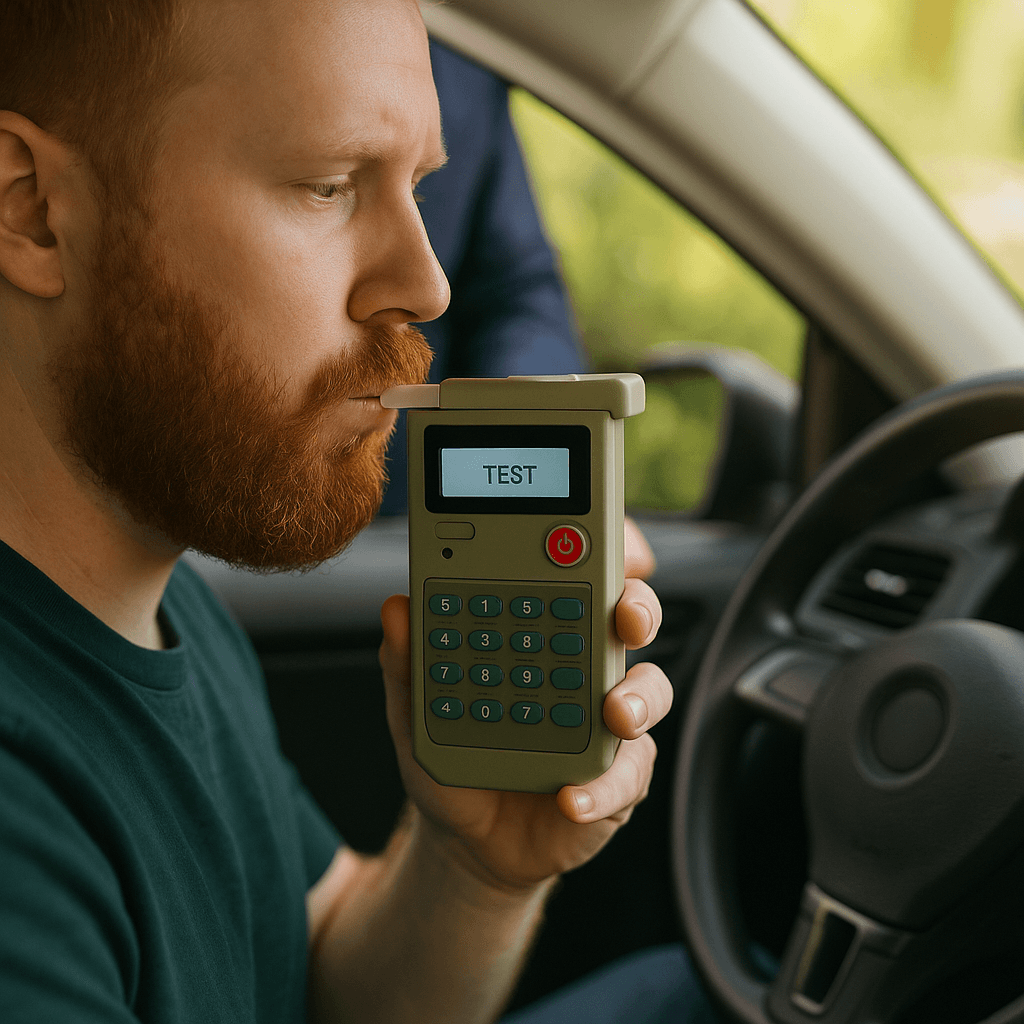
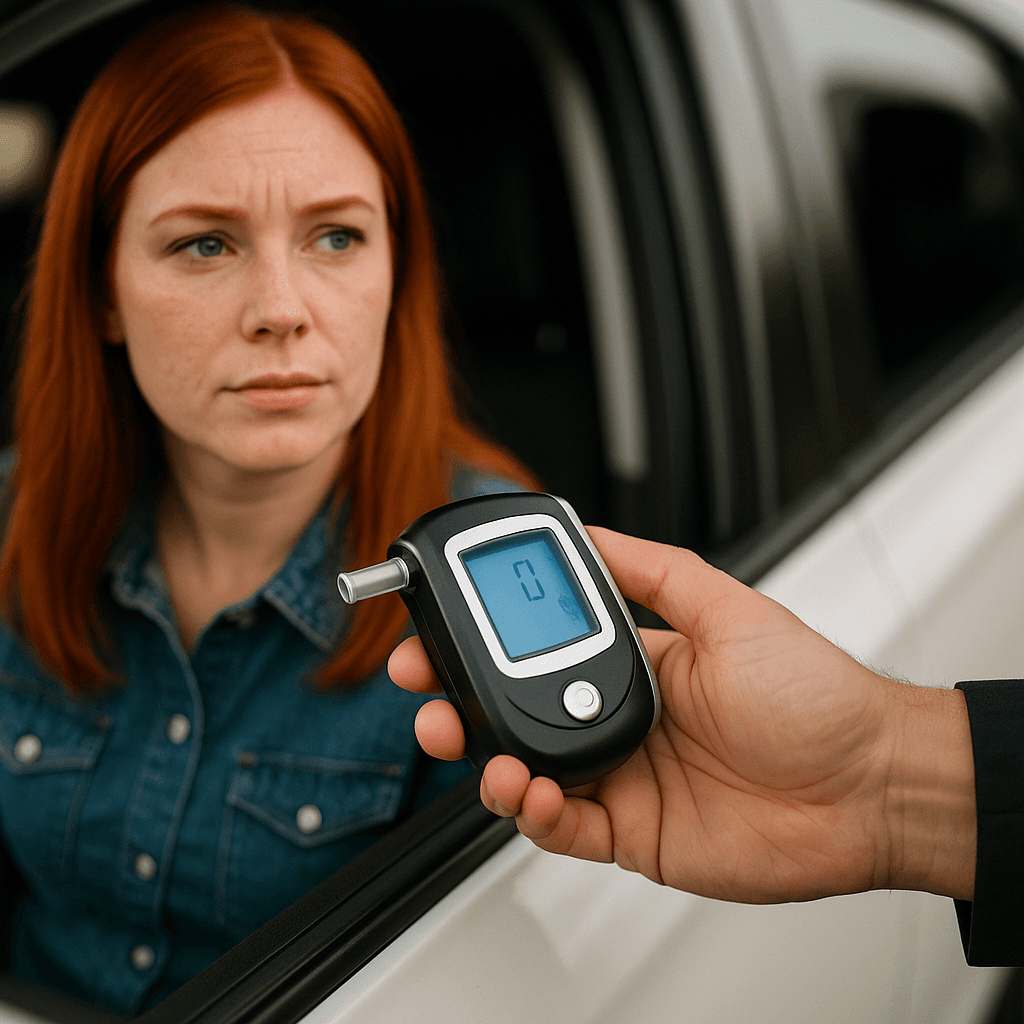
IIDs are breath alcohol sensors wired into your vehicle's starter circuit. They prevent engine ignition if your breath alcohol concentration exceeds a programmed threshold, typically 0.02% BAC. Every engine start requires a passing breath test. Random rolling retests occur while driving, typically every 15 to 45 minutes.
The device logs every test attempt, every passed test, every failed test, every missed rolling retest, and GPS coordinates at each event. It also logs tampering attempts, disconnections, and power interruptions. This data is stored on the device and uploaded during monthly calibration appointments at a certified service center.
State DMVs and courts review these logs for compliance violations. A failed test, a missed rolling retest, or evidence of tampering triggers a violation report. Depending on your state and the terms of your hardship license, one violation may result in immediate revocation of your driving privileges and extension of your IID requirement period.
Compare car insurance rates in your state
Get quotes from licensed carriers — no obligation, no spam, results in minutes.
Get Your Free Quote✓ No Obligation Required✓ Licensed Carriers Only✓ Available Nationwide✓ Free to Compare
Which States Require IID Installation for Hardship Licenses
Approximately 30 states mandate ignition interlock installation as a condition of hardship license approval for DUI-related suspensions. The requirement varies by offense count, BAC level at arrest, and whether injury or property damage occurred.
Texas requires IID installation for all occupational licenses issued after DWI suspension. The device must remain installed for the entire suspension period, typically 90 days to one year for a first offense. Florida mandates IID for Business Purpose Only licenses issued after DUI suspension, with minimum installation periods of six months for first offense and two years for second offense. Illinois requires IID for Monitoring Device Driving Permits (MDDPs) issued during statutory summary suspension. The device must stay installed for the full suspension period, which ranges from six months to three years depending on BAC and prior offenses.
California, Arizona, Michigan, Pennsylvania, Ohio, Georgia, Virginia, North Carolina, and Washington all have IID mandates tied to hardship license eligibility for DUI suspensions. Installation periods range from four months to multiple years. States without universal IID mandates for hardship licenses include New Jersey, which does not offer hardship licenses for DUI suspensions at all, and several states where IID is recommended but not legally required.
The Cost Stack When IID Is Required
IID installation typically costs $70 to $150. Monthly lease and calibration fees range from $60 to $100. Mandatory monthly calibration appointments cost $50 to $80 each. Removal at the end of the compliance period costs $50 to $100.
For a one-year IID requirement, expect total costs between $900 and $1,500. For a two-year requirement, total costs range from $1,700 to $2,900. These costs are in addition to hardship license application fees, SR-22 or FR-44 filing fees, and increased insurance premiums.
Some states offer indigent exemptions or payment plans for low-income drivers. Texas, Arizona, and Illinois have indigent IID programs that reduce monthly fees for drivers who qualify based on household income. Documentation requirements typically include recent pay stubs, tax returns, and proof of public assistance enrollment.
Why People Believe GPS Tracking Is Required
The belief stems from three sources. First, IID providers market their devices as having "GPS reporting" or "location verification," which sounds like real-time tracking but refers only to coordinate logging at test events. Second, probation officers sometimes use ankle monitors for DUI offenders serving probation, and those monitors do track location continuously. Drivers conflate the two systems.
Third, some states pilot programs testing real-time vehicle tracking for commercial drivers or repeat DUI offenders. Minnesota tested a pilot program in 2018 that used real-time GPS tracking for fourth-offense DUI cases, but the program applied to criminal probation supervision, not hardship license eligibility. The pilot ended in 2020 and was not expanded.
No state has implemented real-time GPS vehicle tracking as a standard condition of hardship license approval for typical first or second DUI suspensions.
Insurance Requirements After IID Installation
Installing an IID does not change your SR-22 insurance filing requirement, but most carriers require notification before installation. Your policy must list the IID-equipped vehicle. Some carriers charge an administrative fee for updating the policy, typically $25 to $50.
Your liability coverage must meet your state's minimum requirements throughout the IID compliance period. In Texas, that means $30,000 bodily injury per person, $60,000 per accident, and $25,000 property damage. In Florida, it means $10,000 property damage liability plus $10,000 personal injury protection. Letting your policy lapse during the IID period triggers immediate hardship license revocation in most states and restarts your suspension clock.
Drivers who do not own a vehicle but need IID-equipped transportation for work can use non-owner SR-22 coverage combined with employer vehicle IID installation. Some states allow IID installation on employer-owned vehicles if the employer consents in writing and the driver is the sole operator of that vehicle during work hours.
What Happens If You Drive Without the Required IID
Operating any vehicle not equipped with your court-ordered or DMV-ordered IID is a criminal offense in most states. In Texas, driving without the required IID is a Class A misdemeanor punishable by up to one year in jail and a $4,000 fine. In Florida, it is a first-degree misdemeanor punishable by up to one year in jail and a $1,000 fine.
Your hardship license is immediately revoked upon conviction. Your suspension period is extended by the length of the violation, typically adding six months to two years to your total suspension. Your IID compliance clock resets to zero, meaning any months already served do not count toward your requirement.
Some states treat driving without IID as a probation violation if the IID requirement was court-ordered as part of a DUI sentence. That triggers additional criminal penalties separate from the DMV suspension consequences.