South Carolina's hardship program allows most suspended drivers to apply for route-restricted driving — but DUI cases face a mandatory 30-day hard suspension first, and ignition interlock installation is non-negotiable.
What Is the Route Restricted License in South Carolina?
South Carolina calls its hardship driving privilege a Route Restricted License. This permits suspended drivers to operate a vehicle along specific, pre-approved routes for essential purposes: work, school, medical appointments, court-ordered obligations, and in some cases childcare or groceries. The license restricts both the routes you drive and the hours you can drive them.
The SCDMV or a judge defines these restrictions case by case. A factory worker with a 6 a.m. shift receives different route and time windows than a freelance contractor with variable appointments. You submit documentation proving your need — employer verification letters, school enrollment records, medical appointment schedules — and the state writes the restrictions onto your license document.
This is not permission to drive anywhere at any time. Violating the route or time restrictions written on your Route Restricted License triggers immediate revocation and adds new charges. The restrictions are the license.
Who Qualifies for a Route Restricted License After Suspension?
South Carolina's Route Restricted License program is open to most suspension triggers, including DUI, uninsured motorist violations, and points accumulation. The state does not categorically exclude any suspension type from hardship consideration, but approval depends on meeting specific conditions tied to your violation.
DUI suspensions require completing a 30-day hard suspension period before you can apply. During those 30 days, no driving privilege exists — not for work, not for emergencies, not for anything. After the hard period ends, you become eligible to petition for the Route Restricted License. You must also enroll in South Carolina's Alcohol and Drug Safety Action Program (ADSAP) before the hardship license can be issued, though you do not need to complete the entire program before receiving the license.
Uninsured motorist suspensions and points-based suspensions allow immediate application for the Route Restricted License without a hard suspension period. However, uninsured cases require proof of SR-22 insurance filed with the SCDMV before the hardship license is granted. Points suspensions sometimes require SR-22 and sometimes do not, depending on the underlying violations that triggered the point accumulation.
The variable most applicants miss is ignition interlock. South Carolina's Emma's Law mandates ignition interlock device installation for all DUI-related suspensions, including first offenses, as a condition of receiving any restricted driving privilege. This is unusual compared to many states, where first-offense DUI does not require IID for hardship licenses. The IID requirement applies even if you complete the 30-day hard suspension and enroll in ADSAP — it is a separate, mandatory condition.
Compare car insurance rates in your state
Get quotes from licensed carriers — no obligation, no spam, results in minutes.
Get Your Free Quote✓ No Obligation Required✓ Licensed Carriers Only✓ Available Nationwide✓ Free to Compare
How Much Does the Route Restricted License Cost in South Carolina?
The SCDMV charges a $100 application fee to process your Route Restricted License petition. This is a non-refundable administrative fee — you pay it whether your application is approved or denied.
If your suspension requires SR-22 filing, expect $15 to $35 in annual filing fees paid to your insurance carrier. These fees are separate from your liability premium, which will increase significantly after a suspension-triggering violation. Typical monthly premium increases for SR-22 policies in South Carolina range from $85 to $190 per month compared to standard rates, depending on your driving history, age, and the violation that caused the suspension. Estimates based on available industry data; individual rates vary by driving history, vehicle, coverage selections, and location.
Ignition interlock installation adds $75 to $150 upfront, plus $60 to $100 per month in monitoring and calibration fees for the duration of the device mandate. For a first-offense DUI in South Carolina, the IID requirement typically lasts six months. That translates to $435 to $750 in total IID costs on top of the application fee and insurance increases.
If your suspension stems from a court proceeding rather than an administrative DMV action, you may also face court filing fees or attorney costs, which vary by county. These are not standardized statewide.
How Do You Apply for a Route Restricted License in South Carolina?
You apply for the Route Restricted License through the South Carolina Department of Motor Vehicles, not through a court hearing. This is an administrative process. You complete the application form, gather required documentation, pay the $100 fee, and submit everything to your local SCDMV office.
Required documentation includes: proof of employment or school enrollment (employer verification letter on company letterhead, school registration records, or other official proof of need), proof of SR-22 insurance if your suspension type requires it, proof of ADSAP enrollment for DUI cases, and ignition interlock installation confirmation from a state-approved IID vendor if your case requires it. Missing any document delays processing or results in denial.
Processing time is not published by the SCDMV, but applicants typically report 10 to 20 business days from submission to license issuance when all documentation is complete. Incomplete applications sit in the queue until you provide the missing items, which resets the processing clock.
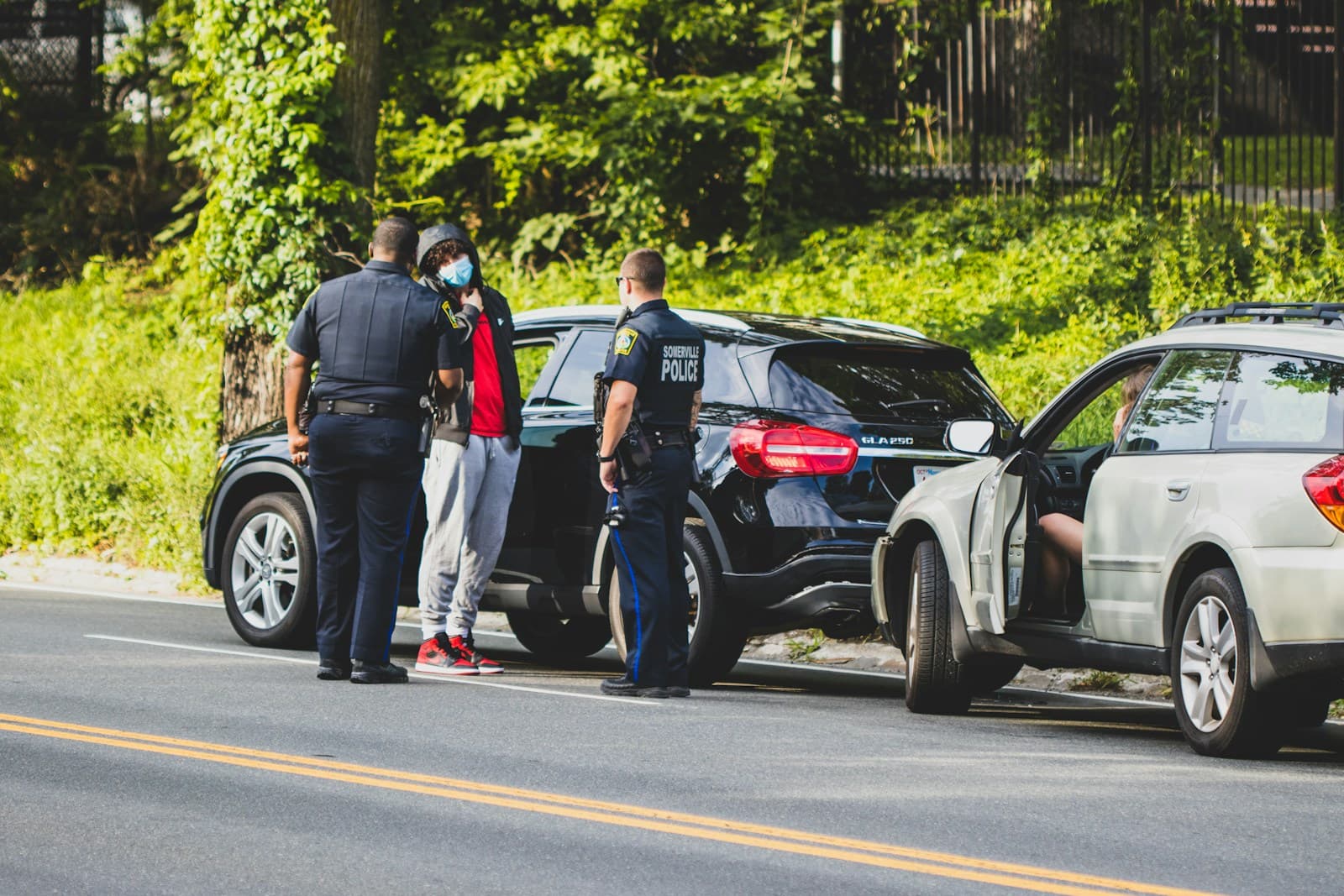
Once approved, your Route Restricted License lists the specific routes you are permitted to drive and the time windows during which you can drive them. These restrictions are printed on the license document itself. You must carry the license any time you drive, and law enforcement can verify the restrictions during a traffic stop. Driving outside your approved routes or time windows voids the license and results in new criminal charges.
What Routes and Hours Are Allowed on a Route Restricted License?
South Carolina does not issue blanket route or time permissions. The SCDMV defines your specific routes and hours based on the documentation you submit. If your employer verification letter states your work address and shift times, your Route Restricted License will authorize driving from your home address to that work address during those hours. If you work variable shifts or travel to multiple job sites, you must document each location and provide evidence of the schedule variability.
Allowed purposes typically include: employment, school or vocational training, medical appointments for yourself or dependents, court-ordered obligations including probation check-ins or child custody exchanges, and ADSAP classes or other mandatory treatment programs. Some counties allow grocery shopping or childcare within the route restrictions, but this is not automatic — you must request it and provide supporting documentation.
Time restrictions are tied to the documented need. A 9-to-5 office worker receives route authorization during commute windows around those hours. A night-shift warehouse worker receives different hours. You cannot drive outside the approved windows even if the route matches — a midnight grocery run is a violation even if the grocery store is on your approved work route.
Violating route or time restrictions is treated as driving on a suspended license, a criminal offense in South Carolina. It also terminates your Route Restricted License immediately.
How Does SR-22 Insurance Work with the Route Restricted License?
SR-22 filing is required for DUI suspensions and uninsured motorist suspensions in South Carolina. It is not universally required for points-based suspensions unless the underlying violations involved insurance lapses or uninsured driving. The SR-22 is a certification your insurance carrier files with the SCDMV proving you carry at least the state's minimum liability coverage: $25,000 per person for bodily injury, $50,000 per accident for bodily injury, and $25,000 for property damage.
You cannot receive the Route Restricted License until the SR-22 is on file with the SCDMV. Your carrier files it electronically, usually within 24 to 48 hours of binding your policy. You must maintain continuous SR-22 coverage for the entire filing period — typically three years in South Carolina for DUI cases. If your policy lapses for any reason, your carrier notifies the SCDMV electronically, and your Route Restricted License is suspended immediately.
If you do not own a vehicle, you can file a non-owner SR-22 policy. This provides liability coverage when you drive a borrowed or rented vehicle and satisfies the state's filing requirement. Non-owner policies typically cost $30 to $60 per month, significantly less than owner policies, but they do not provide collision or comprehensive coverage for the vehicle you drive.
Carriers writing SR-22 policies in South Carolina include GEICO, Progressive, State Farm, Dairyland, Bristol West, The General, Direct Auto, GAINSCO, and National General. Not all standard carriers offer SR-22 filing, so comparison shopping is necessary.
What Happens If You Violate Route Restricted License Terms?
Driving outside your approved routes or time windows terminates your Route Restricted License immediately and adds a new charge: driving under suspension. In South Carolina, this is a misdemeanor punishable by fines up to $1,000 and jail time up to 30 days for a first offense. Repeat offenses carry steeper penalties.
You also lose eligibility to reapply for the Route Restricted License. The SCDMV views route or time violations as evidence you cannot comply with restricted driving conditions, which disqualifies you from future hardship petitions until your original suspension period ends and you complete full reinstatement.
Law enforcement verifies Route Restricted License restrictions during traffic stops by checking the printed restrictions on your license document against your current location and time. If you are pulled over at 10 p.m. but your license restricts driving to 7 a.m. to 6 p.m., that discrepancy is immediately visible. GPS data from ignition interlock devices also creates a compliance record the SCDMV can audit.