Montana's probationary license requires navigating both district court petitions and Motor Vehicle Division (MVD) compliance. Court-defined terms vary by county, and the ignition interlock requirement adds a second compliance layer before you can drive again.
Who Can Apply for a Montana Probationary License
Montana allows probationary licenses (the state's legal term for hardship driving) for DUI offenses and points-based suspensions. The state does not restrict eligibility based solely on the violation type the way Pennsylvania or Washington do for uninsured-driving suspensions.
DUI applicants face a mandatory hard suspension before they can petition: approximately 45 days for a first offense, longer for subsequent offenses under MCA § 61-8-402. Points-based suspensions do not carry the same statutory waiting period, though individual district courts may impose their own timelines.
Unpaid fines and uninsured-driving suspensions are not explicitly barred from probationary license eligibility under Montana statute, but courts retain discretion. If your MVD suspension stems from unpaid tickets, the court will often require proof of payment or a payment plan before granting the probationary license. Rural geography matters: Montana courts recognize that driving 50+ miles one-way for work or medical care is common, and route restrictions reflect this reality more than urban-state frameworks allow.
District Court Petition Requirements and County Variation
Montana's probationary license is issued by a district court judge, not the Motor Vehicle Division (MVD). You file a petition in the district court of the county where you reside. The MVD administers the underlying suspension and reinstatement, but the probationary license itself is a judicial order.
Because Montana has 56 counties and each district court operates independently, petition fees, hearing schedules, and processing timelines vary. Some counties process petitions within 10 business days; others take 30+ days depending on court dockets. There is no statewide application fee standard codified in statute—courts assess fees locally.
Required documentation for most petitions: proof of need (employer affidavit, school enrollment, medical appointment documentation), SR-22 insurance certificate filed with the MVD, and evidence of ignition interlock device (IID) installation if your suspension is DUI-related. Courts expect you to demonstrate that your need to drive is employment-based, medical, or educational—recreational or social driving is excluded from probationary terms.
Compare car insurance rates in your state
Get quotes from licensed carriers — no obligation, no spam, results in minutes.
Get Your Free Quote✓ No Obligation Required✓ Licensed Carriers Only✓ Available Nationwide✓ Free to Compare
Ignition Interlock Requirement for DUI-Related Probationary Licenses
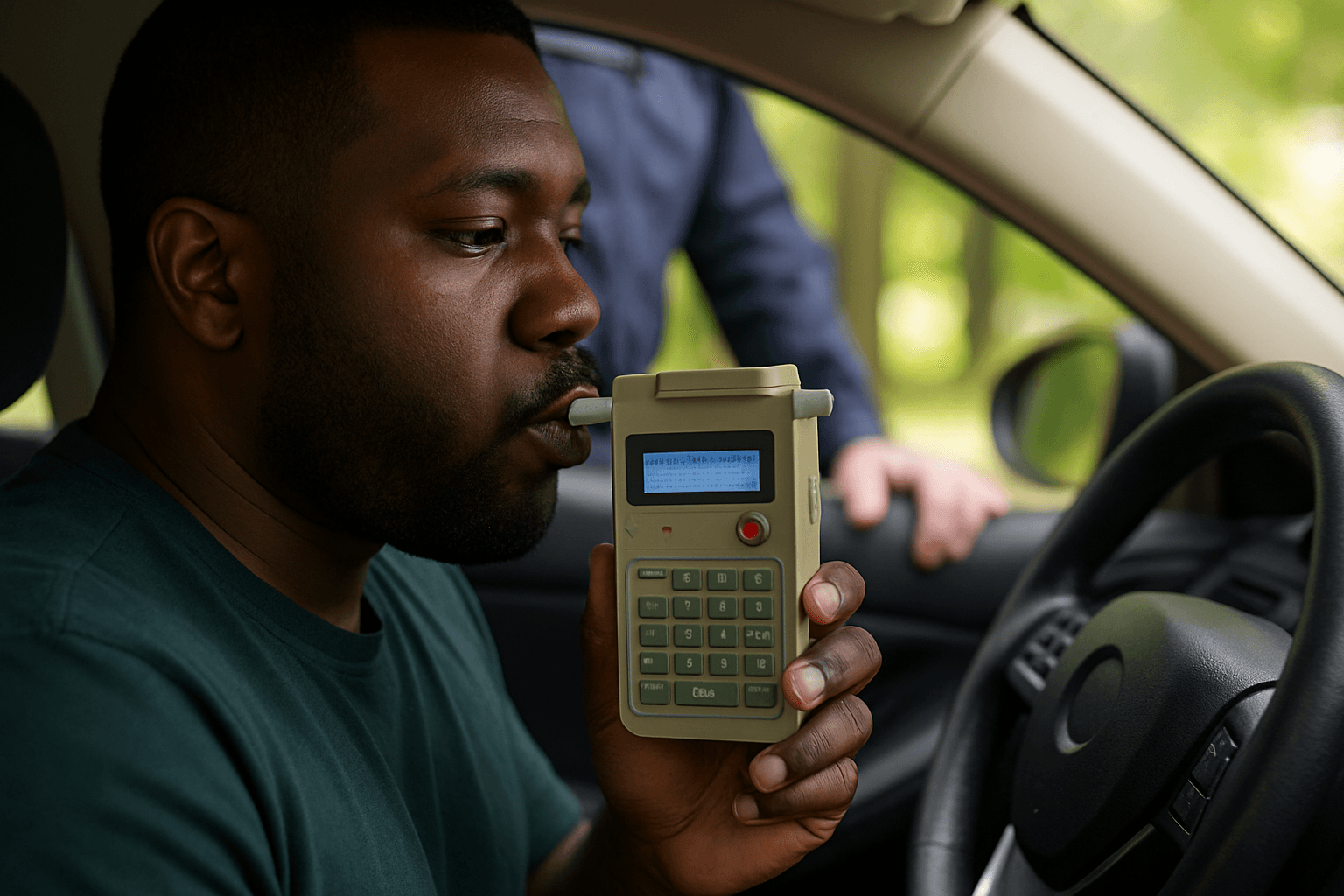
Montana requires an ignition interlock device for all DUI-related probationary licenses under MCA § 61-8-442. The device must be installed and verified by a state-approved vendor before the court issues the probationary license order.
Installation costs typically range $75–$150, with monthly monitoring fees of $60–$90. These costs are in addition to the court petition fee, SR-22 filing premium increase, and MVD reinstatement fee. The interlock requirement runs for the duration of the probationary license period and often continues through full reinstatement—DUI first offenders typically face a 1-year interlock requirement, repeat offenders 2–5 years depending on offense history.
If you violate interlock terms (failed breath sample, tamper alert, missed calibration appointment), the court can revoke the probationary license immediately. Most vendors report violations to both the court and the MVD within 48 hours. There is no grace period for technical violations—the system is zero-tolerance by design.
Route and Time Restrictions Courts Impose
Montana probationary licenses are court-defined, meaning the judge sets the specific routes, times, and purposes for which you can drive. There is no single statewide restriction template. Most orders permit driving for work, school, medical appointments, and essential household errands like grocery shopping or childcare.
Route restrictions reflect Montana's rural geography: it is common for probationary orders to allow 50+ mile one-way commutes to employment or medical facilities. Courts typically define routes by destination rather than exact street-by-street paths, acknowledging that rural road networks don't always offer a single direct route.
Time restrictions vary by judge and case. DUI probationary licenses frequently prohibit driving after 10 p.m. or during hours when the petitioner is not scheduled for work, school, or medical care. Points-based probationary licenses may carry fewer time restrictions if alcohol was not involved in the underlying violation. Carry the court order with you at all times when driving—law enforcement will request it during any traffic stop, and failure to produce the order can result in an additional driving-while-suspended charge.
SR-22 Filing and Insurance Premium Impact
Montana requires an SR-22 certificate of financial responsibility for most probationary license holders. The SR-22 is filed by your insurance carrier with the MVD and certifies that you carry at least Montana's minimum liability limits: $25,000 bodily injury per person, $50,000 per accident, $20,000 property damage.
SR-22 filing fees range $15–$50 depending on the carrier. The premium increase is more significant: DUI-related suspensions typically increase premiums 60–120% for the first year, with the increase tapering over the 3-year filing period. Points-based suspensions without alcohol involvement typically add 25–50% to base rates.
Carriers writing SR-22 in Montana include Geico, Progressive, State Farm, Bristol West, National General, The General, and USAA. Not all carriers write SR-22 for DUI offenders—some non-standard carriers specialize in high-risk filings and may offer lower premiums than your current carrier after a DUI suspension. If you do not own a vehicle, non-owner SR-22 policies are available and typically cost $25–$50/month for liability coverage plus the SR-22 filing.
The SR-22 filing must remain active for 3 years from the date of reinstatement for DUI suspensions, per Montana law. If you cancel your policy or let it lapse, the carrier notifies the MVD within 10 days and your license is automatically re-suspended. The 3-year clock restarts from the date you refile, not from the original date.
MVD Reinstatement After Probationary License Period Ends
When your probationary license period expires, you do not automatically regain full driving privileges. You must apply for reinstatement with the Montana Motor Vehicle Division (MVD). The base reinstatement fee is $100, though second or subsequent DUI revocations may require $200.
DUI-related reinstatements require proof of completion of a chemical dependency education course or treatment program. This is a statutory prerequisite for DUI cases even though Montana does not require courses for most other suspension types. The court often orders this as part of the criminal case, and the MVD will not reinstate until the certificate of completion is submitted.
Reinstatement can be processed at county treasurer offices in some counties, as county treasurers serve as agents for the MVD. Not all counties offer in-person reinstatement processing—some require mail or online submission through the MVD's Helena office. Processing timelines are not published statewide; anecdotal reports suggest 5–10 business days once all documentation is received, though this varies by county workload. Verify current requirements with the Montana Department of Justice Motor Vehicle Division at doj.mt.gov/driving.
What Happens If You Violate Probationary License Terms
Driving outside the court-ordered restrictions—wrong route, wrong time, unauthorized purpose—results in immediate probationary license revocation. Law enforcement can arrest you for driving while suspended, and the new charge carries steeper penalties than the original suspension trigger.
Most Montana courts do not offer second-chance probationary licenses within the same suspension period. If you violate the terms, you serve the remainder of the suspension without driving privileges. DUI cases face additional consequences: violation of interlock terms or probationary license terms can extend the interlock requirement by 6–12 months and may trigger probation violation proceedings in the criminal case.
If you move to a new state mid-suspension, Montana's probationary license does not transfer. The new state will recognize Montana's suspension under the Interstate Driver's License Compact, but the probationary license order is a Montana judicial document with no reciprocal recognition. You must reinstate fully in Montana before applying for a license in the new state, or petition the new state's equivalent hardship program if one exists.