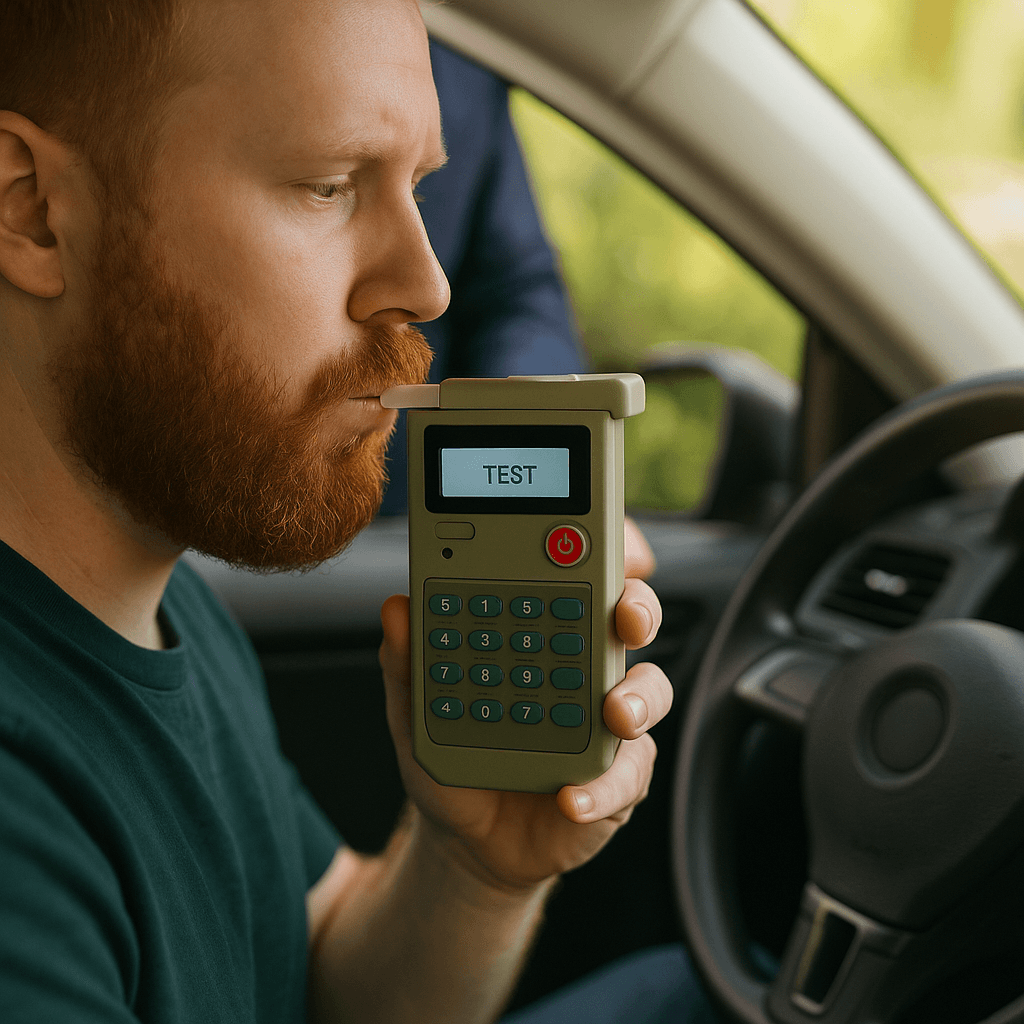
Courts and DMVs routinely add ignition interlock, restricted hours, geographic limits, and mandatory monitoring to hardship approvals—even when state law doesn't require them. These add-ons carry separate costs and compliance burdens most applicants don't anticipate.
What Are Hardship License Add-On Conditions?
Hardship license add-on conditions are requirements imposed by a court or DMV examiner beyond the statutory eligibility and documentation rules written into state law. State statutes define who qualifies for a hardship license, what purposes it covers, and what documents the applicant must file. The statute does not define every condition the approving authority can attach to the license once granted.
Courts and DMVs use discretionary authority to attach conditions they believe reduce risk or ensure compliance. These conditions carry force of law once written into the order. Violating them triggers immediate revocation and often extends the original suspension period. Common add-ons include ignition interlock device installation, geographic boundary restrictions, time-of-day driving limits, mandatory alcohol or drug monitoring, and mandatory check-ins with probation or a monitoring agency.
The cost and logistical burden of these add-ons often exceeds the cost of the hardship license application itself. Ignition interlock alone costs $75 to $150 per month for device rental plus $75 to $200 for installation and calibration every 30 to 60 days. Alcohol monitoring ankle bracelets cost $300 to $450 per month. Time restrictions that limit driving to employment hours only eliminate any ability to run errands, attend medical appointments, or pick up children outside work shift windows. Applicants who budget only for the application fee and assume approval means immediate relief discover the approval comes with conditions that reshape their daily routine and monthly expenses for the entire restricted license period.
Why Courts Add Conditions State Law Doesn't Require
Judges add conditions to manage perceived risk. A DUI suspension carries higher perceived risk than a points-based suspension. A second DUI carries higher risk than a first. A refusal case carries higher risk than a low-BAC case. Judges use add-on conditions to grant hardship driving while addressing the behavior that triggered the suspension.
The judge's discretion is nearly unlimited. State statutes specify minimum eligibility and maximum restrictions. Between those boundaries, the judge tailors conditions to the individual case. Two applicants in the same county with identical suspension triggers can receive hardship approvals with different condition sets if their driving histories, employment types, or household circumstances differ.
Courts also add conditions based on local enforcement capacity and county-level DUI rates. Counties with high DUI recidivism rates routinely impose ignition interlock on all DUI-related hardship licenses regardless of whether the applicant blew above the enhanced-penalty threshold. Counties with established monitoring infrastructure attach mandatory check-in requirements. Rural counties with limited monitoring capacity may impose stricter geographic or time limits instead. The add-on reflects what the county can enforce, not just what the statute allows.
Compare car insurance rates in your state
Get quotes from licensed carriers — no obligation, no spam, results in minutes.
Get Your Free Quote✓ No Obligation Required✓ Licensed Carriers Only✓ Available Nationwide✓ Free to Compare
Common Add-On Conditions and What They Cost
Ignition interlock device (IID) requirements are the most frequent add-on for DUI-related hardship licenses. The device prevents the vehicle from starting if the driver's breath alcohol concentration exceeds a preset limit, typically 0.02 percent. Installation costs $75 to $200. Monthly rental and monitoring fees run $75 to $150. Calibration appointments every 30 to 60 days cost $50 to $100 per visit. Over a 12-month hardship period, total IID cost ranges from $1,200 to $2,400. Some states require IID for all DUI hardship applicants by statute. Others leave it to judicial discretion, creating county-level variation.
Geographic boundary restrictions limit the applicant to specific routes or counties. Courts impose these when the suspension trigger involved reckless driving, fleeing police, or multiple violations in a short period. Violating a boundary restriction is immediate grounds for revocation. GPS ankle monitors enforce boundaries in some jurisdictions, adding $200 to $400 per month in monitoring fees. Paper-based boundary orders rely on employer affidavits and law enforcement stops to catch violations.
Time-of-day restrictions limit driving to specific hours, typically work shift hours plus one hour before and after. Applicants working variable shifts or multiple part-time jobs struggle to document shifting windows. Missing a calibration appointment, medical visit, or school pickup because it falls outside permitted hours is not a defense. Courts rarely modify time windows once set unless the applicant files a formal amendment petition, which requires another hearing and additional attorney fees.
Mandatory alcohol or drug monitoring includes random urinalysis, transdermal alcohol ankle monitors (SCRAM), or twice-daily breathalyzer check-ins at a monitoring station. Costs range from $10 per test for random UA to $450 per month for continuous transdermal monitoring. Missed tests count as failed tests. Failed tests trigger immediate hardship revocation and often restart the entire suspension clock.
How Add-Ons Affect Your Insurance Filing Requirement
Add-on conditions do not change the underlying SR-22 or FR-44 filing requirement, but they do affect which carriers will write the policy. Ignition interlock device installation triggers a coverage question on most applications. Some carriers decline IID-required policies outright. Others write them through non-standard divisions at higher premiums.
Non-owner SR-22 policies do not cover IID installation because the applicant does not own a vehicle. If the court requires both IID and proof of insurance, the applicant must borrow or lease a vehicle, install the device in that vehicle, and carry standard SR-22 coverage on the vehicle. The vehicle owner's insurance must also list the IID and may non-renew the policy when they discover the device. This creates a circular compliance problem many applicants do not anticipate.
Geographic and time restrictions do not appear on the insurance application, but they increase violation risk. A driver restricted to daylight hours who is pulled over at 9 p.m. faces both a criminal charge for violating the court order and immediate SR-22 cancellation once the carrier learns of the new charge. The SR-22 filing period clock often restarts from the new violation date, extending total filing duration by 12 to 36 months.
Carriers do not verify add-on compliance. The insurance policy reflects the SR-22 filing requirement, not the court's additional conditions. Compliance with IID, boundaries, and monitoring falls entirely on the driver. Insurance covers liability for accidents during permitted driving. It does not cover fines, fees, or extended suspension periods triggered by violating the hardship conditions.
How to Identify Add-Ons Before You Apply
Review your state's hardship statute and compare it to your county's actual approval orders. State DMV websites publish the statute. County clerk offices maintain sample hardship orders or petitions with blank condition fields. Ask the clerk for the most recent approved hardship order in a case similar to yours—same suspension trigger, same county. Redacted orders are public record in most states.
Hire an attorney who practices in your specific county. Hardship outcomes vary more by county than by state. An attorney who practices in your county courthouse knows which judges impose IID on first-offense DUI hardship, which require monitoring, and which accept standard work-only restrictions. That local knowledge prevents surprises at the hearing.
If your suspension trigger was DUI, assume ignition interlock will be required even if your state statute does not mandate it below a specific BAC threshold. Budget $2,000 for the first year of IID costs. If your trigger involved drugs or multiple alcohol-related incidents, budget for monitoring costs. Courts almost never waive monitoring requirements once imposed, even for financial hardship.
Ask your insurance agent whether your current or prospective carrier writes policies for IID-required vehicles before the hearing. Some applicants receive hardship approval with an IID condition, then discover no accessible carrier will write the SR-22 policy. Non-owner SR-22 policies do not solve this problem because the IID must be installed in a specific vehicle. Knowing your carrier options before the hearing allows you to address insurance feasibility with the judge if the condition creates an impossible compliance scenario.
What to Do If Your Approval Includes Unexpected Add-Ons
Read the approval order immediately after the hearing. Courts hand you the signed order or mail it within 5 to 10 business days. The order lists every condition with effective dates and compliance deadlines. Missing an IID installation deadline or failing to register with a monitoring agency within the stated window triggers automatic revocation in most states. You will not receive a reminder or a grace period.
If the order includes IID, contact an approved installer within 48 hours. Most states maintain a list of certified IID vendors. Installation appointments book 7 to 14 days out in urban areas, longer in rural counties. The device must be installed and calibrated before you begin driving under the hardship license. Driving before installation is driving on a suspended license, not hardship driving.
If the order includes monitoring, register with the monitoring agency listed in the order within the compliance window. Agencies do not accept late registration. Missing the registration deadline voids the hardship approval and requires filing a new petition. Monthly monitoring fees begin accruing on the registration date regardless of when you actually start driving.
If the add-on conditions make compliance financially or logistically impossible, file a motion to modify within 10 days. Courts rarely remove conditions entirely, but they sometimes adjust time windows, geographic boundaries, or monitoring frequency. Do not ignore the order and hope enforcement is lax. Hardship violations are prosecuted more aggressively than standard suspended-license violations because the court granted you conditional relief and you breached the agreement.
How Add-Ons Affect Total Cost and Timeline to Full Reinstatement
Add-on conditions extend both the cost and timeline to full license reinstatement. A standard hardship license with no add-ons costs $50 to $150 in application and administrative fees. Add ignition interlock and the first-year cost rises to $1,500 to $2,600. Add mandatory monitoring and monthly costs climb another $200 to $450. Over a 12-month hardship period, total cost for IID plus monitoring exceeds $5,000 in some counties.
The hardship period does not count toward the original suspension period in most states. If you received a 12-month suspension and a 12-month hardship license, you will serve 24 months total before full reinstatement. Add-on conditions sometimes extend beyond the hardship period itself. Judges routinely order IID installation to continue for the full suspension period even after the hardship license expires. This means you pay for the device during both the hardship period and the remaining suspension months.
Violating an add-on condition restarts the suspension clock in many states. A driver halfway through a 12-month suspension who violates a geographic boundary restriction faces revocation of the hardship license and a new suspension period equal to or longer than the original. The SR-22 filing period also restarts from the new violation date, adding 12 to 36 months of high-risk insurance premiums to the total cost.
Full reinstatement requires proof of compliance with every condition for the entire hardship period. Courts and DMVs verify IID logs, monitoring reports, and check-in records before issuing final reinstatement approval. Missing a single calibration appointment or failed monitoring test delays reinstatement even if you completed the time requirement. Budget for the possibility that your hardship period will extend beyond the stated end date if compliance gaps appear in your record.