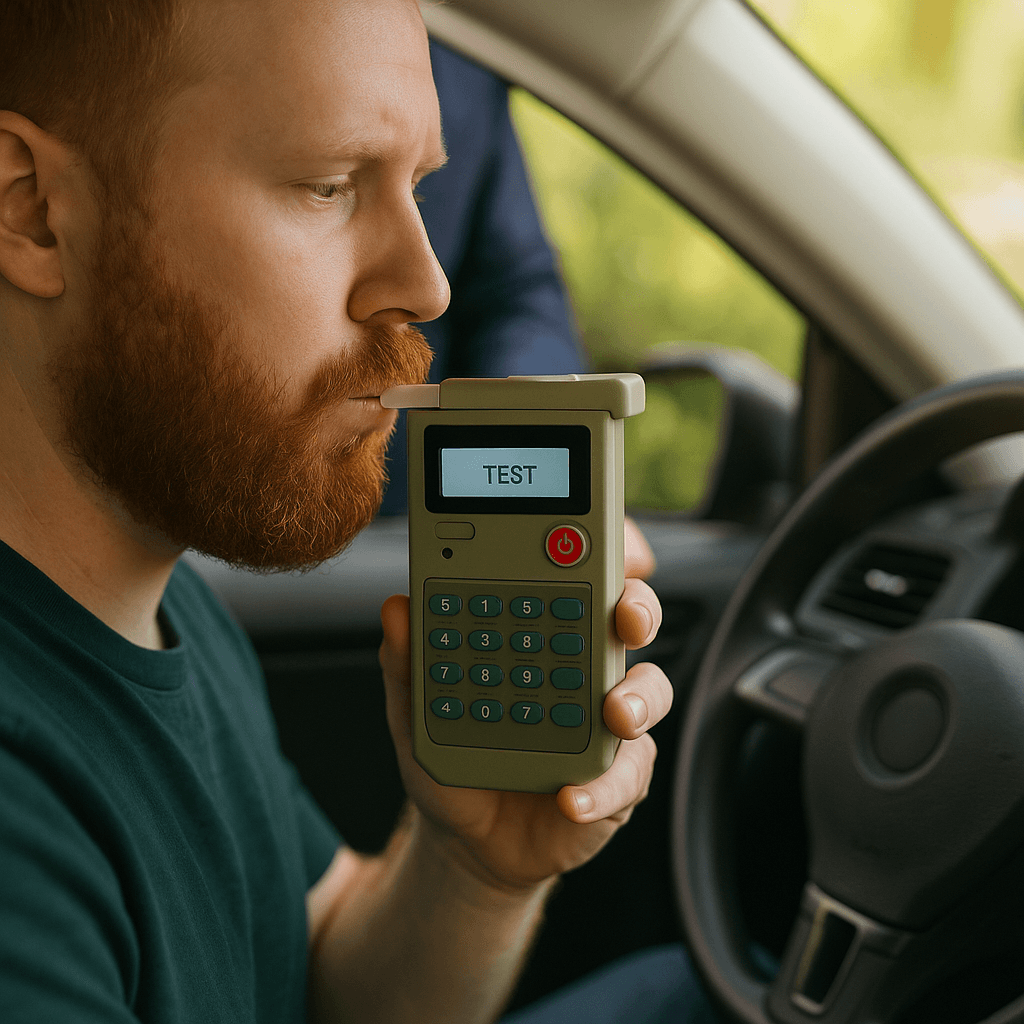
Georgia's IILDP pathway requires IID installation before the court petition — not after approval. This sequence reversal catches most first-time applicants off guard and delays reinstatement by weeks.
Why Georgia's IID Sequence Is Backward From What You Expect
Georgia's Ignition Interlock Limited Driving Permit pathway requires IID installation and proof of installation before you file your Superior Court petition. Most states approve the hardship permit first, then require installation within 10-30 days. Georgia reverses this: install the device, obtain the installer's certificate, file that certificate with your petition, then wait for the court hearing.
This sequence creates a cash-flow trap. You pay the IID provider's installation fee, typically $75-$150, plus the first month's lease fee of $70-$100, before you know whether the court will grant your petition. If the court denies your application, you've spent $200-$300 on a device you cannot legally use. The installer will remove it, but most providers do not refund installation fees for court denials.
The logic behind Georgia's sequence: the court wants proof you have complied with the IID requirement before granting driving privileges, not a promise to comply afterward. HB 205, effective July 2024, formalized this pathway for DUI arrestees as an alternative to the Administrative License Suspension process. The statute assumes compliance precedes privilege.
What Happens If You Install After Filing the Petition
Filing your Superior Court petition without the IID installer's certificate attached delays your hearing by 30-60 days in most Georgia counties. The court clerk will not schedule a hearing without proof of IID installation on file. You will receive a notice to cure the deficiency, which restarts the processing clock from zero.
Some counties allow conditional petition filing with a 10-day cure window, but this is judge-specific, not statewide policy. Fulton, DeKalb, and Gwinnett counties typically require the certificate at filing. Rural counties may accept a filing and allow cure before the hearing date, but you cannot rely on this. The safer path: install before filing.
If you install the device after the court grants your IILDP, the permit is void from issuance. You are driving on a suspended license, not a valid restricted permit. DDS does not activate the permit in their system until the IID provider reports installation and activation. Most drivers discover this during a traffic stop, not from proactive DDS notification.
Compare car insurance rates in your state
Get quotes from licensed carriers — no obligation, no spam, results in minutes.
Get Your Free Quote✓ No Obligation Required✓ Licensed Carriers Only✓ Available Nationwide✓ Free to Compare
How Long You'll Carry the Device and What Monitoring Costs
Georgia's IILDP requires IID installation for the full suspension period, not a shorter monitoring window. A first-offense DUI suspension in Georgia lasts 12 months. Your IID lease runs for 12 months. A second-offense DUI within 5 years carries a 3-year suspension. Your IID lease runs for 3 years.
Monthly lease fees range from $70 to $100 depending on the provider and county. Annual cost: $840 to $1,200. Over a 3-year period, total IID cost is $2,520 to $3,600, excluding the initial installation fee. Most providers require payment by the 5th of each month. Missing two consecutive payments triggers a lockout code that disables the vehicle until the account is current. The IID does not notify you before the lockout — it activates at the next ignition attempt.
Georgia law requires monthly calibration appointments, typically $20-$40 per visit. These appointments are mandatory; missing one generates a violation report to DDS. Three missed calibrations in a 12-month period results in automatic IILDP revocation. The court does not hold a hearing before revocation — DDS processes it administratively based on the IID provider's report.
Which IID Providers Georgia Courts Accept and How to Choose
Georgia DDS maintains a list of approved IID manufacturers. As of current state requirements, approved providers include Intoxalock, Smart Start, LifeSafer, and Guardian Interlock. The court will not accept installer certificates from non-approved providers. Installing a device from an out-of-state provider or a generic breathalyzer system voids your petition.
Pricing varies by provider and county. Intoxalock typically charges $75 installation, $85/month lease, and $30 calibration. Smart Start charges $100 installation, $75/month lease, and $25 calibration. LifeSafer charges $90 installation, $80/month lease, and $30 calibration. Guardian Interlock charges $85 installation, $90/month lease, and $35 calibration. These figures are approximate; call the provider's Georgia office for current pricing.
Choose based on calibration location density, not advertised monthly rate. If the nearest calibration center is 40 miles from your work route, you will burn the monthly savings difference in fuel costs. Smart Start and Intoxalock have the widest calibration network in metro Atlanta and rural Georgia. LifeSafer and Guardian have fewer locations outside the I-85 corridor.
What the Court Petition Filing Actually Costs Beyond the IID
Georgia Superior Courts charge a filing fee for IILDP petitions. The fee varies by county, typically $150-$300. Fulton County charges $200. DeKalb County charges $180. Gwinnett County charges $220. Rural counties may charge less, but the statewide average is $200. This fee is separate from the IID installation cost.
You must also file an SR-22 certificate of financial responsibility with Georgia DDS before the court will grant the permit. SR-22 filing fees are typically $25-$50, charged by the insurance carrier. The SR-22 requirement lasts for 3 years from the date of reinstatement, not from the date of conviction. If your IILDP expires after 12 months and you reinstate your full license, the SR-22 clock continues. Missing SR-22 coverage for even one day triggers an automatic license suspension and voids the IILDP.
Some courts require attendance at a DUI Alcohol or Drug Use Risk Reduction Program before granting the IILDP. The program costs $355-$450 depending on the provider. This requirement is judge-specific, not uniform statewide. If the court notice lists the Risk Reduction Program as a prerequisite, complete it before the hearing date. Arriving at the hearing without the completion certificate results in automatic denial.
How SR-22 Insurance Premiums Change With an Active IID
SR-22 filing is required for all Georgia IILDP petitions stemming from DUI or uninsured motorist violations. The filing itself costs $25-$50, but the premium increase is the larger cost. Georgia drivers with a DUI conviction and SR-22 filing pay approximately $140-$240 per month for liability coverage, compared to $85-$120 for clean-record drivers.
Carriers that write SR-22 policies in Georgia with active IID requirements include Acceptance Insurance, Bristol West, Dairyland, Direct Auto, GAINSCO, Geico, Infinity, Kemper, National General, Progressive, State Farm, The General, and USAA. Not all carriers offer the same monthly rates. Progressive and Geico typically quote $140-$180/month for DUI+SR-22+IID drivers. Dairyland, GAINSCO, and The General quote $160-$220/month. Acceptance and Direct Auto quote $180-$240/month.
Some carriers reduce premiums after 12 months of clean IID reports and no violations. Progressive offers a snapshot-style discount after the first year if calibration records show zero failed breath tests. State Farm offers a similar reduction after 18 months. These discounts are not automatic — you must request a policy review and provide the IID provider's clean-record report.
What Happens If You Blow a Fail Reading During the IILDP Period
A failed breath test does not immediately revoke your IILDP, but it generates a violation report to Georgia DDS. The IID device logs every test attempt, timestamp, and BAC reading. Providers upload this data to DDS monthly. One failed test typically results in a warning letter from DDS. Two failed tests in a 30-day period triggers a compliance review. Three failed tests in a 90-day period results in automatic IILDP suspension.
The suspension is administrative, not judicial. DDS processes it without a court hearing. You receive a notice of suspension by mail, effective 10 days from the notice date. Most drivers do not realize the suspension has occurred until they are pulled over. The paper IILDP you carry does not update in real time — only the DDS electronic record changes.
Reinstating after an IID-violation suspension requires filing a new Superior Court petition, paying the filing fee again, and extending the IID monitoring period by 6 months. Some judges add an additional 90-day hard suspension before granting the new IILDP. This is discretionary, not mandatory. The cost of a second petition: another $200 filing fee, another $75-$150 IID installation fee if the device was removed, and 6 additional months of $70-$100/month lease payments.