DC DMV approves Limited Permits only for documented essential purposes—work, medical, school, or court-approved needs. Without employer verification or proof of recurring appointments, your application will be denied before a hearing is even scheduled.
What DC Classifies as Essential Purpose Driving Under a Limited Permit
DC DMV defines essential purposes narrowly: employment, medical appointments, educational attendance, and court or DMV-ordered obligations. The agency does not approve permits for grocery shopping, childcare drop-offs, or general household errands unless those activities are directly tied to one of the four statutory categories.
Employment driving covers commuting to and from a documented job site, driving during work hours if your employer requires it, and traveling between multiple work locations if your job description lists those sites. Medical appointments include dialysis, chemotherapy, physical therapy sessions, and other recurring treatment—not routine checkups. Educational attendance means enrolled coursework at an accredited institution, not informal tutoring or enrichment classes.
Court-approved purposes are the fourth category. A judge may specify additional routes or destinations at the time of sentencing or during a hardship hearing. These additions must appear in writing on your court order. DC DMV will not honor verbal instructions or undocumented expansions of your approved routes.
Route Documentation Requirements DC DMV Actually Enforces
DC requires a completed DMV application form, proof of insurance with SR-22 endorsement for DUI-related suspensions, and documentation proving each claimed essential purpose. Employment verification must come from your employer on company letterhead, signed by a supervisor or HR representative, stating your work address, shift hours, and whether your job requires driving during work hours.
Medical appointment documentation means a letter from your healthcare provider listing the facility address, appointment frequency, and medical necessity of in-person visits. Educational documentation requires a registrar letter confirming your enrollment status, class schedule, and campus location. Generic acceptance letters or tuition receipts do not satisfy this requirement.
If you claim multiple work sites or rotating appointments, you must document all addresses upfront. Adding destinations after permit approval requires filing an amended application and paying the administrative processing fee again. Most applicants underestimate this documentation burden—DC DMV rejects applications that list routes without corresponding proof more often than applications denied for eligibility reasons.
Compare car insurance rates in your state
Get quotes from licensed carriers — no obligation, no spam, results in minutes.
Get Your Free Quote✓ No Obligation Required✓ Licensed Carriers Only✓ Available Nationwide✓ Free to Compare
Ignition Interlock Device Installation and Compliance Timeline
DC law requires ignition interlock device installation before Limited Permit approval for any DUI-related suspension. You cannot drive to your DMV hearing, cannot drive to pick up your restricted license, and cannot legally operate a vehicle until a certified installer completes the device installation and submits proof to DC DMV electronically.
The installation process takes 3–7 business days after you contract with an approved provider. DC maintains a list of certified installers; using a non-approved vendor voids your permit eligibility. Installation costs range from $150 to $300, with monthly monitoring fees of $75–$100. Over a typical 12-month permit period, total interlock costs reach $1,050–$1,500 before accounting for calibration visits or lockout violations.
You must schedule calibration appointments every 30–60 days depending on your device model. Missing a calibration window triggers a device lockout, meaning your vehicle will not start until you complete the overdue appointment. Lockouts count as compliance violations. Three lockouts in a 12-month period result in automatic permit revocation without a hearing. DC DMV does not distinguish between missed appointments due to work schedule conflicts and intentional non-compliance.
How DC DMV Verifies Compliance After Permit Issuance
Your interlock device transmits data to DC DMV monthly. The agency reviews start attempts, failed breath tests, missed rolling retests, and calibration compliance. A single failed test does not automatically revoke your permit, but a pattern of violations triggers a show-cause hearing where you must explain why your permit should not be terminated.
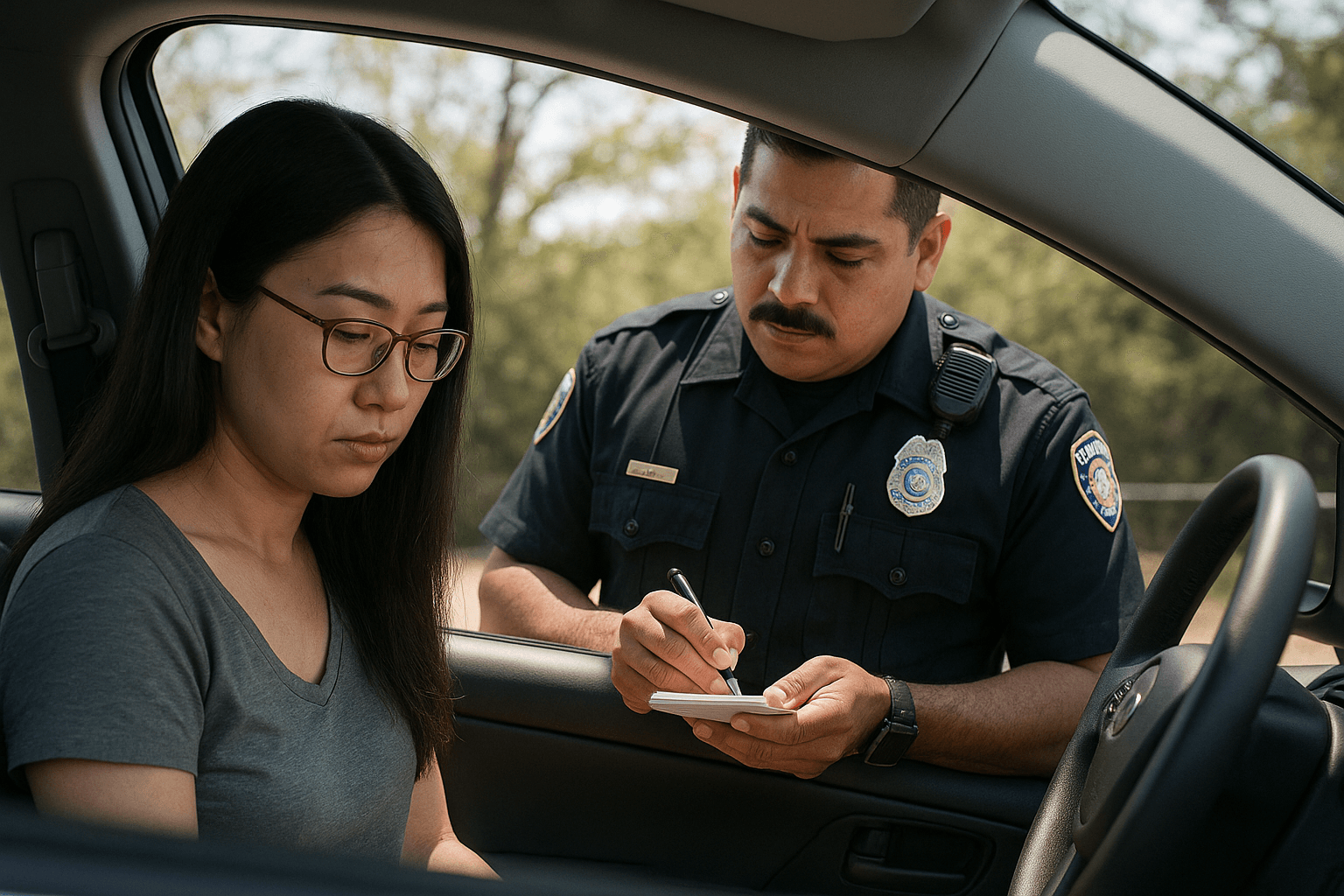
DC police have access to the Limited Permit database during traffic stops. If an officer pulls you over outside your approved routes or outside your approved hours, the stop generates a DMV compliance flag even if the officer issues only a warning. Two flags in a six-month period require a compliance review hearing. At that hearing, you must prove the deviation was unavoidable—a detour due to road closure, a medical emergency, or a verifiable vehicle breakdown.
Employers sometimes change shift schedules or work locations after permit approval. DC requires you to notify DMV within 10 business days of any schedule or route change and submit updated employer documentation. Operating under the old permit terms while your amendment is pending counts as non-compliance. The safest approach: do not drive the new route until DMV approves the amendment and issues updated permit paperwork.
SR-22 Filing Requirements and Premium Impact in DC
DC requires SR-22 certificates for DUI-related suspensions, uninsured driving violations, and certain habitual offender designations. The SR-22 itself is not insurance—it is a filing your insurer submits to DC DMV confirming you carry at least the statutory minimum liability coverage: $25,000 bodily injury per person, $50,000 bodily injury per accident, and $10,000 property damage.
SR-22 filing fees range from $25 to $50 depending on your carrier. The larger cost is the premium increase. Drivers requiring SR-22 endorsements pay 40–80% more than standard-risk drivers for the same coverage. In DC, typical SR-22 premiums run $140–$240 per month for liability-only policies. If you need comprehensive and collision coverage, monthly costs reach $200–$350.
Not all carriers write SR-22 policies in DC. GEICO, Progressive, The General, and National General are the most accessible options for suspended-license drivers. State Farm writes SR-22 but applies stricter underwriting for DUI suspensions. Many preferred-tier carriers—Amica, Erie, Hartford—decline SR-22 business entirely or route it to non-standard subsidiaries with higher rates.
DC typically requires three years of continuous SR-22 filing after a DUI suspension. If your policy lapses or cancels during that period, your insurer must notify DC DMV electronically within 24 hours. DMV automatically re-suspends your license and revokes your Limited Permit. You must start the application process over, pay reinstatement fees again, and prove continuous coverage before a new permit hearing is scheduled.
Cost Stack for a 12-Month Limited Permit in DC
Application processing and hearing fees are not publicly itemized on DC DMV's website, but applicants typically report combined costs of $100–$200 for initial filing and administrative review. Add ignition interlock installation ($150–$300), monthly monitoring ($75–$100 per month for 12 months), and required calibration visits (typically covered under the monthly fee but sometimes billed separately at $20–$40 per visit).
SR-22 filing adds $25–$50 upfront, then premium surcharges of $1,680–$2,880 annually for liability-only coverage. If you do not own a vehicle, non-owner SR-22 policies cost $40–$80 per month in DC—still 50–100% higher than non-SR-22 non-owner policies.
Total first-year cost for a DUI-related Limited Permit in DC: approximately $3,600–$5,400. This includes DMV fees, interlock costs, SR-22 filing, and 12 months of high-risk auto insurance. The cost does not include attorney fees if you hire counsel to represent you at your hardship hearing, which adds $1,500–$3,000 depending on case complexity.
Drivers suspended for non-DUI causes avoid the interlock requirement, cutting $1,050–$1,500 from the annual cost. However, DC's points-based and uninsured-driving suspensions still require SR-22 filing in most cases, meaning insurance premium surcharges remain the largest ongoing expense.
What Happens When You Drive Outside Approved Routes or Hours
Operating a vehicle outside your documented essential purposes voids your Limited Permit immediately. DC law treats this as driving under suspension—a misdemeanor carrying fines up to $1,000, possible jail time up to 90 days, and mandatory license revocation extension.
If stopped by police outside your approved routes, the officer will confiscate your Limited Permit paperwork and issue a citation for unauthorized driving. DC DMV receives electronic notice within 48 hours and schedules a revocation hearing. At that hearing, you carry the burden of proving the deviation was necessary and unplanned. Scheduled stops—even for gas or food—do not qualify as emergencies.
Revocation outcomes vary by the severity of the deviation. A single stop two miles outside your approved route may result in a warning and 30-day permit suspension. A stop 15 miles away from any approved destination, or driving at 2:00 AM when your permit restricts you to daytime hours, typically results in full revocation and a mandatory six-month waiting period before you can reapply.
DC judges have denied subsequent hardship applications when applicants demonstrated a pattern of non-compliance during prior permits. The agency maintains a compliance history database. A revoked permit for route violations in 2023 will appear on your record when you apply again in 2025, and the hearing officer will ask why you should be trusted with another chance.