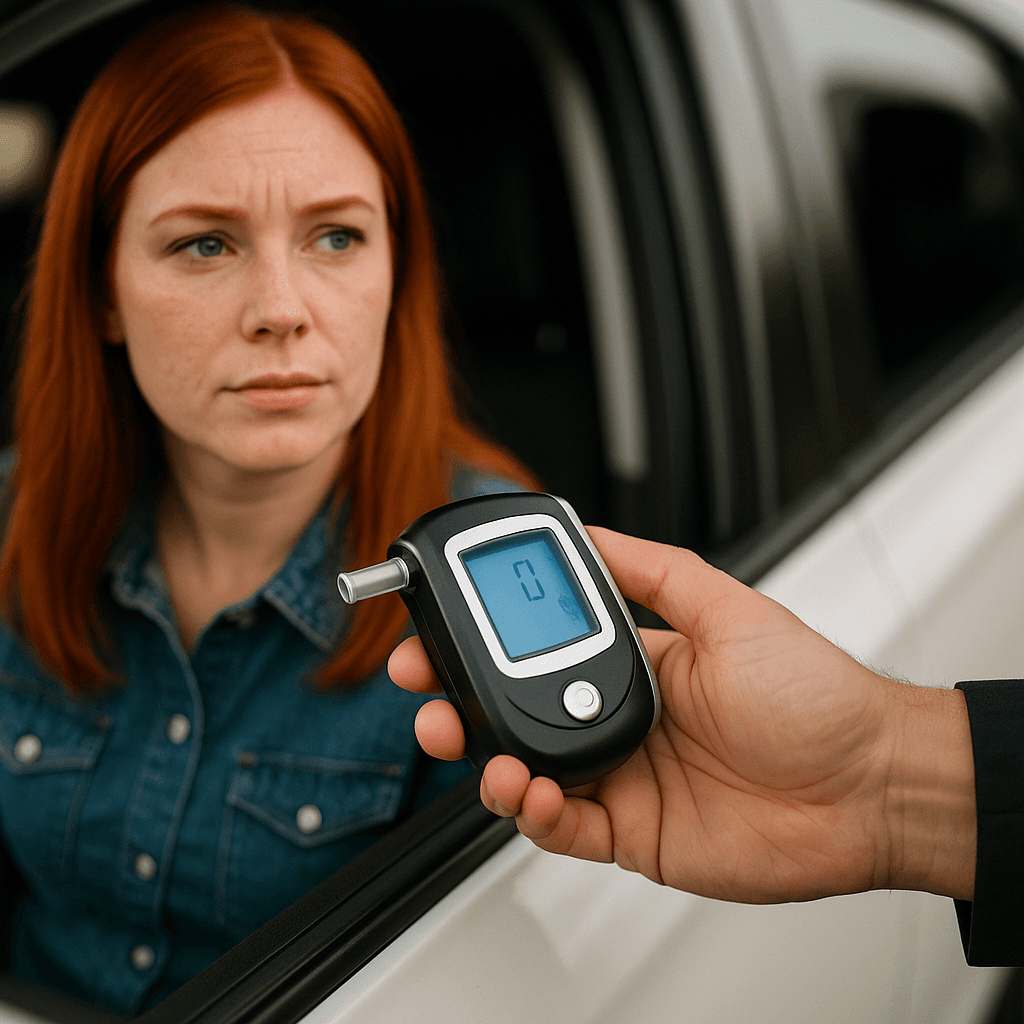
Delaware's Conditional License requires ignition interlock installation before approval, not after. Most applicants misread the sequence and file incomplete paperwork.
Delaware calls it a Conditional License, and the ignition interlock requirement reverses the normal application sequence
Delaware's hardship driving program is called the Conditional License, and it requires ignition interlock device (IID) installation before you submit your application — not after approval. Most drivers expect to get approval first, then install the device. Delaware reverses that order. You need proof of IID installation from your vendor before the DMV will process your Conditional License petition.
This sequence matters because IID vendors schedule installations 5 to 10 business days out, and Delaware DMV processing adds another layer of time. If you wait to start the IID enrollment process until after you think your application is ready, you've added two weeks to your timeline without realizing it.
Delaware's Ignition Interlock Program is administered directly through the DMV under 21 Del. C. § 2742A. The state does not use a court-based hardship petition system for DUI-related suspensions. Your Conditional License application goes to the Delaware Division of Motor Vehicles, not a judge.
Who qualifies for a Conditional License in Delaware
Delaware Conditional Licenses are available for DUI suspensions and points-related suspensions. The state also allows Conditional Licenses for employment or essential-need suspensions tied to other violation types, but the ignition interlock requirement applies primarily to DUI cases.
Delaware does not offer Conditional Licenses for suspensions triggered by driving without insurance. If your suspension stems from an insurance lapse or cancellation, the state requires full reinstatement before you can drive again — no restricted driving option exists for that trigger.
Similarly, suspensions for unpaid fines or failure-to-appear charges do not qualify for Conditional License relief until the underlying issue is resolved. Delaware's DMV will not process a Conditional License application if your suspension stems from a court-related administrative hold rather than a moving violation.
The eligibility gate is not your driving record — it is the specific trigger that caused your suspension. Read your suspension notice carefully. If the notice cites 21 Del. C. § 2118 (insurance-related suspension), a Conditional License is not available. If it cites 21 Del. C. § 2742 (DUI administrative suspension), you are eligible once the ignition interlock requirement is satisfied.
Compare car insurance rates in your state
Get quotes from licensed carriers — no obligation, no spam, results in minutes.
Get Your Free Quote✓ No Obligation Required✓ Licensed Carriers Only✓ Available Nationwide✓ Free to Compare
What the Conditional License application path looks like in Delaware
Delaware's Conditional License application is submitted to the DMV, not a court. You do not petition a judge. You submit a completed application form along with proof of employment or essential need, proof of ignition interlock installation (for DUI-related suspensions), and an SR-22 insurance certificate.
The required documentation includes a letter from your employer on company letterhead describing your work schedule and location, proof of IID installation from an approved vendor (with serial number and installation date), and an SR-22 certificate filed by your insurer. If your suspension is tied to school enrollment or medical appointments rather than employment, substitute a letter from the institution or medical provider describing your schedule and address.
Delaware does not publish a fixed application fee for Conditional Licenses in the same way it does for reinstatement fees. Some DMV materials reference administrative processing fees; verify the current fee schedule at dmv.de.gov before submitting your application.
Processing time is not guaranteed. Delaware's DMV is centralized — all hardship license applications flow through the state office in Dover rather than county-level branches. Most applicants report approval or denial within 10 to 15 business days after submission, but this timeline depends on application completeness and the DMV's current backlog.
How the ignition interlock device requirement works for DUI Conditional Licenses
Delaware requires ignition interlock installation for all DUI-related Conditional Licenses under 21 Del. C. § 2742A. The device must be installed by a state-approved vendor before you submit your Conditional License application. The vendor provides a receipt and installation certificate with the device serial number — that certificate is required documentation for the DMV.
IID installation costs $70 to $150 depending on the vendor, and monthly monitoring fees run $60 to $90. Delaware's approved vendor list is published on the DMV website. You cannot use an out-of-state vendor or a vendor not on Delaware's approved list.
The ignition interlock period runs separately from your Conditional License approval. Delaware requires IID installation for the full suspension period for most DUI cases — not just during the Conditional License term. If your DUI suspension is 12 months and you receive a Conditional License after 3 months, you still owe the IID requirement for the remaining 9 months plus any additional monitoring period ordered by the court or DMV.
Violating the IID requirement — failing a rolling retest, tampering with the device, or missing a calibration appointment — triggers automatic Conditional License revocation. Delaware DMV receives violation reports electronically from IID vendors. Most drivers receive no warning before revocation.
What routes and hours the Conditional License allows
Delaware Conditional Licenses restrict you to essential purposes: work, school, medical appointments, and other DMV-approved or court-approved destinations. Your application must list specific addresses and routes. Delaware DMV does not approve vague destination categories like "grocery shopping" or "errands."
Most Conditional Licenses do not include time-of-day restrictions unless the court or DMV adds them explicitly for your case. The restriction is route-based, not hour-based. You may drive to and from work at any time your work schedule requires, but you may not take detours or make stops not listed on your approved route log.
If your work schedule changes or you need to add a destination (for example, a new medical provider or a school enrollment), you must file an amendment with the DMV before driving to that location. Delaware does not allow retroactive route additions. Driving to an unapproved location while holding a Conditional License is treated as driving under suspension — a separate criminal charge.
How SR-22 filing works with a Delaware Conditional License
Delaware requires SR-22 insurance for DUI-related Conditional Licenses and most other suspension triggers. The SR-22 certificate is a form your insurer files electronically with the Delaware DMV to verify you carry at least Delaware's minimum liability coverage: $25,000 per person, $50,000 per accident for bodily injury, and $10,000 for property damage.
SR-22 filing adds $15 to $50 to your policy as a one-time filing fee, and it raises your premium by 30% to 80% depending on your violation history and the carrier. Delaware requires continuous SR-22 coverage for the full suspension period and often for 3 years following a DUI conviction. If your policy lapses or cancels during that period, the insurer notifies the DMV electronically and your license is re-suspended immediately.
Not all insurers file SR-22 certificates in Delaware. Geico, Progressive, The General, Dairyland, and State Farm all file SR-22 in Delaware and accept suspended-license applicants. If your current carrier does not file SR-22 or refuses to renew your policy after a DUI, you need to shop for a carrier that writes non-standard auto coverage.
If you do not own a vehicle, you need non-owner SR-22 insurance. This policy provides liability coverage when you drive a borrowed or rented vehicle and satisfies Delaware's SR-22 filing requirement without requiring vehicle ownership. Non-owner SR-22 premiums in Delaware typically run $40 to $80 per month.
What full reinstatement costs after your suspension period ends
Delaware's base reinstatement fee is $25 under 21 Del. C. § 2717. That fee applies once your suspension period ends and you have satisfied all other conditions — SR-22 filing, IID removal (if applicable), completion of DUI education classes, and payment of any court fines or DMV administrative fees.
If your suspension was for DUI, you also owe the cost of DUI education or treatment programs required by the court. Delaware's DUI education programs run $200 to $400 depending on the program length and provider.
If your suspension lasted long enough that your license physically expired during the suspension period, you may be required to retake the knowledge test and road skills test before reinstatement. Delaware does not require retesting for most short suspensions, but habitual offenders and drivers with revocations longer than 2 years face retesting requirements.
The SR-22 filing period typically extends beyond the suspension period. Even after you pay the reinstatement fee and your driving privileges are restored, you must maintain SR-22 coverage for the full filing period ordered by the court or DMV — usually 3 years for DUI cases. Letting your SR-22 lapse during that period triggers a new suspension.