In Texas, Georgia, and Florida, you stand before a judge to request hardship driving privileges. In Illinois, Wisconsin, and most other states, you submit paperwork to the DMV. The application pathway determines the documentation burden, the timeline, and the likelihood of approval.
Why Application Pathway Determines Approval Probability
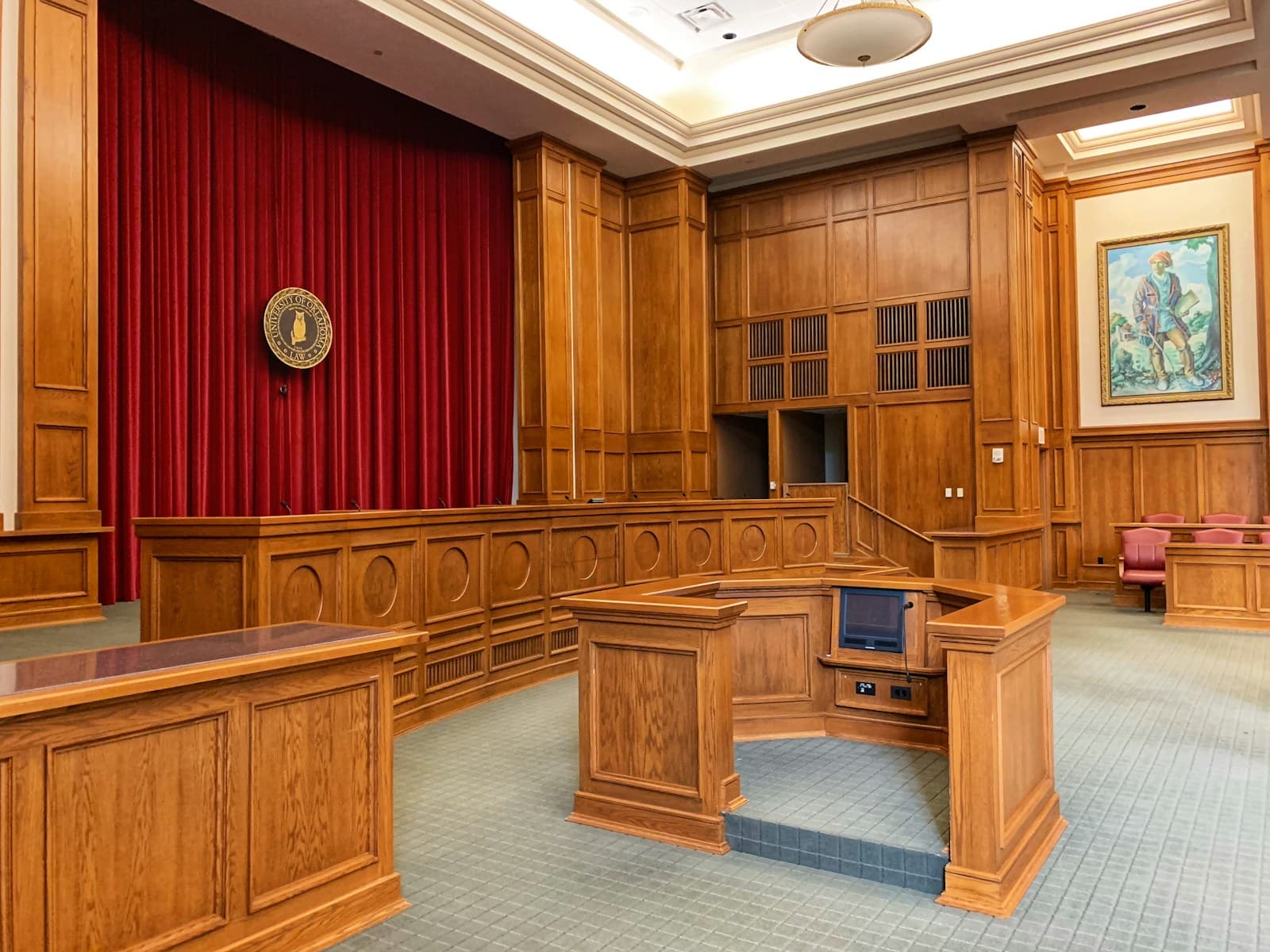
Court-application hardship license states require you to convince a judge that the restriction serves a legitimate purpose and poses minimal public safety risk. The judge evaluates your employment documentation, your driving history, and your compliance with other suspension conditions during a live hearing. Texas, Georgia, Florida, Oklahoma, and several other states route hardship applications through the court system rather than the DMV administrative process.
DMV-application states evaluate your petition against published eligibility criteria without a hearing. Illinois, Wisconsin, Ohio, Michigan, and most other states process hardship applications administratively. You submit documentation, the DMV verifies your compliance with suspension conditions, and the approval or denial arrives by mail.
The distinction matters because court hearings introduce subjective evaluation. Two drivers with identical violations and identical employment documentation can receive different outcomes depending on the judge assigned, the documentation quality, and the prosecutor's position. DMV-application states produce more predictable outcomes but impose stricter eligibility gates upfront.
What Documentation Court Hearings Require That DMV Applications Do Not
Court-application states require employer affidavits with route specificity judges can verify. Texas judges deny petitions when the employer letter states "needs to drive for work" without listing the job site addresses and the distances involved. Florida judges require employer affidavits notarized within 30 days of the hearing date because judges know termination and rehire patterns can make older letters inaccurate.
Georgia judges require proof of SR-22 filing at the time of the hearing, not just a statement of intent to file if the petition is granted. Most Georgia drivers file SR-22 before the hearing to meet this requirement, which means paying the full SR-22 premium upfront even if the petition is denied. DMV-application states allow you to file SR-22 after approval, reducing upfront financial risk.
Route maps and odometer logs strengthen court petitions in ways DMV applications do not recognize. Texas drivers who bring printed route maps showing the distance from home to work site to childcare pickup to home document the restriction's scope visually. Judges can compare the proposed routes against the driver's stated work hours and verify the request is narrow. DMV-application states do not accept route maps because the evaluation is checklist-based, not narrative.
Compare car insurance rates in your state
Get quotes from licensed carriers — no obligation, no spam, results in minutes.
Get Your Free Quote✓ No Obligation Required✓ Licensed Carriers Only✓ Available Nationwide✓ Free to Compare
How Hearing Timelines Differ From Administrative Processing
Court hearings introduce scheduling delays DMV-application states avoid. Texas drivers wait 4 to 8 weeks for a hearing date after filing the petition because district court dockets are shared with criminal and civil cases. Georgia drivers wait 2 to 6 weeks depending on county. Florida drivers in densely populated counties wait 6 to 10 weeks because Business Purpose Only hearings compete for docket time with felony arraignments and civil motion hearings.
DMV-application states process hardship petitions in 10 to 21 days from submission. Illinois issues Restricted Driving Permits within 14 days when documentation is complete. Wisconsin processes occupational license applications in 10 to 15 business days. Ohio issues occupational driving privileges within 21 days after verifying SR-22 filing and suspension compliance.
Court hearings allow same-day denials with immediate feedback. If your Texas employer affidavit does not list route specifics, the judge denies the petition during the hearing and explains the deficiency. You leave knowing what to fix. DMV denials arrive by mail with a generic reason code and no guidance on what documentation was insufficient.
What Happens When You Miss the Hearing Date
Missing a scheduled hardship hearing in a court-application state results in automatic petition denial and forfeiture of the filing fee. Texas charges a $125 filing fee per petition. If you miss the hearing, the petition is dismissed and you must file a new petition with a new $125 fee to schedule another hearing. Georgia charges $150 per petition with the same forfeiture rule.
Florida allows one continuance request if filed at least 5 business days before the scheduled hearing date. After one continuance, missing the rescheduled hearing results in dismissal. Oklahoma allows continuances only for documented medical emergencies or military deployment verified by official documentation submitted before the hearing date.
DMV-application states do not impose hearing-date forfeiture because no hearing occurs. If Illinois or Wisconsin requests additional documentation, you have 30 days to submit it before the application is closed. You do not lose the application fee if you miss the documentation deadline; the application simply expires and you must reapply.
How Prosecutors Participate in Court Hearings
Court-application states allow prosecutors to object to hardship petitions during the hearing. Texas prosecutors attend hearings for DUI-related suspensions and argue against approval when the driver's BAC exceeded .15 or when the driver refused chemical testing. The prosecutor's objection does not automatically result in denial, but it shifts the burden to you to prove the restriction is safe and necessary.
Florida prosecutors attend Business Purpose Only hearings for aggravated DUI cases involving injury or property damage. Georgia prosecutors attend hearings when the underlying suspension involved reckless driving or hit-and-run charges. The prosecutor reviews your driving history, your compliance with suspension conditions, and your DUI education enrollment before the hearing.
DMV-application states do not involve prosecutors because the evaluation is administrative. Illinois, Wisconsin, and Ohio DMV staff review your eligibility against published criteria without adversarial input. Prosecutor participation introduces unpredictability court-application drivers must prepare for.
What Routes Court-Approved Hardship Licenses Allow
Court-application states issue hardship licenses with judge-specified route restrictions written into the court order. Texas judges list approved destinations by street address: residence, work site, childcare provider, DUI education facility, and probation office. Driving to any address not listed in the court order violates the restriction and triggers immediate revocation.
Georgia judges issue Limited Driving Permits with day-of-week and time-of-day restrictions tailored to the driver's work schedule. If your employer affidavit states you work Monday through Friday 7:00 AM to 4:00 PM, the judge restricts driving to those days and hours plus one hour before and after for commute time. Driving on Saturday or after 5:00 PM violates the restriction even if you are traveling to an approved destination.
DMV-application states issue hardship licenses with standardized categories rather than specific routes. Illinois Restricted Driving Permits allow travel to and from work, medical appointments, educational institutions, and childcare providers without listing specific addresses. Wisconsin occupational licenses allow travel necessary for employment and household maintenance without route itemization. The standardized-category approach reduces documentation burden but increases enforcement discretion if stopped.
How SR-22 Filing Requirements Interact With Application Pathway
Court-application states require proof of SR-22 filing before or during the hardship hearing for suspension triggers that mandate SR-22. Texas drivers suspended for DUI, uninsured driving, or serious moving violations must file SR-22 before the hearing date. Georgia requires SR-22 filing before the Limited Driving Permit petition is filed because the filing is a prerequisite to eligibility, not a post-approval requirement.
Florida requires FR-44 filing for DUI-related Business Purpose Only applications rather than SR-22. FR-44 mandates higher liability limits than SR-22: $100,000 per person and $300,000 per accident rather than the state minimum $10,000/$20,000. Oklahoma requires SR-22 filing within 10 days of the court order granting the Modified License, shifting the financial burden to after approval rather than before.
DMV-application states typically require SR-22 filing after hardship approval rather than before. Illinois issues the Restricted Driving Permit first, then monitors for SR-22 filing within 30 days. Wisconsin requires proof of SR-22 at the time of application but allows the filing date to match the occupational license effective date, reducing the risk of paying SR-22 premiums during the application review period.