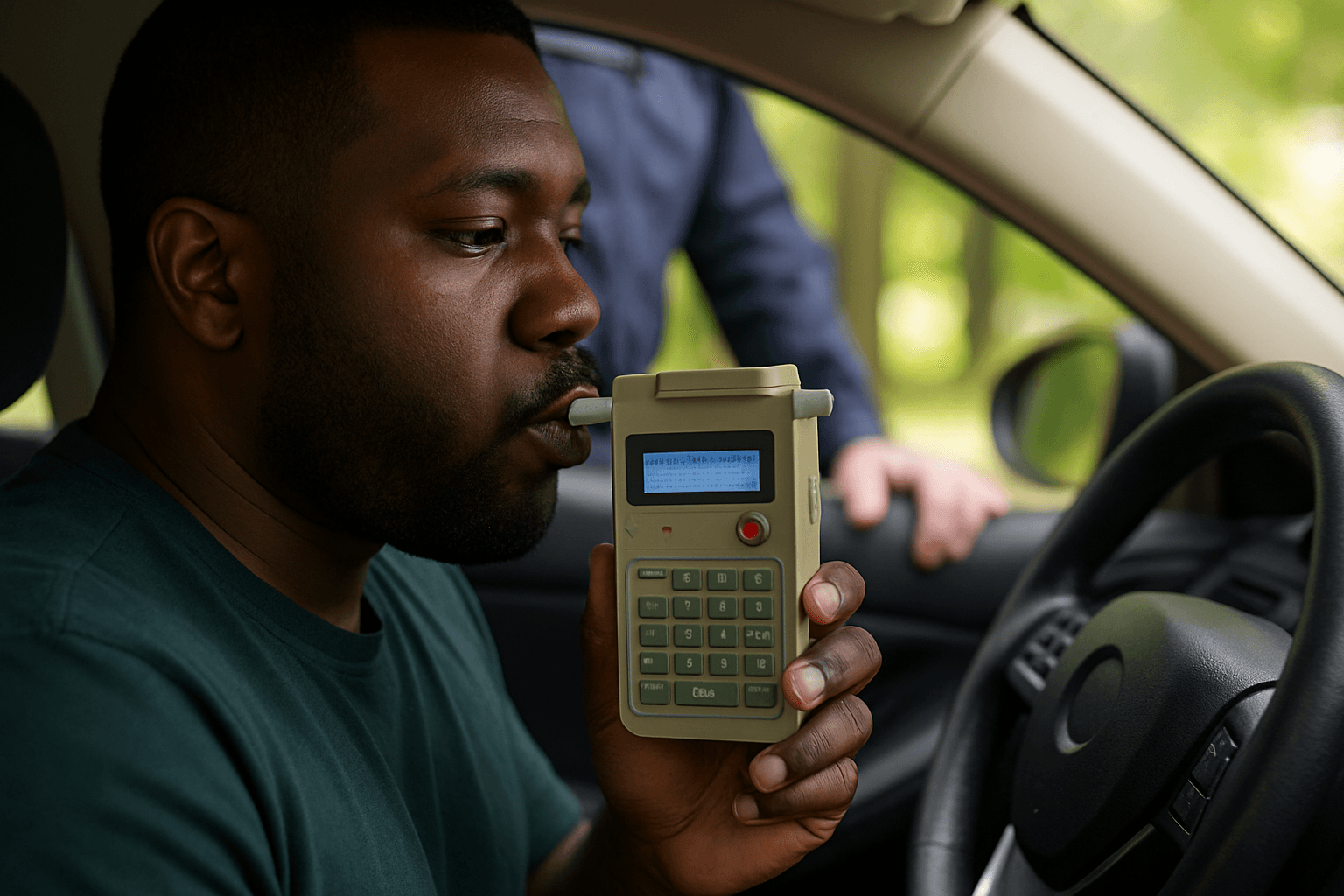
Connecticut's Special Operation Permit requires a 45-day hard suspension before any restricted driving begins for DUI offenders. The ignition interlock and DMV application path run separately from court proceedings, and misunderstanding the timeline costs most applicants weeks of unnecessary delays.
Connecticut Special Operation Permit: What the Name Means and Why Court Doesn't Control It
Connecticut calls its hardship license a Special Operation Permit (SOP), administered entirely by the Connecticut Department of Motor Vehicles under CGS § 14-37a. Court proceedings for OUI (Operating Under the Influence—Connecticut's term for DUI) run on a separate track from the DMV's administrative per se suspension, and most drivers assume their court date controls when they can apply for restricted driving. It doesn't.
The DMV issues an administrative suspension the day of arrest if you fail or refuse a breath test under CGS § 14-227b. That suspension starts immediately: 90 days for a failed test on a first offense, 6 months for refusal. For DUI-related suspensions, Connecticut requires a 45-day hard suspension before SOP or ignition interlock license eligibility begins. No driving at all during that 45-day window, no exceptions for work or medical needs.
After the 45-day hard period ends, you can apply for a Special Operation Permit through the DMV—not the court. The SOP restricts you to essential purposes: employment, medical treatment, education, and child care as defined in the permit. Hours are typically restricted to your documented schedule; the permit specifies exact times and routes on a case-by-case basis. Connecticut also offers an ignition interlock license under the same statute, which closely parallels the SOP but has its own procedural path and may be available earlier for some offenders who install the device and complete alcohol education.
DUI Cause Eligibility: First-Offense Path vs Repeat-Offense Reality
Connecticut's Special Operation Permit system is open to DUI offenders, but the administrative hard suspension period creates a mandatory waiting window that most drivers don't see coming. For a first OUI offense under CGS § 14-227b, the DMV imposes a 90-day administrative per se suspension if you fail the breath test. The first 45 days are hard—no SOP, no ignition interlock license, no driving at all.
After 45 days, you can apply for an SOP or enroll in Connecticut's ignition interlock program. If you qualify for the Pretrial Alcohol Education Program (AEP)—a diversion program available to some first-time offenders—and complete it successfully, the charge may be dismissed and the administrative suspension record can be avoided entirely. That's a court-managed diversion, not a DMV reinstatement path, and it requires enrollment early in the criminal case.
For repeat offenders or drivers who refused the breath test, the hard suspension period lengthens and SOP eligibility becomes more restrictive. Refusal to submit to a BAC test under CGS § 14-227b triggers a separate, longer administrative suspension: typically 6 months for first refusal versus 90 days for a failed test. The refusal suspension runs independently of any criminal court proceeding and cannot be shortened by court action.
Connecticut separates administrative per se suspensions—imposed by the DMV upon arrest based on BAC or refusal—from court-ordered suspensions following conviction. Each track has its own reinstatement process and may run concurrently or consecutively depending on case outcome. The SOP application is filed with the DMV regardless of where your court case stands.
Compare car insurance rates in your state
Get quotes from licensed carriers — no obligation, no spam, results in minutes.
Get Your Free Quote✓ No Obligation Required✓ Licensed Carriers Only✓ Available Nationwide✓ Free to Compare
Points, Uninsured, and Unpaid Fines: What Causes Qualify for SOP in Connecticut
Connecticut's SOP system is not limited to DUI suspensions. Drivers suspended for points accumulation are eligible to apply for a Special Operation Permit through the same DMV administrative process. The state's point system accumulates violations on your license; if you reach the threshold for suspension, the DMV notifies you of the suspension period and your SOP eligibility begins immediately—no hard blackout period for points-based suspensions.
Uninsured motorist suspensions under CGS § 14-213b trigger registration suspension rather than license suspension in most cases. The DMV suspends your vehicle registration upon notice of an insurance lapse, and you must provide proof of new or reinstated insurance and pay a reinstatement fee to restore the registration. If your license is suspended for failure to maintain insurance, SOP eligibility depends on whether the suspension is administrative or court-ordered. The data layer confirms Connecticut hardship eligibility for uninsured-cause suspensions, but carrier cancellation reporting through the state's electronic insurance compliance system can trigger immediate action with no grace period.
Unpaid fines and failure-to-appear suspensions are handled separately. Connecticut does not publish a universal SOP eligibility rule for unpaid-fine suspensions in the public-facing DMV materials, and case-by-case review applies. The critical distinction: your cause of suspension determines which documentation the DMV requires and whether a hard blackout period applies before you can apply.
DMV Application Path: What You File, When You File, and What the DMV Actually Reviews
Connecticut's Special Operation Permit application is filed directly with the Connecticut DMV—not through a court hearing. The application path is administrative: you submit the application form, required documentation, and any applicable fees to the DMV, and the DMV reviews your case to determine whether your documented need qualifies for restricted driving under CGS § 14-37a.
Required documentation for DUI-related SOP applications includes proof of employment or other essential need (employer letter on company letterhead stating your work schedule and confirming that no public transportation or carpool alternative is available), an SR-22 insurance certificate filed by your carrier, and the completed application form. For DUI suspensions, you must also provide proof of ignition interlock device installation before the SOP is issued. Connecticut requires the IID for most alcohol-related suspensions as a condition of restricted driving eligibility.
The DMV reviews your application to confirm that your documented need fits within the approved purposes: employment, medical treatment, education, and child care. The permit specifies exact hours and routes on a case-by-case basis—your employer letter must include specific shift times and work address. If your schedule changes after the permit is issued, you must file an amendment with the DMV. Driving outside the approved hours or routes violates the permit terms and triggers automatic revocation, even if the trip was work-related.
Processing time is not codified in public-facing DMV materials; the data layer notes low confidence on processing days. Plan for at least 2–3 weeks from the date you submit a complete application to the date the permit is issued. Incomplete applications—missing employer letterhead, vague schedule descriptions, or no SR-22 certificate on file—extend processing time indefinitely. The DMV does not issue provisional permits while your application is pending.
Ignition Interlock Requirement: IID Duration, Installation Proof, and Cost Stack
Connecticut requires an ignition interlock device for most DUI-related Special Operation Permits. The IID requirement is mandatory under CGS § 14-227g for drivers convicted of OUI or administratively suspended for failing or refusing a breath test. You must install the device with a state-approved vendor, provide proof of installation to the DMV, and maintain the device for the full duration specified in your suspension order—typically 6 months to 1 year for first offenses, longer for repeat offenses.
The ignition interlock license program under CGS § 14-37a runs in parallel to the SOP system. For some drivers, enrolling in the IID program offers earlier eligibility than waiting for the SOP application window. The IID license restricts you to driving only vehicles equipped with a functioning interlock device and imposes the same purpose and schedule restrictions as the SOP. The DMV determines which path you qualify for based on your offense history and suspension type.
IID installation costs $70–$150, and monthly lease fees run $60–$90. Over a 12-month interlock period, total IID cost reaches $850–$1,200. That's in addition to the Special Operation Permit application fee (not codified in the data layer but typically under $100 based on Connecticut DMV fee schedules), the $175 base reinstatement fee when your full license is restored, and the SR-22 filing fee your carrier charges—usually $25–$50.
Violating the interlock terms—attempting to start the vehicle after a failed breath test, tampering with the device, or driving a non-equipped vehicle during the restriction period—triggers automatic permit revocation and extends your suspension. The IID vendor reports all violations to the DMV electronically. Most drivers don't realize that a single failed rolling retest (the random breath test required while driving) can result in a 30-day lockout period where the device will not allow the vehicle to start.
SR-22 Filing for SOP: Why It's Required, How Long You Carry It, and What Happens If It Lapses
Connecticut requires an SR-22 certificate of financial responsibility for DUI-related suspensions. The SR-22 is not insurance—it's a filing your carrier submits to the DMV certifying that you carry at least Connecticut's minimum liability coverage: $25,000 per person bodily injury, $50,000 per accident bodily injury, and $25,000 property damage. The filing proves to the state that you meet the financial responsibility requirement under Connecticut law.
You cannot apply for a Special Operation Permit without an active SR-22 on file. Your carrier files the SR-22 electronically with the DMV when you purchase or add the filing to your existing policy. The DMV receives the filing confirmation within 24–48 hours in most cases. If you don't own a vehicle, you need a non-owner SR-22 policy, which provides liability coverage when you drive a borrowed or rented vehicle and satisfies the state's filing requirement.
Connecticut typically requires SR-22 filing for 3 years from the date of conviction or administrative suspension for DUI offenses. If your SR-22 lapses—because you cancel your policy, miss a payment, or switch carriers without notifying the DMV—your carrier is required to file an SR-26 cancellation notice with the state. The DMV receives the SR-26 electronically and suspends your license immediately. There is no grace period; the suspension is automatic.
Reinstating after an SR-22 lapse requires filing a new SR-22, paying the $175 reinstatement fee, and waiting for DMV processing. If you're driving on a Special Operation Permit when the lapse occurs, the permit is revoked and you're back to full suspension. Most carriers in Connecticut—Geico, Progressive, State Farm, Bristol West, Dairyland, The General, National General, and USAA—write SR-22 policies for suspended-license drivers. Rates vary widely by driving history and county; expect $140–$240/month for liability-only SR-22 coverage in Connecticut for a driver with a recent DUI. Non-owner SR-22 policies typically cost $60–$120/month.
What an SOP Costs: Application Fee, IID, SR-22, and Premium Impact Over 3 Years
The full cost of obtaining and maintaining a Connecticut Special Operation Permit stacks across multiple categories: DMV application fee, ignition interlock device installation and lease, SR-22 filing fee, and the premium increase triggered by the DUI conviction and SR-22 requirement.
Application fee for the SOP is not definitively published in the data layer but typically falls under $100 based on Connecticut DMV fee schedules. IID installation runs $70–$150 upfront, then $60–$90/month for the lease—over a 12-month period, that's $850–$1,200 total. Your carrier charges a one-time SR-22 filing fee of $25–$50 when the certificate is issued. When your full license is reinstated after the suspension period ends, the DMV charges a $175 reinstatement fee.
The larger cost is the premium increase. A DUI conviction and SR-22 requirement typically raise your auto insurance premium by 80–150% in Connecticut. If you were paying $100/month for full coverage before the suspension, expect $180–$250/month for SR-22 liability coverage after. Over the 3-year SR-22 filing period, the cumulative premium increase alone can reach $3,000–$5,400 compared to clean-record rates.
Non-owner SR-22 policies cost less—$60–$120/month—because they don't insure a specific vehicle. If you sold your car or don't own one, non-owner coverage satisfies the SR-22 requirement and keeps the permit active while you're suspended. When you're ready to buy a vehicle again, you'll need to switch to a standard SR-22 policy that covers the new vehicle.
The total 3-year cost stack for a Connecticut driver with a first DUI who needs a Special Operation Permit: $850–$1,200 for IID, $175 reinstatement fee, $25–$50 SR-22 filing fee, and $3,000–$5,400 in cumulative premium increases. That's $4,050–$6,825 over three years, not including court fines, legal fees, or alcohol education program costs.