California restricts your driving to work, DUI program attendance, and employment-scope errands only. The state does not pre-approve specific routes, but you must document and justify every trip if challenged.
What Routes Are Allowed Under California's Restricted License
California allows restricted license holders to drive to and from work, to and from DUI treatment programs (if court-ordered), and within the scope of employment. The DMV does not issue a list of approved routes or pre-approve specific addresses. You are expected to limit yourself to work commutes, mandatory program attendance, and work-related errands that occur during your shift or as part of your job duties.
The restriction is purpose-based, not route-based. If you drive to your employer's office at 123 Main Street every weekday, that route is implicitly permitted because the purpose is work. If you drive to a client site during work hours as part of your job, that is permitted because it falls within the scope of employment. If you stop at a grocery store on your way home from work, that is not permitted—the purpose shifted from work to personal errand.
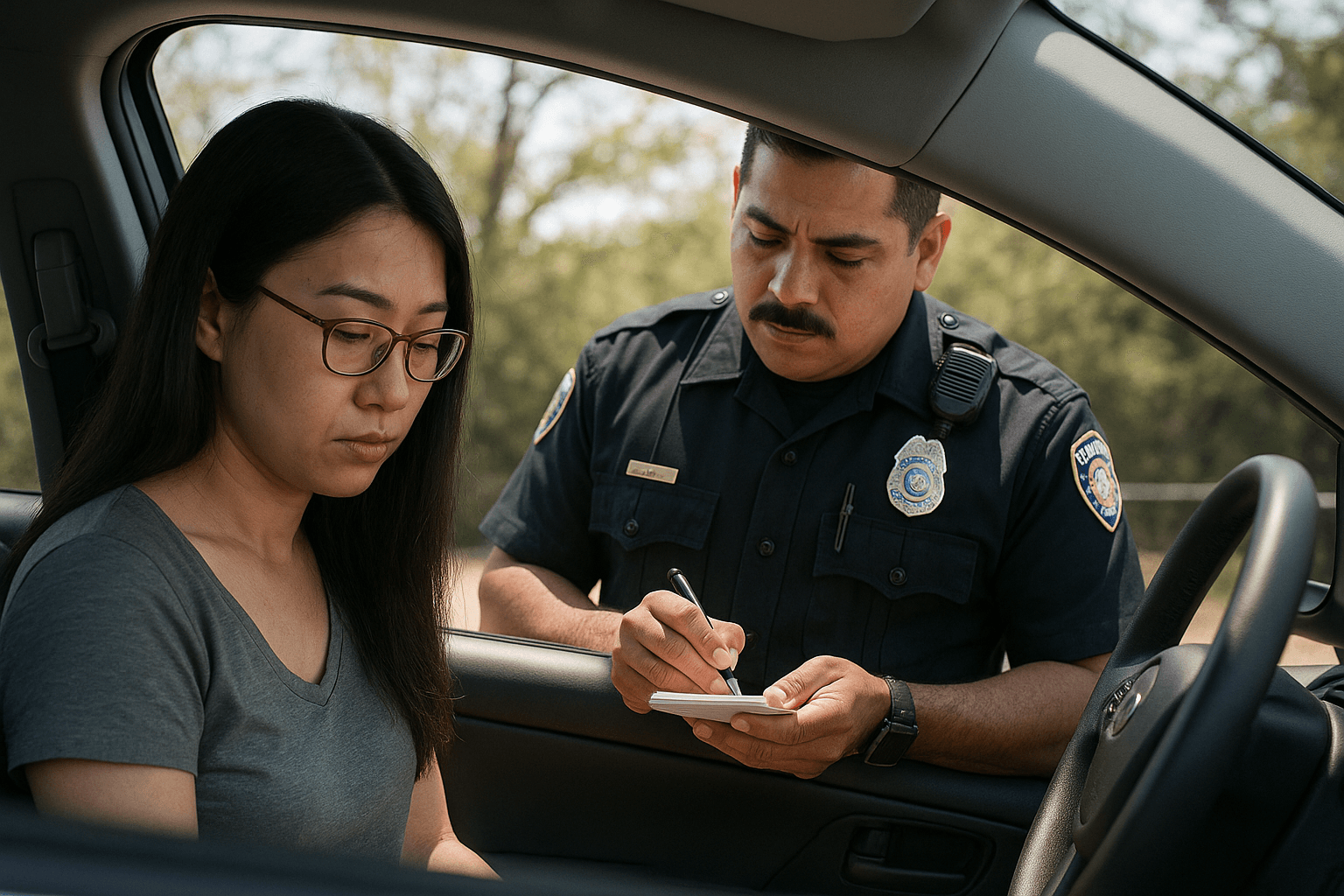
California does not require you to submit route documentation as part of your restricted license application. You receive the restricted license with the printed limitation "To/From Work and DUI Program Only" (or similar language), and enforcement is reactive. If you are pulled over, the officer will ask where you are going and whether the trip fits the restriction. If the answer is no, you can be charged with driving on a suspended license, which carries penalties including jail time, extended suspension, and fines up to $1,000 for a first offense.
How California Defines 'Scope of Employment' Driving
Scope of employment means driving that is necessary to perform your job duties during work hours or as a direct requirement of your position. A delivery driver making deliveries, a sales representative visiting client sites, a home health aide driving to patient homes, and a construction worker driving to job sites all fall within scope of employment. Personal errands taken during your lunch break do not.
The test is whether your employer requires the driving and whether it occurs during time you are being paid or scheduled to work. If you clock out and drive to the bank, that is personal. If your manager sends you to the bank to deposit company receipts during your shift, that is scope of employment. The distinction matters because California law enforcement and courts apply it strictly.
If your job requires frequent travel to multiple sites, keep a daily log of trips with addresses, times, and purpose. This log is not required by the DMV, but it is your evidence if you are stopped. Officers have discretion to issue citations on the spot if they believe you are violating the restriction. The burden of proof in court will be on you to demonstrate the trip was work-related.
Compare car insurance rates in your state
Get quotes from licensed carriers — no obligation, no spam, results in minutes.
Get Your Free Quote✓ No Obligation Required✓ Licensed Carriers Only✓ Available Nationwide✓ Free to Compare
What Happens If You Drive Outside Permitted Purposes
Driving outside the restricted license's permitted purposes is treated as driving on a suspended license under California Vehicle Code Section 14601. First-offense penalties include 5 to 6 months in county jail (though jail is often suspended in favor of probation), a fine of $300 to $1,000, and mandatory vehicle impoundment for 30 days. Your restricted license will be revoked, and your underlying suspension period may be extended.
Second and subsequent violations carry mandatory minimum jail sentences of 10 days and vehicle impoundment for up to 90 days. Courts have limited discretion to reduce these penalties. If you are caught driving to the grocery store, to visit family, or to run any personal errand, the court will not treat the violation lightly because you were explicitly granted limited driving privileges and chose to exceed them.
Violations also reset your SR-22 filing period in most cases. California requires SR-22 for 3 years after a DUI-related restricted license is issued. If your restricted license is revoked for a violation, the 3-year clock resets from the date you eventually reinstate, not from your original filing date. This can add thousands of dollars in extended SR-22 premiums to the cost of a single unauthorized trip.
Does California Restrict Driving by Time of Day
California does not impose blanket time-of-day restrictions on standard restricted licenses issued after DUI suspensions. You can drive to and from work and DUI programs at any hour as long as the trip fits the permitted purpose. If you work a night shift starting at 11 PM, you can drive to work at 10:45 PM. If your DUI program meets at 7 AM on Saturdays, you can drive there at 6:45 AM.
The absence of time restrictions does not expand the scope of permitted purposes. Driving at 2 AM to visit a friend is still a violation even though no curfew exists. The restriction is on purpose, not on clock. Officers who stop you at an unusual hour will scrutinize your explanation more carefully, so carry documentation of your work schedule or program meeting times if your job or program requires off-hours travel.
Some restricted licenses issued in other contexts (e.g., juvenile provisional licenses) do carry time restrictions, but DUI-related restricted licenses for adult drivers do not. The DMV's printed restriction will specify "To/From Work and DUI Program Only" without additional time language. If your printed restriction includes time language, that is enforceable and you must comply.
How to Document Your Permitted Routes
Create a daily trip log with date, departure time, origin address, destination address, purpose, and odometer reading. Use a notebook, a spreadsheet, or a phone app. Keep this log in your vehicle at all times. If you are stopped, hand the officer your restricted license, your SR-22 proof of insurance, and your trip log together. This shows you understand the restriction and are complying in good faith.
For work-related trips, obtain a letter from your employer on company letterhead stating your work schedule, job title, and work locations. If your job requires travel to multiple sites, ask your employer to list typical client addresses or job site zones. Carry this letter in your vehicle. If you are stopped on your way to a client site, you can show the officer the letter and your trip log entry for that day.
For DUI program attendance, carry your program enrollment documentation and meeting schedule. California DUI programs issue attendance cards or printouts showing your required meeting days and times. Keep a copy in your vehicle. If your program location changes or if you attend make-up sessions at a different site, update your log to reflect the new address.
What About Carpooling or Transporting Family Members
California's restricted license restriction applies only to your driving, not to who rides with you. You can transport passengers to and from work or DUI programs as long as the trip itself fits the permitted purpose. If you carpool with a coworker and drive to work together, that is allowed because the trip's purpose is work. If you drive your child to daycare on your way to work, that is not allowed because daycare is a personal errand, even though it occurs during the same trip.
The key question is whether you would make the trip if the passenger were not in the car. If the answer is yes (because you are driving to work), the passenger is incidental. If the answer is no (because you are only driving to take your child to school), the trip is unauthorized. Courts and officers apply this test strictly. Combining a work trip with a personal errand does not make the personal portion legal.
If your job is driving for a rideshare service, your restricted license does not permit you to work. Rideshare driving is transporting passengers for hire, which is not covered by the "scope of employment" language in California's restricted license statute. You cannot use your restricted license to perform gig-economy driving jobs. If you are caught doing so, you will be charged with driving on a suspended license and your vehicle may be impounded.
How California Restricted Licenses Work With SR-22 Insurance
California requires SR-22 insurance filing before issuing a restricted license after most DUI and negligent operator suspensions. The SR-22 is a certificate your insurance carrier files electronically with the DMV proving you carry at least California's minimum liability limits: $15,000 per person for bodily injury, $30,000 per accident for bodily injury, and $5,000 for property damage. You must maintain the SR-22 for 3 years from the date your restricted license is issued, not from the date of your arrest or conviction.
If your SR-22 lapses for any reason—missed premium payment, policy cancellation, switching carriers without filing a new SR-22—the DMV receives electronic notice within 24 hours and your restricted license is suspended immediately. You will receive a suspension notice in the mail, but the suspension is effective the day the DMV receives the lapse notice. Driving after that date is driving on a suspended license, even if you have not yet received the notice.
SR-22 insurance premiums in California typically add $300 to $800 per year to your baseline policy cost, depending on your age, county, and driving history. If you do not own a vehicle, you can file a non-owner SR-22 policy for $25 to $60 per month. This satisfies the DMV's SR-22 requirement and allows you to obtain your restricted license even without a car. If you later buy a vehicle, you must notify your carrier and convert to a standard SR-22 policy within 30 days.