California calls it a Restricted License, not a hardship license. The name matters for your DMV paperwork, your IID installer, and your insurance filing. Here's the application path, document checklist, and cost stack.
What California Calls a Hardship License and Why the Name Matters
California issues a Restricted License, not a hardship license. The distinction is not semantic. Your DMV application form, your ignition interlock installer's paperwork, and your SR-22 insurance filing all reference the restricted license by its formal name. Using the wrong terminology on forms or in correspondence with the DMV delays processing.
The restricted license is available for DUI suspensions, negligent operator (point accumulation) suspensions, and certain uninsured-related suspensions. It is not available for failure-to-appear (FTA) suspensions under Vehicle Code 13365 or unpaid fines under 13365.2. Those triggers require paying fines or appearing in court before the DMV can restore any driving privilege.
California's restricted license comes in two procedural forms depending on your suspension trigger. DUI suspensions follow the Administrative Per Se (APS) pathway under Vehicle Code 13353, processed entirely by the DMV without court involvement. Negligent operator suspensions follow a separate DMV review process. Both result in the same restricted license outcome but use different application forms and timelines.
AB 91 Ignition Interlock Opt-In: How First-Offense DUI Drivers Skip the 30-Day Hard Suspension
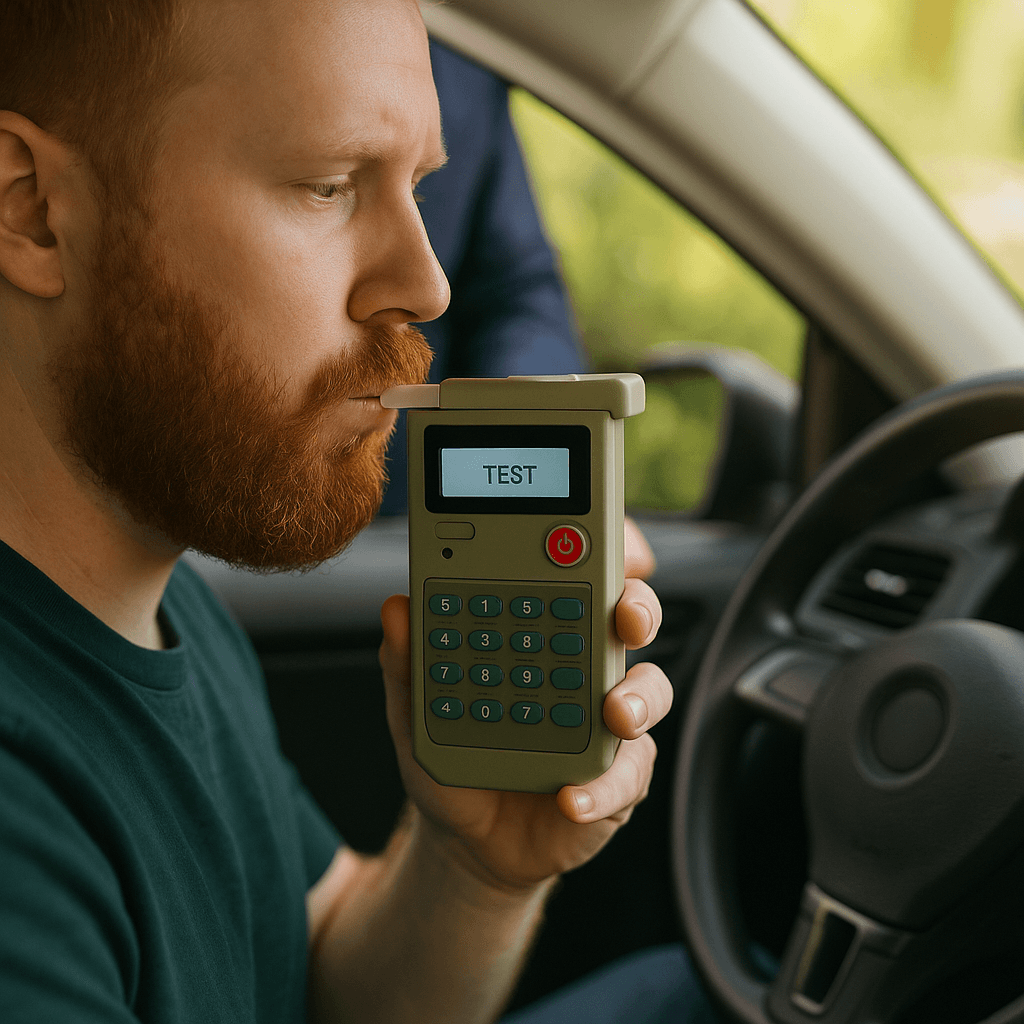
California's AB 91 law, effective January 1, 2019, allows first-offense DUI drivers to bypass the mandatory 30-day hard suspension entirely. Under the traditional pathway, your license is fully suspended for 30 days before you become eligible to apply for a restricted license. AB 91 changed this: install an ignition interlock device immediately after arrest, file your SR-22, and you can drive to work, DUI program classes, and within the scope of employment without waiting 30 days.
The catch is the device must be installed and reported to the DMV before your suspension would otherwise take effect. Most first-offense DUI drivers receive their APS suspension notice at the arrest. You have 10 days from that notice to request a DMV hearing. If you lose the hearing or waive it, the suspension takes effect 30 days post-arrest. Installing the IID before that 30-day mark lets you drive continuously on a restricted license rather than serving a hard suspension first.
This pathway is not automatic. You must proactively request the IID-restricted license when you apply. The DMV does not default to AB 91 if you submit a standard restricted license application. The application fee is $125 regardless of which restricted license pathway you choose. The IID itself costs approximately $70–$150 to install and $60–$90 per month to maintain, paid to the installer, not the DMV.
Compare car insurance rates in your state
Get quotes from licensed carriers — no obligation, no spam, results in minutes.
Get Your Free Quote✓ No Obligation Required✓ Licensed Carriers Only✓ Available Nationwide✓ Free to Compare
Required Documentation for Your California Restricted License Application
The DMV requires proof of SR-22 insurance filing before issuing a restricted license for DUI or negligent operator suspensions. Your insurance carrier files the SR-22 certificate electronically with the DMV. You do not file it yourself. The SR-22 must remain active and on file with the DMV for 3 years from your reinstatement date. If your carrier cancels your policy or you let it lapse, the DMV receives an automated notice and re-suspends your license immediately.
For DUI-triggered restricted licenses, you must also provide proof of DUI program enrollment. California offers three DUI program tiers: 3-month (wet reckless convictions), 9-month (standard first DUI), and 18-month (second DUI or high BAC first offense). The program issues an enrollment verification letter after you register and pay the initial fee. The DMV will not process your restricted license application without this letter. Completing the program is not required before applying for the restricted license; enrollment is sufficient.
If you are applying under the AB 91 IID pathway, you must provide an IID installation verification form from your installer. The installer reports the device directly to the DMV, but you need the verification receipt as proof when you submit your restricted license application. The DMV maintains a list of approved IID providers on its website. Using an unapproved installer voids your application.
The $125 reissue fee must be paid at the time of application. The DMV accepts payment in person at field offices, by mail with a check or money order, or online through the MyDMV portal for certain suspension types. Keep the payment receipt; it serves as temporary proof of application while the DMV processes your paperwork.
Where You Can Drive on a California Restricted License
California's restricted license permits driving to and from work, to and from your DUI treatment program if applicable, and within the scope of your employment. The scope-of-employment provision covers driving required as part of your job: deliveries, service calls, site visits, client meetings. It does not cover personal errands during work hours or lunch breaks unrelated to job duties.
Routes are not pre-approved or documented by the DMV. You do not submit a list of addresses or a map when you apply. The restriction is purpose-based, not route-based. If a law enforcement officer stops you while driving on a restricted license, you must be traveling to or from an approved purpose. Carrying proof of employment (a letter from your employer on company letterhead) and your DUI program enrollment letter helps demonstrate compliance during a traffic stop.
Time-of-day restrictions do not apply under California's standard restricted license. You can drive at any hour as long as the trip serves an approved purpose. However, if you are on the IID-restricted license pathway, the device logs every ignition event and every failed breath test. The DMV reviews IID logs periodically. A pattern of late-night ignition events inconsistent with work or program schedules can trigger a compliance review.
Violating the restricted license terms results in immediate revocation without a hearing. The DMV does not issue warnings. If you are caught driving for an unapproved purpose, your restricted license is canceled and you serve the remainder of your suspension as a hard suspension with no driving privileges at all.
How Long the California Restricted License Period Lasts
For first-offense DUI suspensions, the restricted license period lasts 12 months if you install an IID under the AB 91 pathway. The 12 months begins the day your restricted license is issued, not the day of arrest or conviction. If you choose the traditional pathway (serving the 30-day hard suspension first), your restricted license period lasts 5 months after the 30-day hard suspension ends, for a total suspension period of approximately 6 months.
Second and subsequent DUI offenses carry longer restricted license periods. A second DUI typically requires a 1-year hard suspension before restricted license eligibility, followed by an IID-restricted license for 2 years. Third and fourth offenses extend the hard suspension to 18 months or more, with restricted license periods of up to 3 years depending on offense count and BAC levels.
Negligent operator suspensions do not follow fixed timelines. The DMV issues a negligent operator suspension when you accumulate too many points: 4 points in 12 months, 6 points in 24 months, or 8 points in 36 months. The suspension lasts until you complete a reexamination hearing and demonstrate improved driving knowledge. Restricted license eligibility depends on your performance at the hearing and whether the hearing officer concludes you can drive safely under restrictions. Processing times vary from 30 to 90 days depending on hearing backlog.
Cost Breakdown: Application Fee, IID, SR-22, and Premium Impact
The DMV charges a $125 restricted license reissue fee. This is a one-time administrative charge collected when you submit your application. The fee is the same regardless of suspension trigger or whether you choose the IID pathway or the traditional pathway.
Ignition interlock device costs run $70–$150 for installation and $60–$90 per month for monitoring and calibration. California law requires monthly calibration visits to the installer. Missing a calibration appointment triggers a compliance violation reported to the DMV. Total IID cost over a 12-month restricted license period ranges from $790 to $1,230 depending on installer pricing and your county.
SR-22 insurance filing adds $15–$50 to your policy as a one-time filing fee charged by your carrier. The SR-22 itself does not increase your premium; it is an administrative certificate. Your premium increases because the underlying suspension (DUI, negligent operator, uninsured driving) flags you as high-risk. Post-suspension drivers in California typically pay $140–$280 per month for minimum liability coverage with SR-22 filing, compared to $85–$140 per month for clean-record drivers. Non-owner SR-22 policies (for drivers without a vehicle) cost $50–$110 per month.
Carriers writing SR-22 and restricted-license coverage in California include Geico, Progressive, The General, Dairyland, Bristol West, and Acceptance Insurance. State Farm and USAA write SR-22 but do not specialize in high-risk underwriting; expect higher premiums from these carriers post-suspension. Shopping multiple carriers is essential because rate spreads for restricted-license drivers can exceed 100% between the highest and lowest bidder for identical coverage.
How to Apply: DMV Pathway and Processing Timeline
California's restricted license application is processed entirely by the DMV. You do not go to court unless your underlying suspension stems from a criminal conviction requiring a separate court hearing. For APS DUI suspensions, the DMV administrative review officer handles your application.
Submit your application in person at any DMV field office or by mail to the DMV Driver Safety Office address listed on your suspension notice. Online submission is not available for restricted license applications. Bring your SR-22 confirmation (your carrier provides this), DUI program enrollment verification if applicable, IID installation receipt if you are on the AB 91 pathway, proof of employment, and payment for the $125 reissue fee.
Processing times vary from 2 to 6 weeks depending on DMV workload and whether your paperwork is complete. Incomplete applications are returned without processing; common errors include expired SR-22 certificates, missing DUI program enrollment letters, or IID verification forms from unapproved installers. The DMV does not call you to request missing documents. Your application is returned by mail with a deficiency notice.
Once approved, your restricted license is mailed to the address on file with the DMV. You do not receive a separate physical card if you already hold a California driver's license; the DMV updates your driving record electronically and mails a restriction notice. Carry this notice with your driver's license whenever you drive. If you are on the IID pathway, your installer issues a separate IID compliance card; law enforcement may request this during a traffic stop to verify device installation.