Alaska grants limited licenses only through court petition after mandatory hard suspension, requires ignition interlock for DUI cases, and demands SR-22 filing before any restricted driving begins. The court defines your route and hour restrictions—not the DMV.
Alaska Limited License Requires Court Approval Before DMV Processing
Alaska does not offer administrative hardship licenses through the Division of Motor Vehicles. You must petition a court for a Limited License under AS 28.15.201, and the court decides whether to grant it based on demonstrated need. The DMV processes nothing until a judge signs an order approving your petition.
This matters because most states let drivers apply directly to the DMV for restricted privileges. Alaska's two-tier system means you face judicial discretion first, administrative processing second. A denied petition ends the path—there is no fallback DMV application. Judicial outcomes vary by district and judge, making preparation and documentation quality critical.
Court petition requirements include proof of need for employment, medical treatment, education, or other purposes the court finds compelling. You must also show proof of SR-22 insurance filing for DUI-related suspensions before the court will consider the petition. The court may require additional documentation at its discretion, and there is no published checklist that guarantees approval.
DUI Suspensions Require 90-Day Hard Suspension Before Limited License Eligibility
First-offense DUI triggers a mandatory 90-day hard suspension under AS 28.35.030 before any limited license petition is heard. During this period, no restricted driving is permitted under any circumstance. Subsequent DUI offenses carry longer mandatory periods with no limited license eligibility during the hard suspension window.
This hard suspension is separate from the total suspension length. A first DUI may carry a one-year revocation, but the first 90 days are non-negotiable. Your petition can be prepared during this window, but no court will hear it until the 90th day passes. Filing early does not accelerate the timeline.
The 90-day count begins on the effective date of the administrative revocation or the court-imposed suspension date, whichever applies to your case. Alaska maintains a two-track system: the DMV issues administrative suspensions under AS 28.35.031 for breath test failure or refusal, and courts impose judicial suspensions upon conviction. Both can run concurrently, but the hard suspension period applies to whichever suspension triggers limited license eligibility.
Compare car insurance rates in your state
Get quotes from licensed carriers — no obligation, no spam, results in minutes.
Get Your Free Quote✓ No Obligation Required✓ Licensed Carriers Only✓ Available Nationwide✓ Free to Compare
Ignition Interlock Device Installation Is Required for DUI-Related Limited Licenses
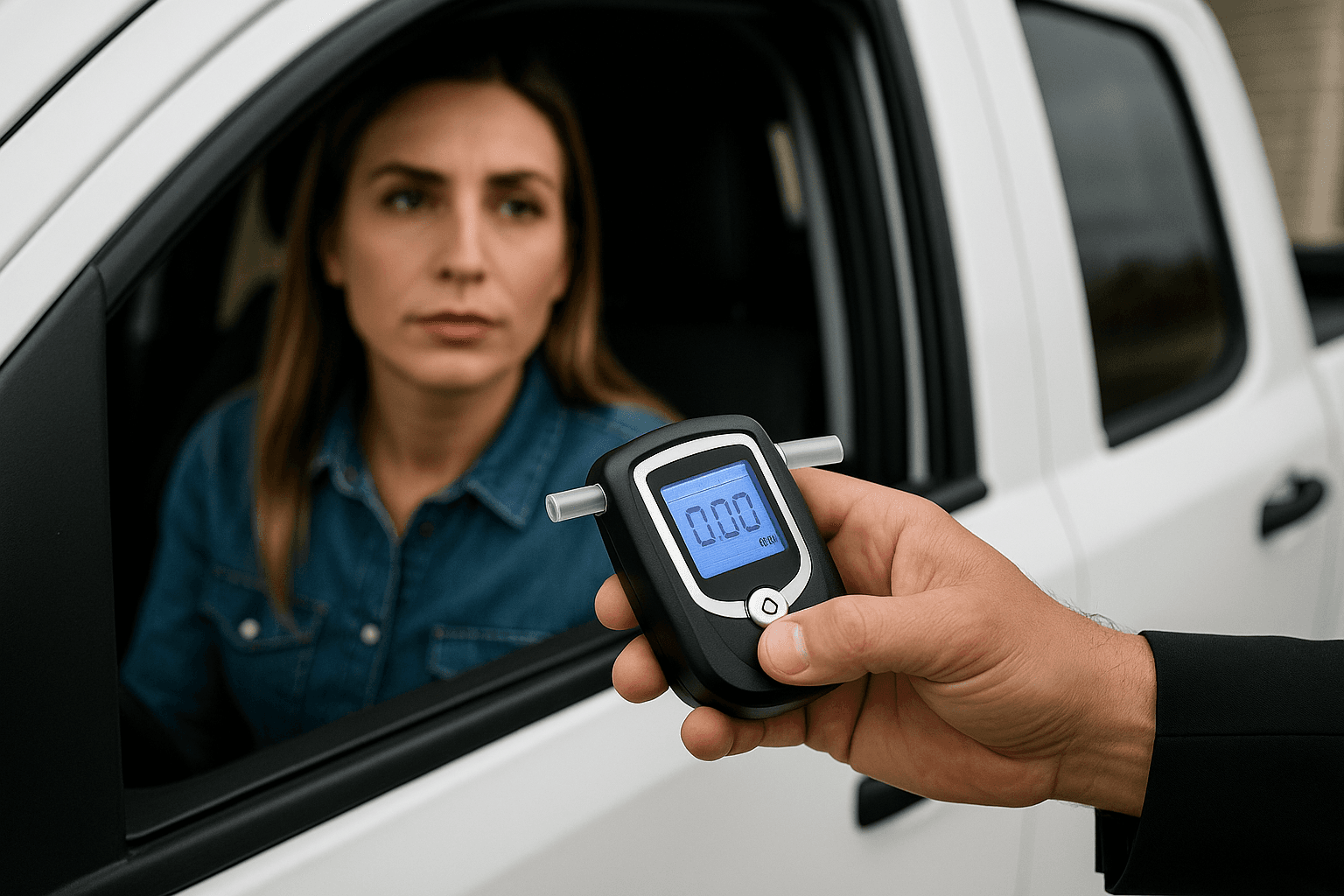
Alaska courts require ignition interlock device installation as a condition of DUI-related limited licenses. The IID must be installed and functioning before the limited license becomes effective, and proof of installation must be submitted to both the court and the DMV.
IID vendors are concentrated in Anchorage, Fairbanks, and Juneau. Residents of roadless bush communities face practical inability to comply with IID requirements. There is no vendor network in fly-in communities, and the nearest installation point may require air travel. This creates a hardship-within-a-hardship problem the court system has not resolved uniformly across districts.
Installation costs typically range from $75 to $150, with monthly lease fees of $60 to $90. Calibration visits are required every 30 to 60 days, adding travel and service costs for remote residents. Total IID expense over a one-year limited license period can exceed $1,000 before the device is removed. These costs are borne by the petitioner and are not waived for financial hardship.
Court-Defined Route and Time Restrictions Replace Generic DMV Limits
Alaska courts define route and hour restrictions based on the specific need you document in your petition. Unlike lower-48 states where DMV rules set standard radius or route allowances, Alaska's limited licenses are tailored to the individual case. The court order specifies exactly where and when you may drive.
Route restrictions typically reference specific road corridors rather than mileage radii. Alaska's non-contiguous highway infrastructure means many communities have only one road in or out. A Juneau resident's limited license might restrict driving to the Glacier Highway corridor between home and workplace. A Mat-Su Valley resident might be restricted to the Parks Highway between Wasilla and Anchorage during specified hours.
Time restrictions are set by the court based on your documented work schedule, medical appointment needs, or educational class times. A night-shift worker will receive different hour allowances than a day-shift employee. The court may require employer affidavits detailing exact shift start and end times, and deviations from those hours violate the limited license terms even if the destination is otherwise approved.
SR-22 Certificate Filing Is Required Before Limited License Approval for DUI Cases
Alaska requires SR-22 certificate of financial responsibility filed with the DMV as a condition of DUI-related limited license approval and subsequent full reinstatement. The SR-22 proves you carry liability insurance meeting Alaska's minimum coverage limits: $50,000 bodily injury per person, $100,000 bodily injury per accident, and $25,000 property damage.
You cannot petition the court for a limited license without proof of SR-22 filing. The court will not hear the petition until the DMV confirms your SR-22 is on file. Carriers electronically transmit SR-22 certificates to Alaska DMV, typically within 24 to 48 hours of policy binding. You must provide the court with proof of this filing—either a copy of the SR-22 form or a DMV confirmation—before the hearing date.
SR-22 filing is maintained for the duration specified by the court and the DMV, typically three years from the conviction date for first-offense DUI. Allowing the policy to lapse or cancel triggers automatic re-suspension of your limited license and blocks full reinstatement. The carrier notifies the DMV electronically when a policy cancels, and the DMV issues a new suspension notice without additional hearing.
Application Costs and Processing Timelines Vary by Court District
Alaska does not publish a statewide limited license application fee. Court filing fees for the petition vary by judicial district and case type. Anchorage and Fairbanks district courts typically charge $50 to $150 for petition filing, but smaller district and magistrate courts may charge different amounts. Contact the clerk of court in the district where your suspension was issued to confirm the current fee.
Processing timelines depend on court dockets and the complexity of your case. In Anchorage and Fairbanks, petitions are typically heard within 30 to 45 days of filing if all documentation is complete. Rural district courts with less frequent hearing schedules may take 60 to 90 days. The court does not begin processing until the hard suspension period expires, so total time from suspension to limited license approval spans the hard suspension period plus the court hearing wait.
Once the court grants the petition, you must take the signed court order to a DMV field office to have the limited license issued. DMV processing adds another 5 to 10 business days if the order is mailed, or same-day issuance if you appear in person at an Anchorage, Fairbanks, or Juneau office. Remote residents relying on mail processing face longer functional delays even after court approval.
Finding SR-22 Insurance in Alaska After Suspension
Not all carriers write SR-22 policies in Alaska, and fewer write policies for drivers with recent DUI convictions or multiple violations. State Farm, Progressive, and GEICO file SR-22 certificates in Alaska and accept DUI-risk drivers, though premiums reflect the elevated risk tier. National General and The General specialize in non-standard auto insurance and write policies for high-risk drivers statewide.
Premium increases after DUI suspension typically range from 80% to 150% compared to standard rates. A driver paying $140 per month before suspension might see rates climb to $250 to $350 per month with SR-22 filing. These rates hold for the duration of the SR-22 filing period, typically three years, and decrease only after the filing requirement expires and the conviction ages off the driving record.
If you do not own a vehicle but need SR-22 coverage to petition for a limited license, non-owner SR-22 insurance provides liability coverage when you drive a vehicle you do not own. GEICO, Progressive, and USAA write non-owner policies in Alaska. Monthly premiums for non-owner SR-22 typically range from $40 to $90, significantly lower than owner policies because the carrier assumes lower exposure. Non-owner SR-22 satisfies Alaska's SR-22 filing requirement and allows you to petition the court for a limited license without purchasing or insuring a vehicle.