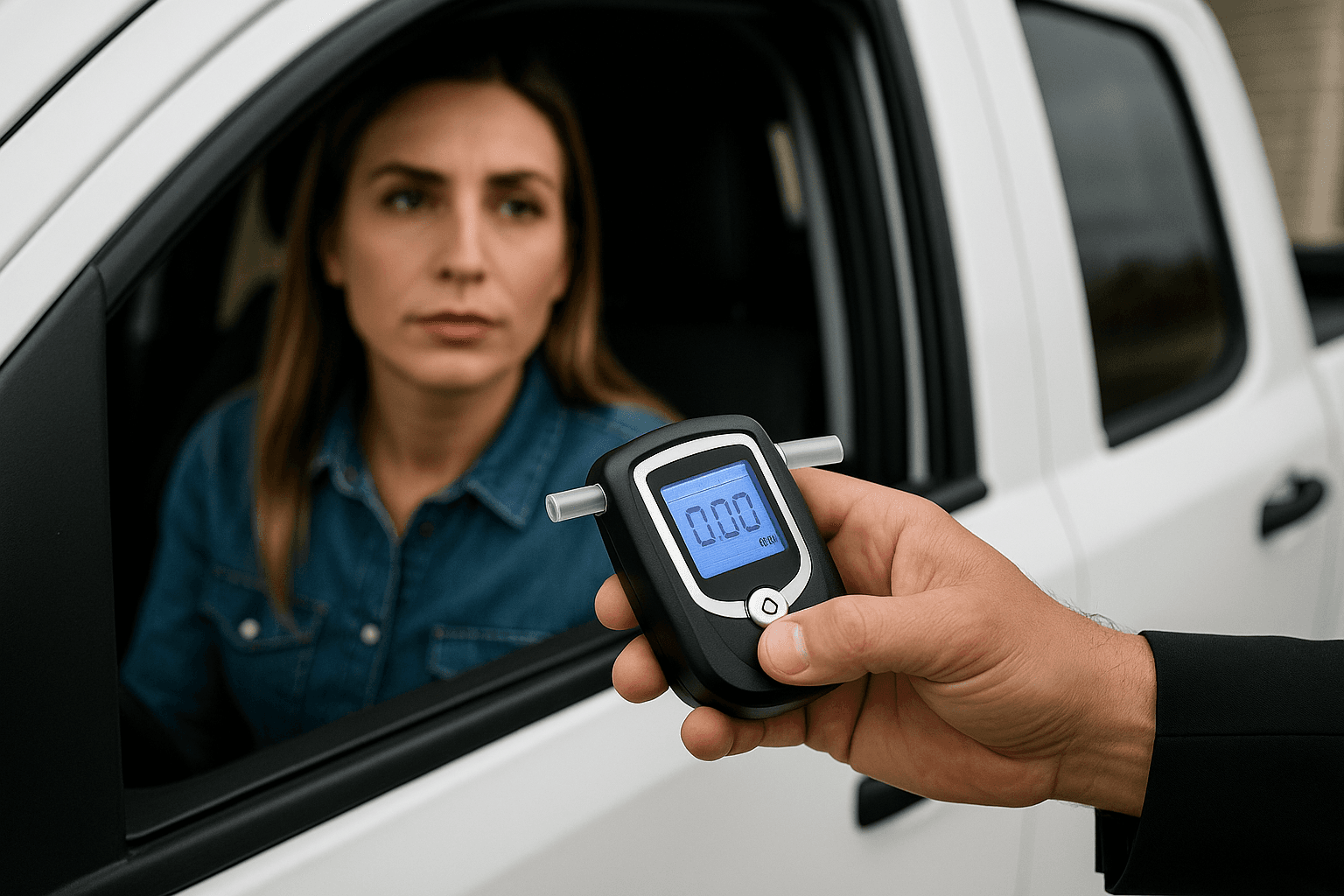
Alaska makes you petition the court after a 90-day hard suspension for DUI. No DMV administrative path exists, and every limited license requires ignition interlock installation before the judge signs the order.
Alaska Eliminates the DMV Administrative Path — Every Limited License Requires Court Approval
Alaska routes all limited license petitions through the court system under AS 28.15.201. No DMV administrative application exists. You file a petition with the district or superior court that has jurisdiction over your suspension, and a judge decides whether to grant restricted driving privileges. This structure means every petition requires court fees, a hearing date, and formal documentation — the informal DMV interview process used in some states does not exist here.
The court-only pathway creates two friction points most drivers miss. First, court calendars in rural Alaska can push your hearing date 60 to 90 days past your petition filing date, extending the total time without driving privileges well beyond the statutory suspension period. Second, judges exercise unusually broad discretion under Alaska law — there is no DMV checklist that guarantees approval if you meet minimum criteria. A judge can deny your petition based on factors not codified in statute, including prior driving history, the specifics of your current violation, or doubts about your stated need.
SR-22 certificate of financial responsibility must be filed with Alaska DMV before the court hearing if your suspension stems from DUI. Courts will not approve a limited license petition without proof of SR-22 filing on record. The SR-22 filing requirement is separate from the limited license petition — you must secure coverage from a carrier authorized to file SR-22 in Alaska, then bring the filing confirmation to your hearing.
The 90-Day Hard Suspension Window Blocks Early Petitions for First-Offense DUI
First-offense DUI triggers a mandatory 90-day hard suspension under AS 28.35.030 before any limited license petition will be heard. The 90-day clock starts from the administrative revocation date, not the conviction date. Most drivers assume they can petition immediately after suspension notice — Alaska law prohibits this. Courts will not schedule a limited license hearing until the 90-day mandatory period expires.
The hard suspension window is a statutory floor. If your suspension period exceeds 90 days, the court may hear your petition after the 90-day mark but before the total suspension ends. If your suspension period is exactly 90 days, the limited license becomes functionally irrelevant — by the time the hard window closes, you are eligible for full reinstatement. Drivers with second or subsequent DUI offenses face longer mandatory hard suspension periods with no limited license eligibility during that window.
Bush Alaska residents face an additional time layer: if you live in a roadless community accessible only by air or ferry, the limited license route restriction framework breaks down. Limited licenses in Alaska restrict driving to specific purposes approved by the court — typically employment, medical treatment, or education — but enforcement and compliance monitoring assumes road-connected geography. Judges in Anchorage, Fairbanks, and Juneau routinely grant limited licenses; judges in rural districts may deny petitions for residents of fly-in communities because the restriction cannot be meaningfully enforced.
Compare car insurance rates in your state
Get quotes from licensed carriers — no obligation, no spam, results in minutes.
Get Your Free Quote✓ No Obligation Required✓ Licensed Carriers Only✓ Available Nationwide✓ Free to Compare
Ignition Interlock Device Installation Is Mandatory for All DUI-Related Limited Licenses
Alaska requires ignition interlock device installation as a condition of any DUI-related limited license under AS 28.35.030. The IID requirement is non-negotiable — courts will not approve a limited license petition without proof of IID installation from an approved vendor. You must install the device before your court hearing and bring the installation receipt to the judge.
IID vendors are concentrated in Anchorage, Fairbanks, and Juneau. If you live outside these cities, travel to an approved vendor for installation adds cost and time. Some roadless communities have no IID vendor access at all, creating a practical barrier to limited license eligibility even when statutory requirements are met. The court cannot waive the IID requirement based on geographic hardship — the statute makes installation mandatory for all DUI-related limited licenses.
The IID monitoring period runs concurrently with your limited license period, then extends into full license reinstatement. Alaska law requires IID monitoring for a minimum period that varies by offense tier. First-offense DUI typically requires 6 to 12 months of IID monitoring; subsequent offenses require longer periods. The monitoring period begins when the device is installed, not when the limited license is granted. Monthly calibration visits cost $60 to $90 per month, and missed calibrations trigger compliance violations that extend the monitoring period or revoke the limited license.
Required Documentation for Court Petition — Employment Verification and Insurance Filing Proof
Alaska courts require formal documentation to support your limited license petition. At minimum, you must submit: (1) a completed petition form to the court, (2) proof of employment, medical appointments, or educational enrollment demonstrating need, (3) SR-22 certificate of insurance filing confirmation from Alaska DMV if your suspension is DUI-related, and (4) IID installation receipt if applicable. Courts may request additional documentation at their discretion.
Employment verification must be specific. A generic letter from your employer stating you work full-time is insufficient. The letter must include your job title, work address, shift hours, and a statement that driving is necessary to reach the worksite. If public transportation or rideshare services are available in your area, the court may question the necessity of a limited license for employment purposes. Self-employed drivers must provide additional documentation — business registration, client contracts, or invoices — proving that driving is integral to income generation.
Medical and educational documentation follows the same specificity standard. If you are petitioning for medical-purpose driving, the court expects appointment schedules, treatment plans, or physician statements confirming that you require regular medical visits. Educational petitions require enrollment verification, class schedules, and a statement from the institution confirming that the campus is not accessible by public transit. The court evaluates whether your stated need justifies the risk of allowing you to drive during a suspension period — vague or incomplete documentation produces denials.
Route and Time Restrictions Are Court-Defined and Enforced by Specific Purpose
Alaska limited licenses do not use mileage-radius restrictions. Instead, courts define allowable driving by purpose: employment, medical treatment, education, or other court-approved needs. The limited license order specifies which purposes are authorized and may include specific hours during which driving is permitted. These restrictions are conditions of the license — violating them revokes the limited license and extends your suspension.
Route restrictions reference specific road corridors rather than geographic zones. If your court order authorizes driving for employment purposes, the restriction typically limits you to travel between your residence and your worksite via the most direct route. Side trips, errands, and detours are prohibited. If you are stopped during authorized hours but off the approved route, law enforcement treats the violation as driving on a suspended license — a criminal offense in Alaska that carries jail time and license revocation.
Time restrictions are equally specific. If your employment shift runs 8 a.m. to 5 p.m., the court may authorize driving from 7 a.m. to 6 p.m. to allow commute time. Driving outside those hours, even on the approved route, violates the limited license terms. Some courts build buffer time into the restriction; others do not. The order you receive from the judge is the authoritative document — DMV records may not reflect time restrictions accurately, and law enforcement will rely on the physical court order you are required to carry while driving.
Application Fees, Court Costs, and Total Limited License Expense
Alaska limited license petitions carry court filing fees that vary by jurisdiction. District court filing fees typically range $100 to $200, depending on the court district and whether additional motions are filed. These fees are separate from the DMV reinstatement fee, SR-22 filing fee, and IID installation costs. The court does not waive filing fees based on financial hardship in most districts.
SR-22 filing adds a one-time fee of $15 to $50, charged by the insurance carrier, plus premium increases for the SR-22 endorsement. Alaska drivers with DUI suspensions typically see monthly premiums increase $85 to $140 per month over standard rates. The premium increase lasts for the entire SR-22 filing period, which is typically 3 years for first-offense DUI.
IID installation costs $100 to $150 upfront, plus $60 to $90 per month for monitoring and calibration. Over a 12-month IID monitoring period, total device costs run $820 to $1,230. The combined cost stack — court fees, SR-22 filing, premium increases, and IID costs — totals $3,000 to $5,500 over the first year of a DUI-related limited license. This estimate does not include attorney fees if you hire legal representation for the court hearing, which is common in contested petitions.
SR-22 Insurance Filing for DUI-Related Limited License and Reinstatement
SR-22 is a certificate of financial responsibility required by Alaska DMV for DUI-related suspensions. The SR-22 itself is not insurance — it is a filing that your insurance carrier submits to DMV confirming you carry at least the state minimum liability coverage: $50,000 per person, $100,000 per accident for bodily injury, and $25,000 for property damage. If your policy lapses or is canceled, the carrier notifies DMV, and your limited license or reinstated license is suspended immediately.
Not all carriers file SR-22 in Alaska. Based on confirmed state filings, SR-22 insurance is available through GEICO, Progressive, National General, The General, State Farm, and USAA. If your current carrier does not file SR-22, you must switch carriers before petitioning for a limited license. Non-owner SR-22 policies are available for drivers who do not own a vehicle but need SR-22 filing to satisfy court and DMV requirements.
Alaska requires SR-22 filing for the entire limited license period and for a minimum period post-reinstatement. First-offense DUI typically requires 3 years of SR-22 filing from the reinstatement date. Subsequent offenses require longer filing periods. The SR-22 clock does not start until your full license is reinstated — time spent on a limited license does not count toward the required filing period.