Alabama circuit courts decide restricted license terms individually — petition without employer-verified routes, specific timeframes, and SR-22 proof for DUI cases, and judges deny the application outright.
Why Alabama Circuit Courts Control Restricted License Approvals, Not ALEA
Alabama restricted licenses require court petition approval before any driving privilege is restored. The Alabama Law Enforcement Agency (ALEA) administers driver licensing statewide, but restricted license petitions go through the circuit court in the county where you live or where the suspension originated. This judicial pathway creates county-to-county variation that no statewide DMV process manual covers.
Circuit court judges exercise wide discretion in setting route restrictions, hour windows, and documentation requirements. One county may approve a restricted license with 6 a.m. to 8 p.m. driving hours for work and medical appointments. Another county's judge may limit the same petitioner to 7 a.m. to 6 p.m. and deny any non-work travel. The suspension trigger matters, but the judge's interpretation of "essential need" determines whether your petition succeeds.
DUI-related suspensions face a mandatory hard suspension period before any restricted license petition can be filed. Alabama Code § 32-5A-191 requires ignition interlock installation for DUI hardship cases, and § 32-5A-304 governs administrative license suspension timelines. The hard suspension length varies by offense number, but first-offense administrative suspensions typically require 90 days before restricted license eligibility opens. Court-imposed DUI suspensions run separately from administrative suspensions, and both must be resolved before reinstatement.
What Route Restrictions Alabama Judges Typically Approve
Alabama restricted licenses limit driving to court-defined routes and purposes. Work, school, medical appointments, and court-ordered programs (DUI education, substance abuse treatment) are the most commonly approved categories. Judges require employer-verified documentation showing your work address, shift hours, and whether alternative transportation exists before approving work-related driving.
Route specificity determines approval rates. A petition stating "I need to drive to work" without addresses, mapped routes, or employer verification gets denied. A petition that includes your home address, employer address, specific route (Highway 59 south from Foley to Gulf Shores, exit at County Road 6), shift start and end times, and a signed employer letter confirming no carpool or public transit option exists has a much higher approval probability.
Medical appointments must be recurring and documented. A single dentist visit does not justify restricted license approval. Dialysis three times weekly, chemotherapy treatments, physical therapy following surgery, or specialist care for chronic conditions can qualify if you provide appointment schedules and physician letters confirming treatment necessity. Grocery shopping, child pickup, and social activities are rarely approved as standalone purposes, though some judges allow limited discretion for emergency situations.
Compare car insurance rates in your state
Get quotes from licensed carriers — no obligation, no spam, results in minutes.
Get Your Free Quote✓ No Obligation Required✓ Licensed Carriers Only✓ Available Nationwide✓ Free to Compare
Time Restrictions and How Alabama Courts Set Driving Hours
Alabama circuit courts set time-of-day restrictions tailored to your documented need. If your employer letter shows 8 a.m. to 5 p.m. shifts Monday through Friday, the judge will typically approve driving hours from 7 a.m. to 6 p.m. on those days only. Weekend driving requires separate justification — a second job, religious services, or medical appointments scheduled on Saturdays.
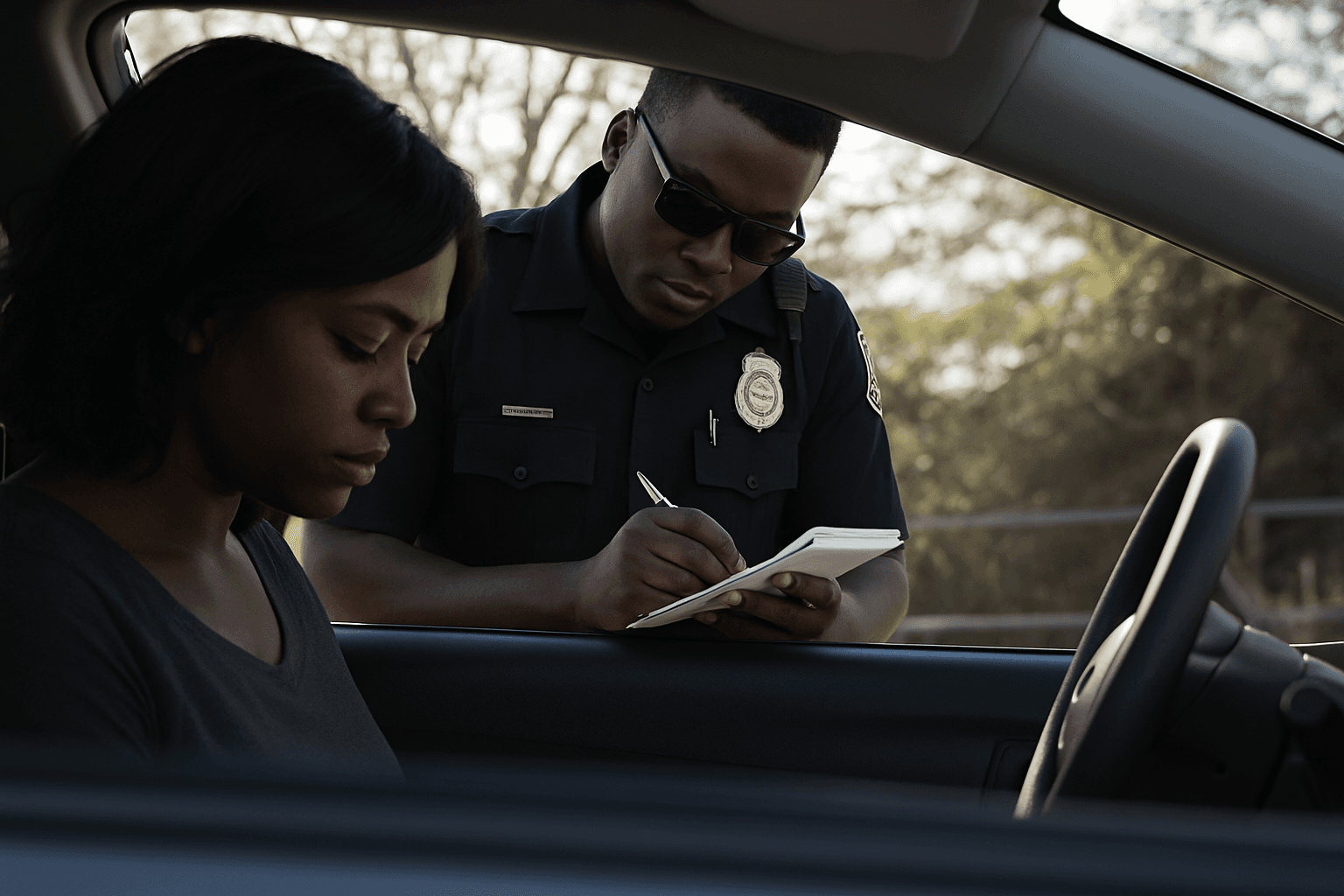
Time restrictions appear on the restricted license order itself. Law enforcement officers checking your license during a traffic stop will verify you are driving within approved hours and along approved routes. Violations trigger immediate revocation of the restricted license and extend the total suspension period. Alabama treats restricted license violations as separate offenses, and judges rarely grant second petitions after revocation.
Some counties allow buffer time for route deviations (15-minute windows before and after shift times to account for traffic), but this is not guaranteed. If your shift ends at 5 p.m. and you are pulled over at 6:15 p.m., the officer will check the restriction language. If the order specifies "travel limited to hours necessary for stated purpose," that 75-minute gap may be interpreted as a violation.
Required Documentation for Alabama Restricted License Petitions
Alabama restricted license petitions require a court filing package submitted to the circuit court clerk. The petition itself is a legal document stating your name, driver's license number, suspension effective date, suspension cause, and the specific driving privileges you request. Judges will not review incomplete petitions — missing any required document results in automatic denial or continuance.
For DUI-related suspensions, you must provide an SR-22 certificate filed with ALEA before the court hearing. The SR-22 confirms continuous liability coverage at Alabama's minimum limits: $25,000 bodily injury per person, $50,000 bodily injury per accident, and $25,000 property damage. Non-owner SR-22 policies work for petitioners without registered vehicles. Carriers writing SR-22 in Alabama include Geico, Progressive, State Farm, Dairyland, The General, Bristol West, Direct Auto, GAINSCO, National General, and Acceptance Insurance.
Employer affidavits must include: business name, address, your job title, shift schedule, work address (if different from business headquarters), supervisor signature, and confirmation that no carpool or public transit serves the route. If you work multiple part-time jobs, submit affidavits for each employer. Self-employed petitioners need business registration documents, client contracts, or tax returns showing income dependency on vehicle access.
Medical documentation requires physician letterhead, diagnosis, treatment frequency, appointment location address, and a statement that travel is medically necessary. Pharmacies do not count as medical appointments — prescription pickup falls under general errands, which judges deny. School enrollment verification (class schedule, campus address, and registrar signature) is required for education-related petitions.
Proof of ignition interlock installation is mandatory for DUI restricted licenses under Alabama Code § 32-5A-191. The IID provider must submit a certificate to ALEA confirming device installation and calibration. Restricted license approval is contingent on IID installation remaining current throughout the restriction period. Monthly IID monitoring fees range from $60 to $100, and lease costs add $70 to $120 per month.
Application Fees and Processing Timeline
Alabama circuit courts charge filing fees for restricted license petitions. Fee amounts vary by county — most range from $150 to $300 — but some counties assess additional court costs or administrative surcharges. Call the circuit court clerk in your county before filing to confirm the exact fee and accepted payment methods. Some courts require certified checks or money orders; personal checks are not universally accepted.
Processing timelines depend on court dockets. In densely populated counties (Jefferson, Mobile, Madison), petition hearings may be scheduled 30 to 60 days after filing. Rural counties often schedule hearings within 15 to 30 days. The hearing itself is brief — 10 to 15 minutes — but you must appear in person unless the court grants a waiver for documented hardship (hospitalization, military deployment).
Judges issue rulings at the hearing or within 7 to 14 days afterward. If approved, the court order is forwarded to ALEA, and ALEA issues the restricted license. Expect 10 to 21 days between court approval and physical license receipt. During this gap, carry a certified copy of the court order in your vehicle — it serves as temporary proof of restricted driving privileges if you are stopped.
If the petition is denied, you may refile after addressing the deficiencies the judge cited. Common denial reasons include insufficient documentation, incomplete SR-22 filing, or inability to demonstrate essential need. Some judges allow petitioners to amend and resubmit within 30 days without paying a second filing fee; others require a new petition and new fee.
SR-22 Insurance Requirements After Restricted License Approval
Alabama DUI restricted licenses require continuous SR-22 filing with ALEA for 3 years after reinstatement, per Alabama's financial responsibility statute. The SR-22 is not a policy — it is a certificate filed by your carrier confirming you maintain liability coverage at state minimums. If your carrier cancels your policy for nonpayment or you switch carriers without filing a new SR-22, ALEA receives an SR-26 cancellation notice and suspends your restricted license immediately.
Non-owner SR-22 policies cover drivers without registered vehicles. These policies cost approximately $25 to $60 per month in Alabama, depending on age, violation history, and zip code. Non-owner policies provide liability coverage when you drive borrowed or rented vehicles but do not cover a vehicle you own or one registered in your household. If you live with a vehicle owner, carriers may require you to be listed as an excluded driver on the household policy or purchase a standard policy with SR-22.
Switching carriers mid-filing period requires coordinating SR-22 filings. Your new carrier must file an SR-22 with ALEA before your old policy cancels, or ALEA will interpret the gap as a lapse. Most carriers allow 24 to 48 hours for electronic SR-22 filing, but manual processing can take 5 to 10 business days. Call ALEA at 334-242-4400 to confirm your new SR-22 is on file before canceling the old policy.
What Happens If You Violate Alabama Restricted License Terms
Driving outside approved routes, hours, or purposes terminates your restricted license immediately. Alabama law enforcement officers check restricted license terms during traffic stops. If you are pulled over at 9 p.m. and your restriction limits driving to 6 a.m. to 6 p.m., the officer will impound your vehicle and cite you for driving while suspended.
Restricted license violations extend your total suspension period and disqualify you from petitioning again until the extended suspension ends. First violations typically add 90 days to the suspension. Second violations add 180 days and may result in criminal charges. Judges view restricted license violations as evidence you cannot comply with court orders, making future petitions nearly impossible to win.
Law enforcement does not provide warnings for minor violations. If your employer changes your shift schedule and you fail to petition the court for amended hours before driving the new schedule, that first instance is a violation. If you detour for gas or groceries during a work commute without explicit court approval for incidental stops, that detour is a violation. The restriction language is interpreted strictly.